
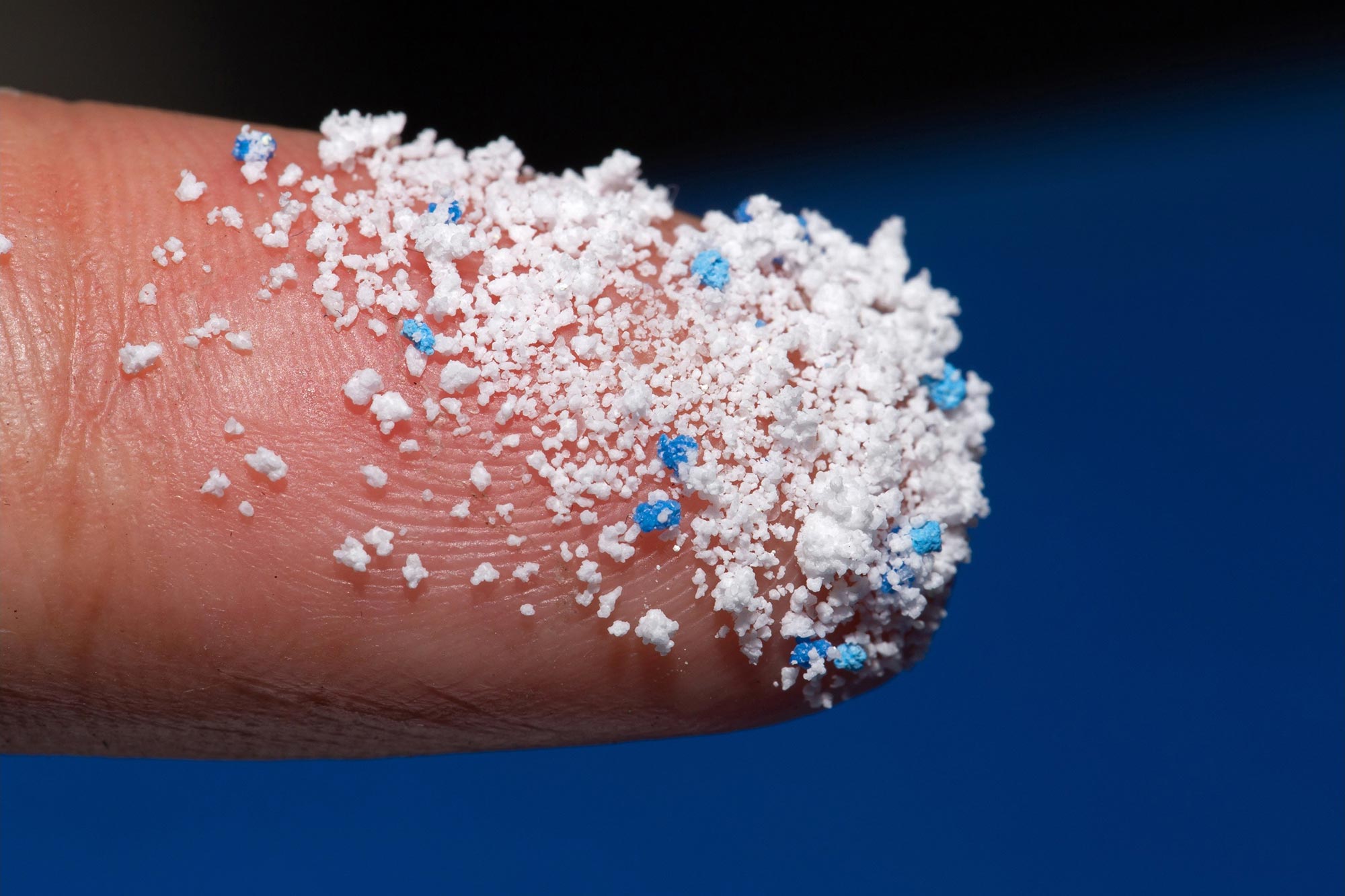
An animal study finds that consuming nanoplastics is linked to changes in metabolism and liver function.
A new animal study suggests that tiny plastic particles found in food and drinks may disrupt glucose metabolism and damage organs like the liver. These findings raise concerns about potential health risks in humans and highlight the need for further research.
As plastic breaks down, it creates microplastics (smaller than 5 millimeters) and nanoplastics (smaller than 100 nanometers), which can enter the food chain and accumulate in seafood and other commonly consumed foods. Estimates suggest that people may ingest between 40,000 and 50,000 microplastic particles each year, with some projections reaching up to 10 million particles annually.

Studying the health effects of polystyrene nanoparticles
“With the growing concern around micro- and nanoplastic exposure, we wanted to evaluate the impact of this exposure on health,” said Amy Parkhurst, a doctoral candidate in the laboratory of Fawaz George Haj, PhD, at the University of California, Davis. “Our observations that oral ingestion of polystyrene nanoplastics contributes to glucose intolerance and signs of liver injury, confirm and extend what has been recently reported on the effects of nanoplastics in animal models.”
Parkhurst, a Clinical and Translational Science Center TL1 research fellow at the University of California, Davis, presented the findings at NUTRITION 2025, the annual meeting of the American Society for Nutrition, taking place from May 31 to June 3 in Orlando.
Research design mimics real-world ingestion
For the new study, the researchers focused on exposure via oral consumption to mimic nanoparticles found in food and drink. They gave 12-week-old male mice a standard rodent diet with a daily oral dose of polystyrene nanoparticles. Polystyrene is a widely used plastic commonly found in food packaging and products. The researchers chose a daily nanoparticle dose of 60 mg per kilogram of body weight, based on human exposure levels and earlier mouse studies that showed health effects at similar amounts.
“We can’t control for all the plastics the mice are exposed to,” said Parkhurst. “However, our study design allowed us to see dose-correlated changes since the nanoplastics-dosed group would have a higher exposure.”
Liver damage and glucose intolerance observed
Compared to the control group receiving no polystyrene, the mice consuming nanoplastics exhibited systemic glucose intolerance and elevated alanine aminotransferase, which indicates liver injury. In the mice consuming polystyrene, the researchers also observed an increase in gut permeability and elevated levels of endotoxin, which contribute to liver dysfunction.
“Our findings warrant further studies to help inform policy around micro and nano plastics,” said Parkhurst. “Robust scientific evidence plays a key role in shaping monitoring efforts and guiding regulations.”
The researchers are continuing to study the impact of nanoplastics on other tissues. They would like to perform more studies in rodent models to better understand the tissues and organs affected by nanoplastics and the underlying molecular mechanisms involved.
They are also working with Elizabeth Neumann, Ph.D., at the University of California, Davis, to use matrix-assisted laser desorption/ionization mass spectrometry imaging for high-resolution monitoring of nanoplastic bioaccumulation and evaluation of the ensuing tissue-specific metabolic changes.
Meeting: NUTRITION 2025
Never miss a breakthrough: Join the SciTechDaily newsletter.
Follow us on Google and Google News.
2 Comments
There is plastic strewn throughout our environment. Fish eat it, we eat it.
Look at the mail you receive. Almost every single envelope has a plastic window, sometimes two. I take those envelopes apart and make sure the plastic gets recycled. But the vast majority of people don’t do this, so all that plastic winds up in the environment.
BAN PLASTIC WINDOWED ENVELOPES!
Plastic? Well if you live in Michigan with stretchin Gretchen, you’re porked!!
Plastic water bottles, or PFAS?
Nestle is stealing all the water they can pump for 200$/year, but lake Michigan is shrinking because of scary climate change… I suppose no one else would point this out and connect the dots. Nestle and stretchin must be old college or high school buddies? I know a guy who went to school with her. I’ll just stop there, do some googling, it will all make sense.