
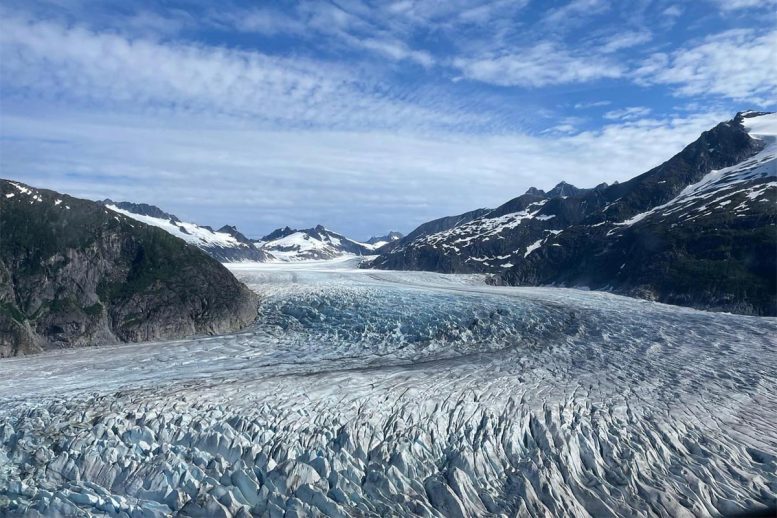
Glaciers carry unique organic carbon fingerprints that reflect geography and pollution, influencing ecosystems downstream.
Florida State University researchers have contributed to the first global study on glacial organic carbon, revealing that no two glaciers are the same—much like the snowflakes that help form them.
The research team, which included postdoctoral scholar Amy Holt and Professor Robert Spencer from the Department of Earth, Ocean, and Atmospheric Science, examined the molecular makeup of organic carbon in meltwater from 136 mountain glaciers across 11 regions on six continents. They discovered that each glacier region has a distinct organic carbon profile. They also found that nearby human activity influences the type of carbon released into rivers, affecting how carbon behaves in surrounding aquatic ecosystems. The results were published in Global Biogeochemical Cycles, a journal of the American Geophysical Union.
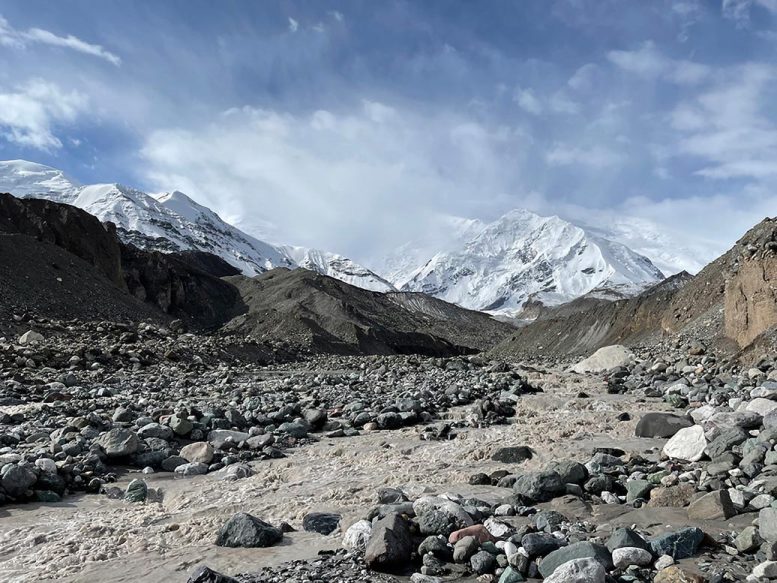
“This work uncovered that glaciers are really diverse, and they likely have variable roles in the carbon cycle, or the planet’s continuous recycling of carbon,” said Holt. “Glaciers and mountain ecosystems are experiencing some of the most extreme effects of climate change. It motivates me to know that my research contributes to our understanding of how these environments may change into the future.”
Mountain glaciers and climate impact
Mountain glaciers, found in alpine regions, are much smaller than the vast ice sheets in Greenland and Antarctica. This research highlights how geographic location influences the type of carbon stored in glaciers and released as they melt. Understanding this process improves our knowledge of how glacial meltwater affects downstream ecosystems, which is vital for the health of global fisheries.
The researchers logged hours of strenuous, high-altitude hiking in extreme weather to collect glacier meltwater samples at the source. Holt visited roughly 40 glacier sites throughout Alaska in North America, Ecuador in South America, and Kyrgyzstan in Central Asia. The remaining sites were in the European Alps, Chile, Greenland, Nepal, New Zealand, Norway, Russia and Uganda. In addition to FSU, members of the 12-scientist team hail from the Swiss Federal Technology Institute of Lausanne and the University of Alaska Southeast.
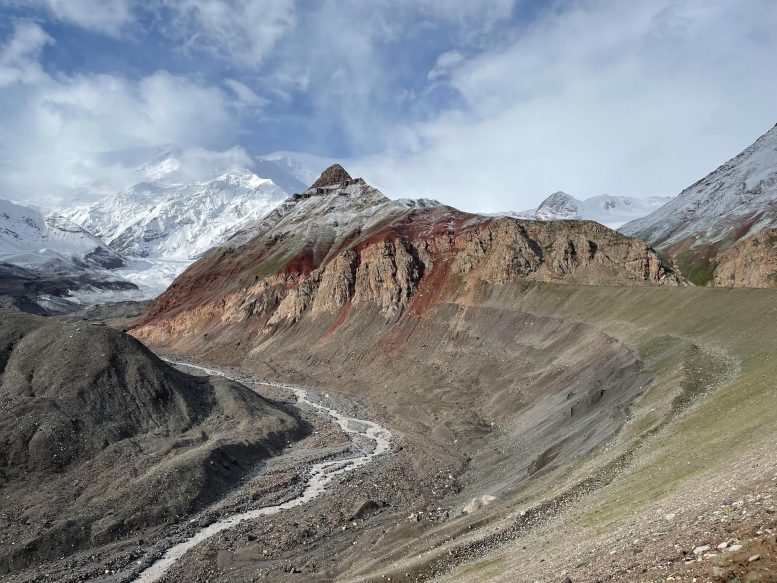
“Many people assume glaciers are hostile, inert environments, but surprisingly, their organic carbon pool is really complex and varied,” said Holt, who completed her doctorate in environmental science at FSU in May 2024 under Spencer’s supervision. “These tiny organic carbon compounds help form the base of aquatic food webs as they can be an energy source for microorganisms, which release carbon back into the atmosphere when they respire.”
Carbon sources and human impact
Glaciers receive organic carbon from a variety of sources, such as microbial activity on the glacier surface, as well as wind-deposited carbon from soils and fossil fuel combustion, which coats the glacier in industrial byproducts. As ice glaciers melt, a process exacerbated by climate change, carbon stored within and on the ice is released to downstream ecosystems.
“There has been huge debate about the source of glacial organic matter globally,” Holt said. “Past studies in different glacier regions have shown glacier organic carbon may be predominantly derived from microbes on the surface, whilst others have suggested it reflects fossil fuel combustion byproducts and recent human activity. This research reconciles these competing perspectives, showing that glacier organic matter is regionally distinct and derived from both sources.”

Areas with a history of industrial activity such as Alaska and Nepal — home to Mount Everest, the world’s highest peak — have higher relative contributions of carbon sourced from fossil fuel combustion as opposed to microbial activity. By contrast, samples from the remote regions of Greenland and New Zealand, for example, where there is less industrial impact, consisted primarily of carbon-containing matter produced by microscopic organisms within the glacial ecosystem.
“In the short term, the material exported in glacier meltwaters may act as a source of biologically available carbon for rapid use by organisms in downstream environments,” Spencer said. “In the long term, many glaciers will decline, shrink and ultimately disappear due to ice loss. There are important ramifications here for receiving waters that include productive fisheries, as changes in the carbon’s sourcing and composition could affect the health and productivity of these ecosystems.”
Reference: “Gradients of Deposition and In Situ Production Drive Global Glacier Organic Matter Composition” by Amy D. Holt, Amy M. McKenna, Anne M. Kellerman, Tom I. Battin, Jason B. Fellman, Eran Hood, Hannes Peter, Martina Schön, Vincent De Staercke, Michail Styllas, Matteo Tolosano and Robert G. M. Spencer, 19 September 2024, Global Biogeochemical Cycles.
DOI: 10.1029/2024GB008212
This research was supported by the National Science Foundation, the Winchester Foundation, the International Associate of Geochemistry, the FSU-headquartered National High Magnetic Field Laboratory, and the NOMIS Foundation, a private Swiss foundation that supports scientific endeavors across disciplines.
Never miss a breakthrough: Join the SciTechDaily newsletter.
Follow us on Google and Google News.