
Close Menu
    Facebook X (Twitter) Instagram
    SciTechDaily
    • Biology
    • Chemistry
    • Earth
    • Health
    • Physics
    • Science
    • Space
    • Technology
    Facebook X (Twitter) Pinterest YouTube RSS
    SciTechDaily
    Home»Space»ASKAP Telescope Predicted to Find 700,000 New Galaxies
    Space

    ASKAP Telescope Predicted to Find 700,000 New Galaxies

    By International Center for Radio Astronomy ResearchNovember 9, 2012No Comments4 Mins Read
    Facebook Twitter Pinterest Telegram LinkedIn WhatsApp Email Reddit
    Share
    Facebook Twitter LinkedIn Pinterest Telegram Email Reddit
    simulated galaxies ASKAP surveys WALLABY and DINGO
    The simulated galaxies ASKAP surveys WALLABY and DINGO are predicted to find. WALLABY will survey a large portion of the sky and DINGO will survey a smaller section but in much greater detail. Credit: Derek K Gerstmann, ICRAR; Alan R. Duffy, ICRAR; Martin J. Meyer, ICRAR; Lister Staveley-Smith, ICRAR; Maksym Bernyk, Swinburne University of Technology; Darren J. Croton, Swinburne University of Technology; Barbel S. Koribalski, CSIRO; Stefan Westerlund, ICRAR and Andreas Wicenec, ICRAR

    Scientists are predicting that the new ASKAP galaxy surveys, WALLABY and DINGO, will find an amazing 700,000 new galaxies, spread over trillions of cubic light years of space.

    Australia’s newest radio telescope is predicted to find an unprecedented 700,000 new galaxies, say scientists planning for CSIRO’s next-generation Australian Square Kilometer Array Pathfinder (ASKAP).

    In a paper to be published Sunday in the Monthly Notices of the Royal Astronomical Society, Australian researchers have combined computer simulations with ASKAP’s specifications to predict the new telescope’s extraordinary capabilities.
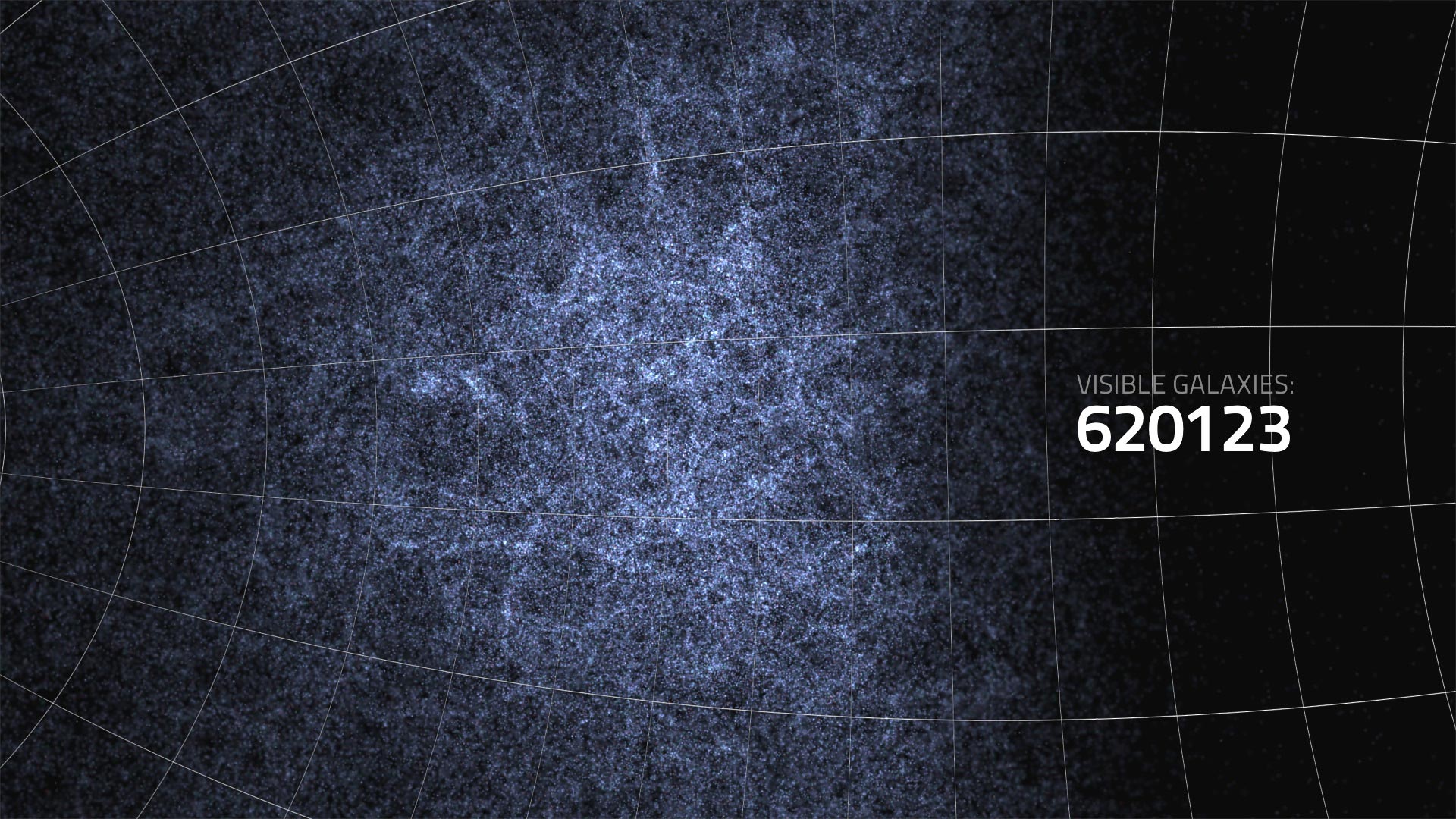
    WALLABY Simulation
    A still from the simulation fly-through video showing the galaxies WALLABY is predicted to find. Credit: Derek K Gerstmann, ICRAR; Alan R. Duffy, ICRAR; Martin J. Meyer, ICRAR; Lister Staveley-Smith, ICRAR; Maksym Bernyk, Swinburne University of Technology; Darren J. Croton, Swinburne University of Technology; Barbel S. Koribalski, CSIRO; Stefan Westerlund, ICRAR and Andreas Wicenec, ICRAR

    “ASKAP is a highly capable telescope. Its surveys will find more galaxies, further away and be able to study them in more detail than any other radio telescope in the world until the SKA Is built,” said Dr. Alan Duffy from The University of Western Australia node of the International Center for Radio Astronomy Research.

    “Our simulation is similar to testing a Formula 1 car in a wind tunnel before using it on the track.”

    ASKAP will start scanning southern skies in 2013 as a forerunner to the massive Square Kilometer Array (SKA), which will be shared between Australia-New Zealand and Southern Africa.
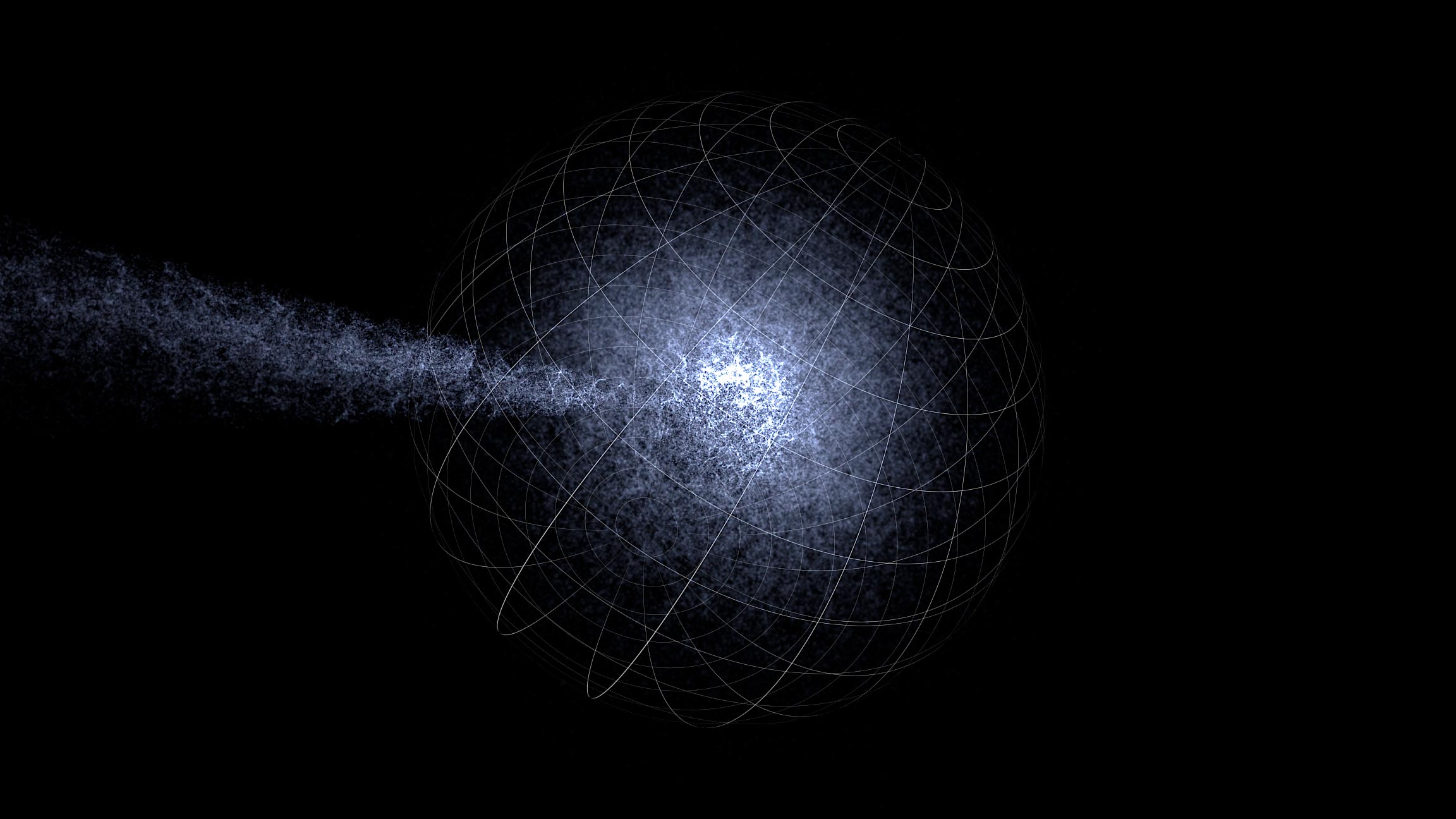
    WALLABY 3D View
    A 3 Dimensional view of the WALLABY and DINGO survey simulations. Credit: Derek K Gerstmann, ICRAR; Alan R. Duffy, ICRAR; Martin J. Meyer, ICRAR; Lister Staveley-Smith, ICRAR; Maksym Bernyk, Swinburne University of Technology; Darren J. Croton, Swinburne University of Technology; Barbel S. Koribalski, CSIRO; Stefan Westerlund, ICRAR and Andreas Wicenec, ICRAR

    Dr. Duffy said two ASKAP surveys, WALLABY and DINGO, would examine galaxies to study hydrogen gas – the fuel that forms stars – and how those galaxies had changed in the last 4 billion years, allowing us to better understand how our own galaxy, the Milky Way, grew.

    “We predict that WALLABY will find an amazing 600,000 new galaxies and DINGO 100,000, spread over trillions of cubic light years of space.”

    Dr. Duffy said the new ASKAP galaxy surveys would also allow astronomers to probe the nature of one of astronomy’s greatest mysteries – Dark Energy.


    A fly-through video of the galaxies ASKAP is expected to discover in the WALLABY and DINGO surveys.

    Combining a large simulation of the Universe with new theories of galaxy formation − including the effects of supermassive black holes − had led scientists to accurately predict where as-yet undiscovered galaxies should be located, Dr. Duffy said.

    “We calculated how much of the model Universe ASKAP could observe using details of the telescope’s capabilities,” said co-author Dr Baerbel Koribalski, who has recently been appointed as an Office of the Chief Executive Science Leader at the CSIRO.
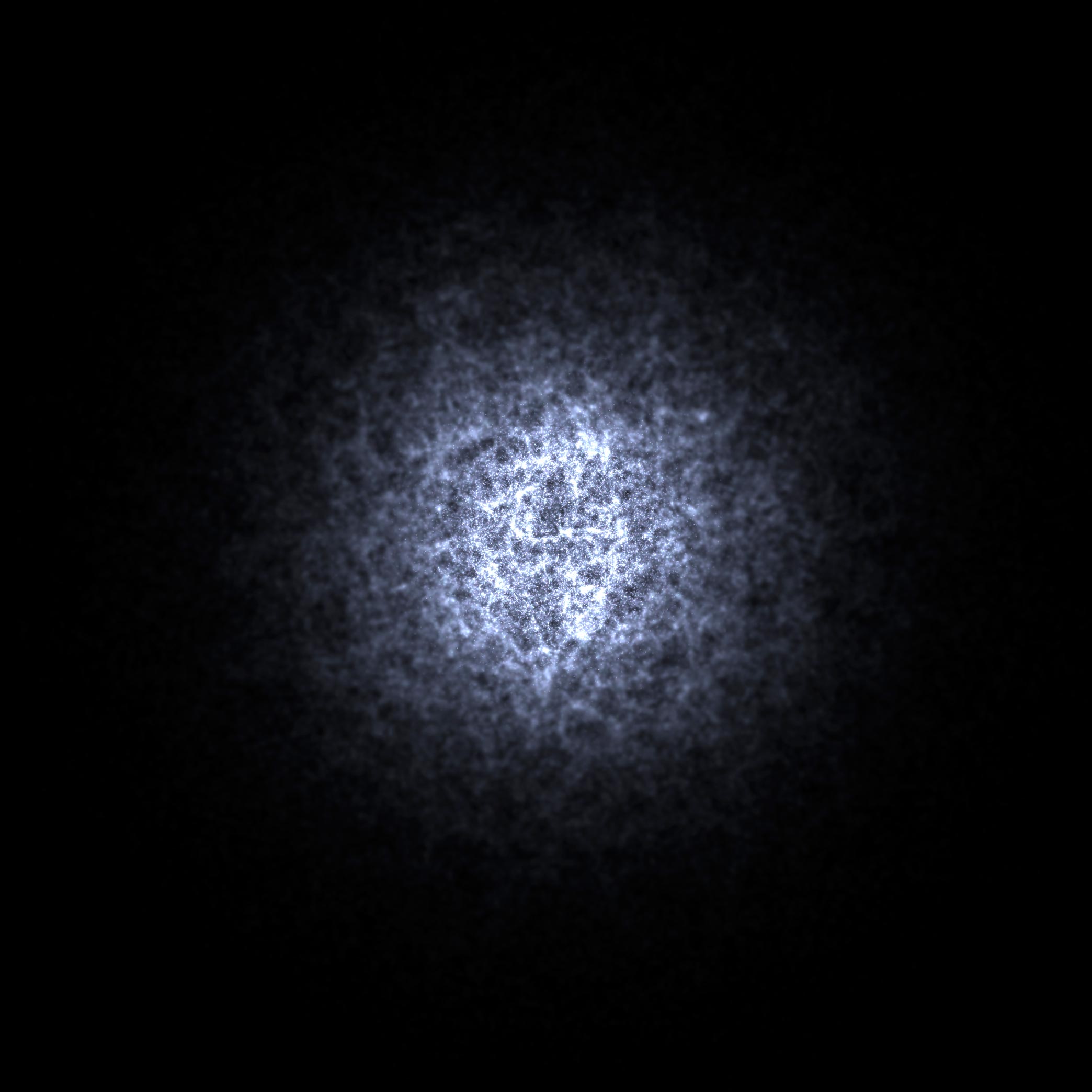
    WALLABY Galaxies
    The galaxies WALLABY is predicted to discover. Credit: Derek K Gerstmann, ICRAR; Alan R. Duffy, ICRAR; Martin J. Meyer, ICRAR; Lister Staveley-Smith, ICRAR; Maksym Bernyk, Swinburne University of Technology; Darren J. Croton, Swinburne University of Technology; Barbel S. Koribalski, CSIRO; Stefan Westerlund, ICRAR and Andreas Wicenec, ICRAR

    Co-author Associate Professor Darren Croton from Swinburne University of Technology also said the predictions would be used to help scientists refine how to handle the large quantity of data ASKAP will produce and test theories of galaxy formation.

    “If we don’t see this many galaxies, then the Universe is strangely different to our simulations,” Associate Professor Croton said.

    ASKAP will become part of the world’s largest telescope – the SKA.

    Reference: “Predictions for ASKAP neutral hydrogen surveys” by Alan R. Duffy, Martin J. Meyer, Lister Staveley-Smith, Maksym Bernyk, Darren J. Croton, Bärbel S. Koribalski, Derek Gerstmann and Stefan Westerlund, 11 November 2012, Monthly Notices of the Royal Astronomical Society.
    DOI: 10.1111/j.1365-2966.2012.21987.x

    ICRAR is a joint venture between Curtin University and The University of Western Australia providing research excellence in the field of radio astronomy.

    Never miss a breakthrough: Join the SciTechDaily newsletter.
    Follow us on Google and Google News.

    Astronomy International Center for Radio Astronomy Research Telescope
    Share. Facebook Twitter Pinterest LinkedIn Email Reddit

    Related Articles

    Astronomers Reveal Incredible New View of the Milky Way

    Astronomers Discover Colossal Cosmic “Bridge” Linking Galaxies Across Space

    Discovery on Overdrive: Australia’s New Tech Uncovers Mysterious Signals From Deep Space

    Astronomers Detect Powerful “Galactic Space Laser” Five Billion Light Years From Earth

    Astronomy Team Discovers Companion Galaxy to NGC 4449

    Giant Magellan Telescope Gets Seven 28-Foot Mirrors and Adaptive Optics

    VISTA Telescope Uses IR to Show Helix Nebula In New Light

    Adaptive Optics Will Put Gemini Twin Telescopes at the Forefront of Astronomy Again

    SN Primo Is Farthest Type Ia Supernova Discovered

    Leave A Reply Cancel Reply

    • Facebook
    • Twitter
    • Pinterest
    • YouTube

    Don't Miss a Discovery

    Subscribe for the Latest in Science & Tech!

    Trending News

    This Copper Drug Clears Alzheimer’s Brain Toxins and Boosts Memory

    Adults Over 65 Lost Massive Amounts of Weight With Ozempic

    How Flocking Birds “Defy” One of Physics’ Most Fundamental Laws

    Physicists Create a New Kind of Schrödinger’s Cat State From Exotic Quantum Building Blocks

    Your Diet Could Be Missing the Key Ingredient for Heart Protection

    Researchers Warn Widely Prescribed Blood Pressure Drugs Could Be Harming Diabetic Kidneys

    James Webb Spots Something Strange Between Day and Night on an Alien Planet

    How Ancient People Moved a 6-Ton Stone 700 Kilometers to Stonehenge

    Follow SciTechDaily
    • Facebook
    • Twitter
    • YouTube
    • Pinterest
    • Newsletter
    • RSS
    SciTech News
    • Biology News
    • Chemistry News
    • Earth News
    • Health News
    • Physics News
    • Science News
    • Space News
    • Technology News
    Recent Posts
    • Scientists Just Found Something Weird Inside Moss
    • Scientists Just Repeated a Nobel Prize-Winning Experiment in a Creature Older Than Jellyfish
    • Scientists Finally Uncover Why Solid-State Batteries Short-Circuit
    • Scientists Discover the “Achilles’ Heel” of Two of the World’s Deadliest Diarrhea Bacteria
    • Why Older Adults Need To Pay Closer Attention to Vitamin B12
    Copyright © 1998 - 2026 SciTechDaily. All Rights Reserved.
    • Science News
    • About
    • Contact
    • Editorial Board
    • Privacy Policy
    • Terms of Use

    Type above and press Enter to search. Press Esc to cancel.