
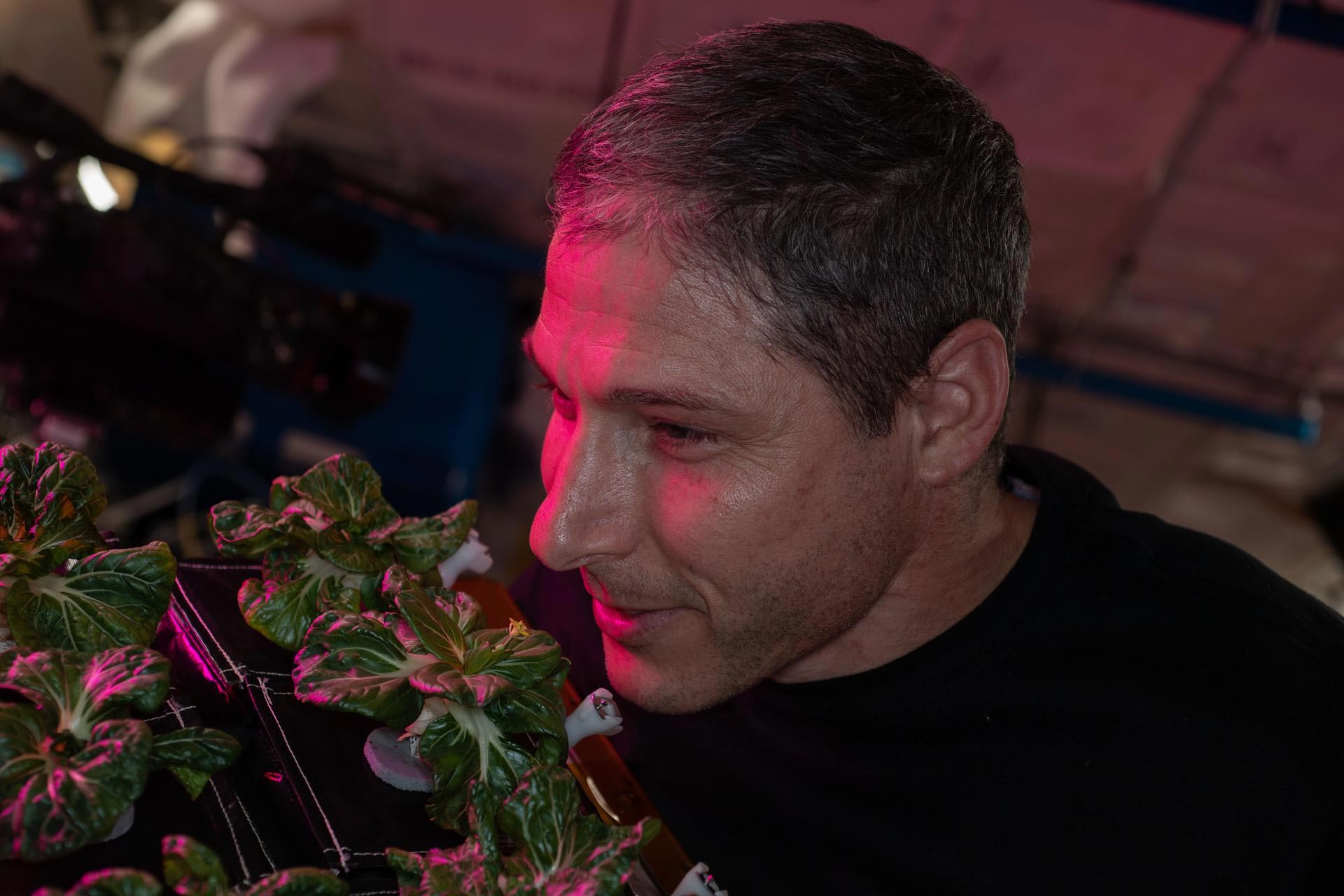
Astronauts are growing and eating student-selected crops in space—preparing for future missions beyond Earth.
Astronauts on the International Space Station recently enjoyed a fresh supply of leafy greens, thanks in large part to the efforts of Expedition 64 crew member Michael Hopkins.
NASA’s SpaceX Crew-1 mission commander took the lead on conducting four Vegetable Production System (Veggie) experiments, with the last two wrapping up after an April 13 harvest. VEG-03K and VEG-03L tested a new space crop, ‘Amara’ mustard, and a previously grown crop, ‘Extra Dwarf’ pak choi. They were grown for 64 days, the longest leafy greens have grown on station.
Pollinating Plants in Microgravity
The pak choi grew for so long that it began to flower as part of its reproduction cycle. Hopkins’ efforts in eclipsing the mark included using a small paintbrush to pollinate plant flowers. He decided on that approach after speaking with Kennedy’s Matt Romeyn, a space crop production project scientist and science lead on the four plant experiments. They discussed multiple options, including just letting the flowers self-pollinate.
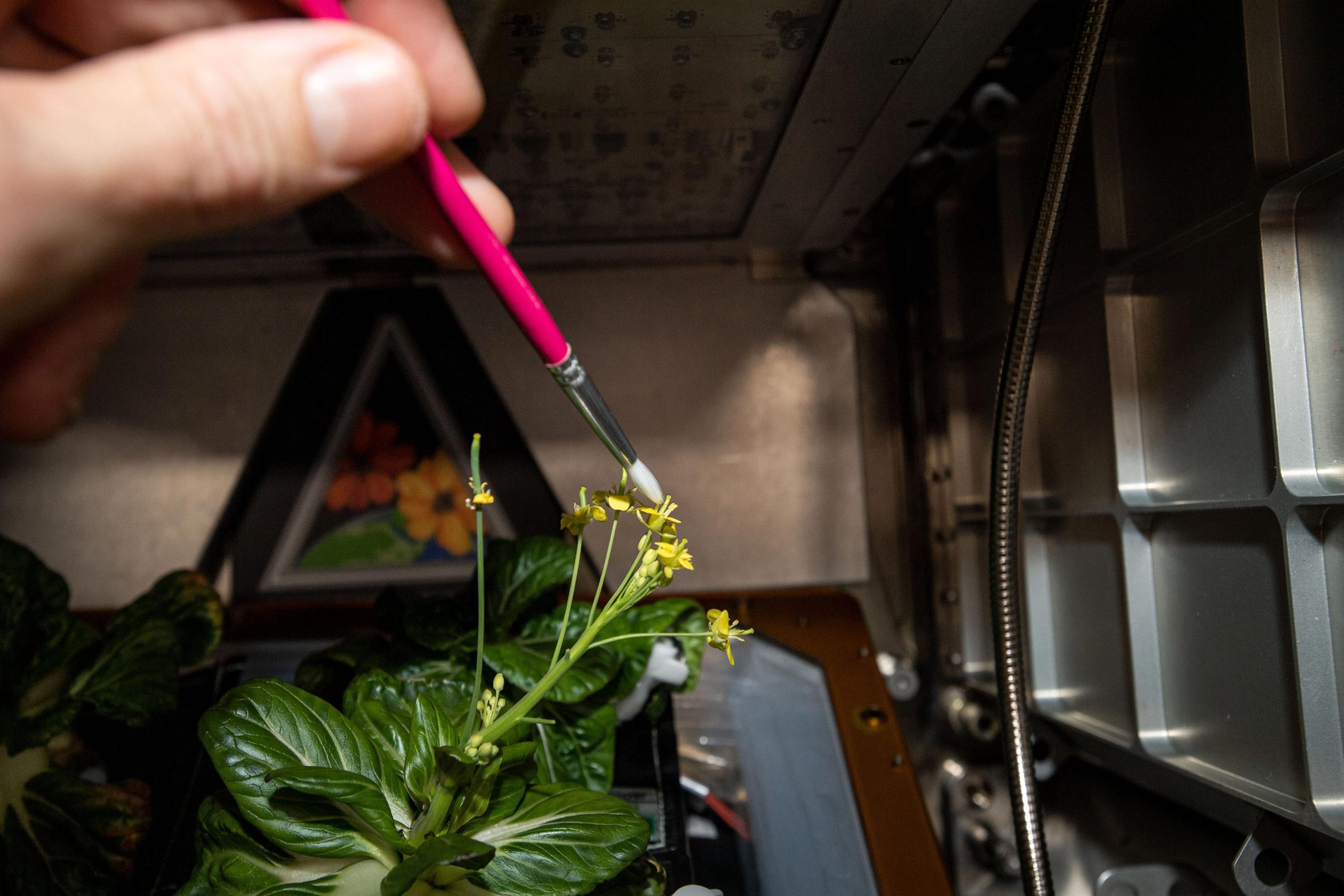
“I wasn’t all at surprised that he chose this route to make sure the plants were fully pollinated because he has always wanted to be very involved,” Romeyn said. “After he used the paintbrush, we saw a high seed production rate.”
This experimentation is important because fruit crops require pollination, and crews need to understand how the process works in microgravity and, eventually, in reduced gravity. Fruit will head to the station soon, when Kennedy sends pepper seeds to the space station later this year as part of the Plant Habitat-04 experiment. The pepper seeds will fly on SpaceX’s 22nd Commercial Resupply Services mission and will grow in the Advanced Plant Habitat. A VEG-05 experiment with dwarf tomatoes also is planned for Veggie next year.
Maximizing Yields and Flavor in Orbit
Multiple harvests from the most recent experiments maximized the amount of produce Hopkins grew, and the crew used the greens to add variety to their meals. Hopkins ate the pak choi as a side dish, with leaves marinated in an empty tortilla package. He added soy sauce and garlic, and put it in a small food warmer for 20 to 30 minutes. Astronauts have been enjoying the Amara mustard “like a lettuce wrap,” Hopkins explained, adding ingredients such as chicken, soy sauce, and balsamic vinegar.
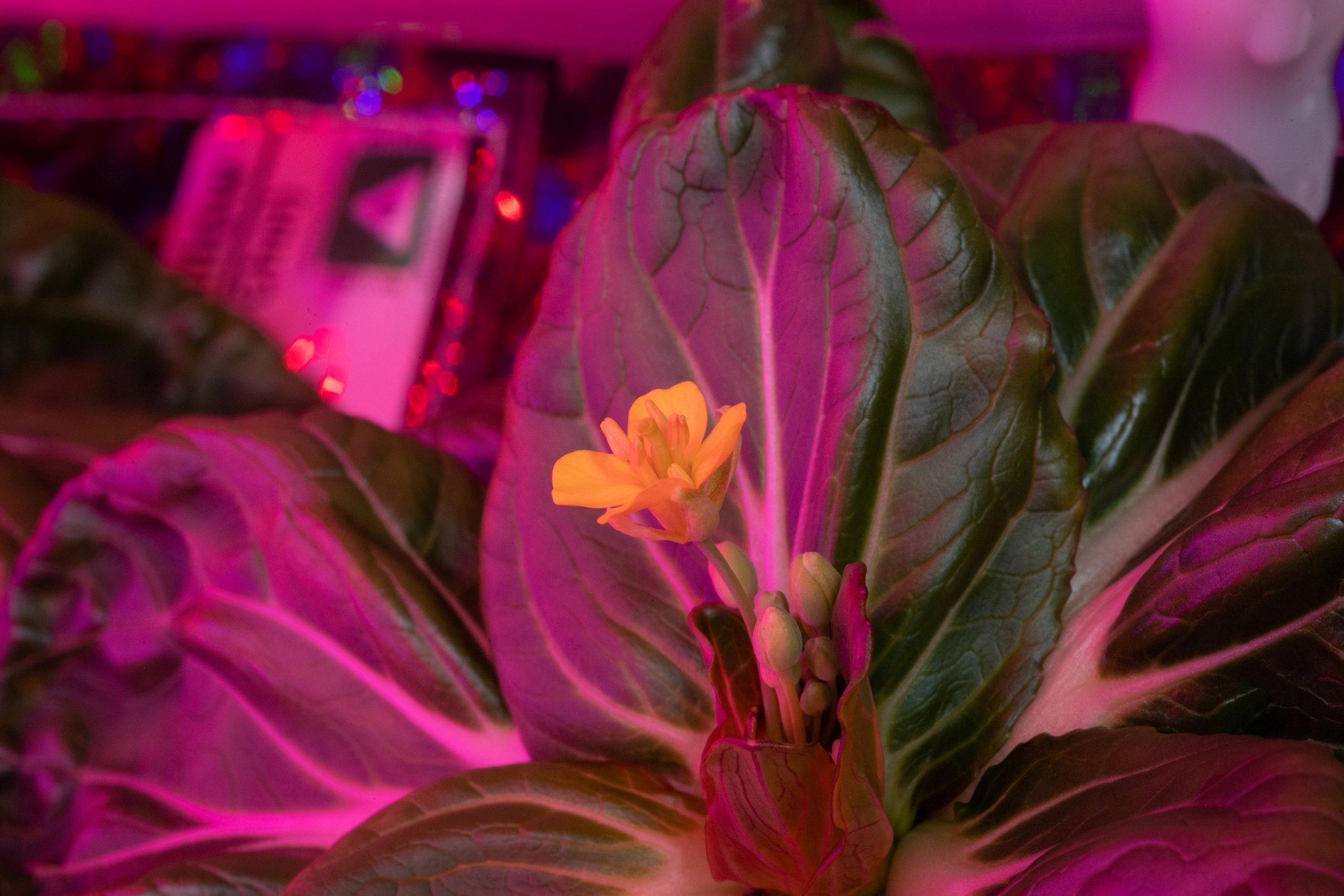
“Delicious, plus the texture or crunch,” he wrote in the experiment notes after sampling Amara mustard grown in space.
“That’s mission accomplished for us right there … doing sustained crop production on station is an important demonstration for later missions beyond low-Earth orbit,” Romeyn said. “The crew is enjoying growing them, they’re enjoying eating them, and these are the exact kind of crops we can send on a long-duration lunar stay to provide supplemental nutrition. Everything we learn on station and the Moon will eventually enable doing this en route to Mars someday.”
While the astronauts’ pre-packaged food offers variety and nutrition, fresh crops deliver an appealing addition. Hopkins said the plants were a much appreciated “connection to Earth” and that connection is one reason he uses his personal time to be a space gardener.
On Jan. 4, Hopkins initiated two experiments, VEG-03I, which involved the first successful plant transplants in space, and VEG-03J, which featured the use of new seed film developed at Kennedy. He harvested both experiments on February 2. Less than a week later, he began growing VEG-03K and VEG-03L.
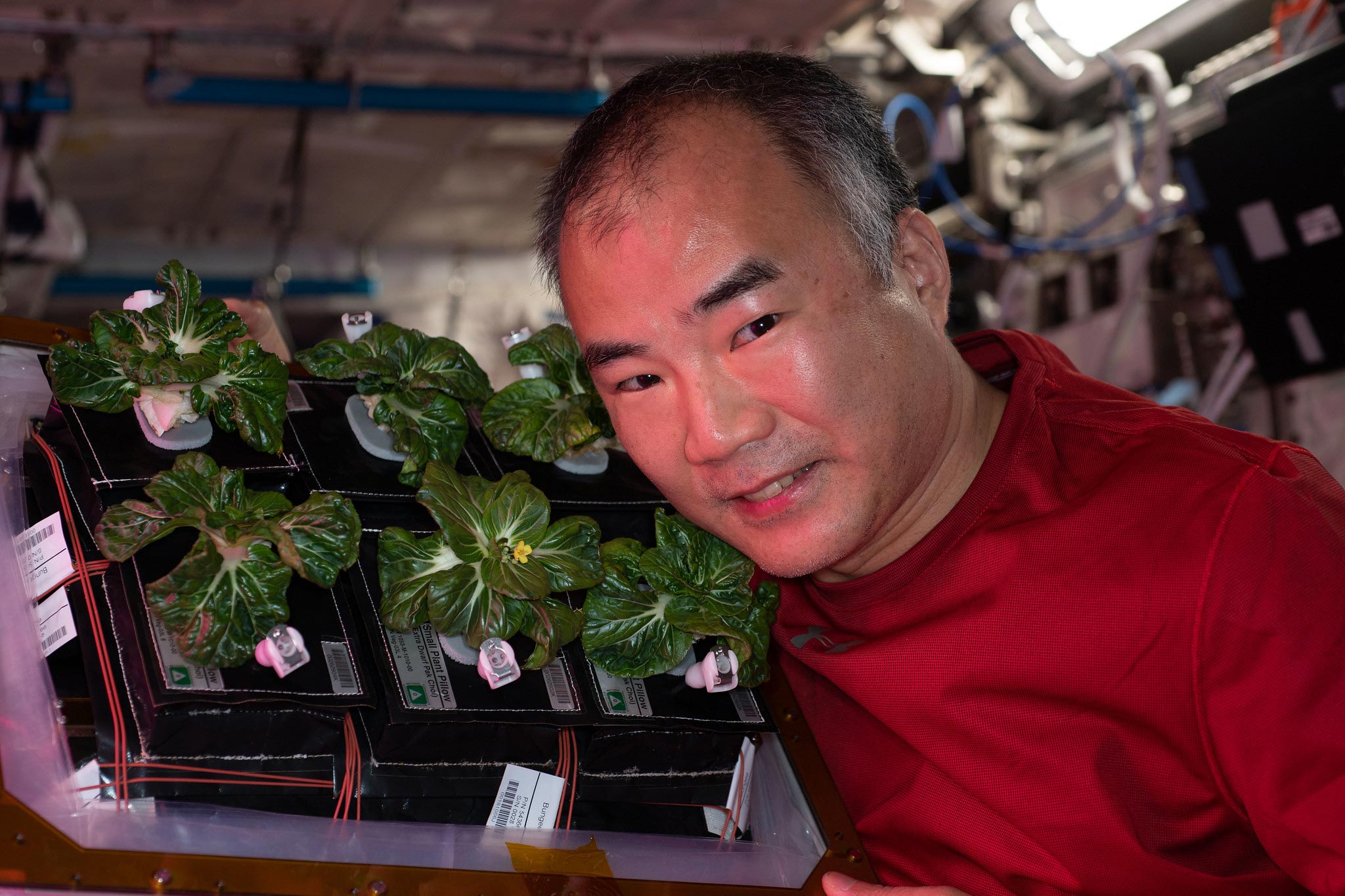
“He has been a huge advocate from the get-go,” said Kennedy Life Sciences Plant Scientist Gioia Massa, adding that NASA astronaut Kate Rubins also has been involved in the Veggie experiments. “We have such passionate and enthusiastic astronauts who are incredibly supportive of this research.”
First Plant Transplants and Unexpected Growth Benefits
Growing these crops has been challenging at times. During VEG-03I, two plant pillows containing ‘Outredgeous’ Red Romaine and ‘Dragoon’ lettuce seeds were growing far slower than the other plants and would not have caught up by harvest time. With guidance from Veggie program scientists at Kennedy, Hopkins transplanted extra sprouts from the thriving plant pillows into two of the struggling pillows. The scientists were pleasantly surprised to learn microgravity appeared to benefit the plants, paving the way for potential future development.
The ‘Extra Dwarf’ pak choi, which had been grown in Veggie twice previously with less favorable results, flourished this time around. Its success is shared by middle school and high school students, who selected the plant as a result of the Growing Beyond Earth program. The classroom-based science project operates in partnership with NASA to test numerous candidate plant varieties in schools throughout the country.
“This variety (of pak choi) was sent specifically because the students tested it and found that it worked really well,” Massa said. “Now it’s being grown and eaten – and enjoyed – by astronauts. That’s not something that happens to most students. They are shaping NASA research.”
The Biological and Physical Sciences Division of NASA’s Science Mission Directorate at NASA Headquarters in Washington led development of Veggie and the APH, and regularly solicits research investigations to be performed in them.
Never miss a breakthrough: Join the SciTechDaily newsletter.
Follow us on Google and Google News.