

A new low-frequency radio image offers the most comprehensive view yet of the Milky Way’s southern sky.
Astronomers at the International Center of Radio Astronomy Research (ICRAR) have produced the most detailed low-frequency radio color image of the Milky Way created to date.
This striking new image presents the Milky Way as seen from the Southern Hemisphere, capturing the Galaxy across a broad range of radio wavelengths, often described as different ‘colors’ of radio light.
The image opens up new opportunities for astronomers to study how stars are born, how they evolve over time, and how they end their lives within our Galaxy.
Building the image at scale
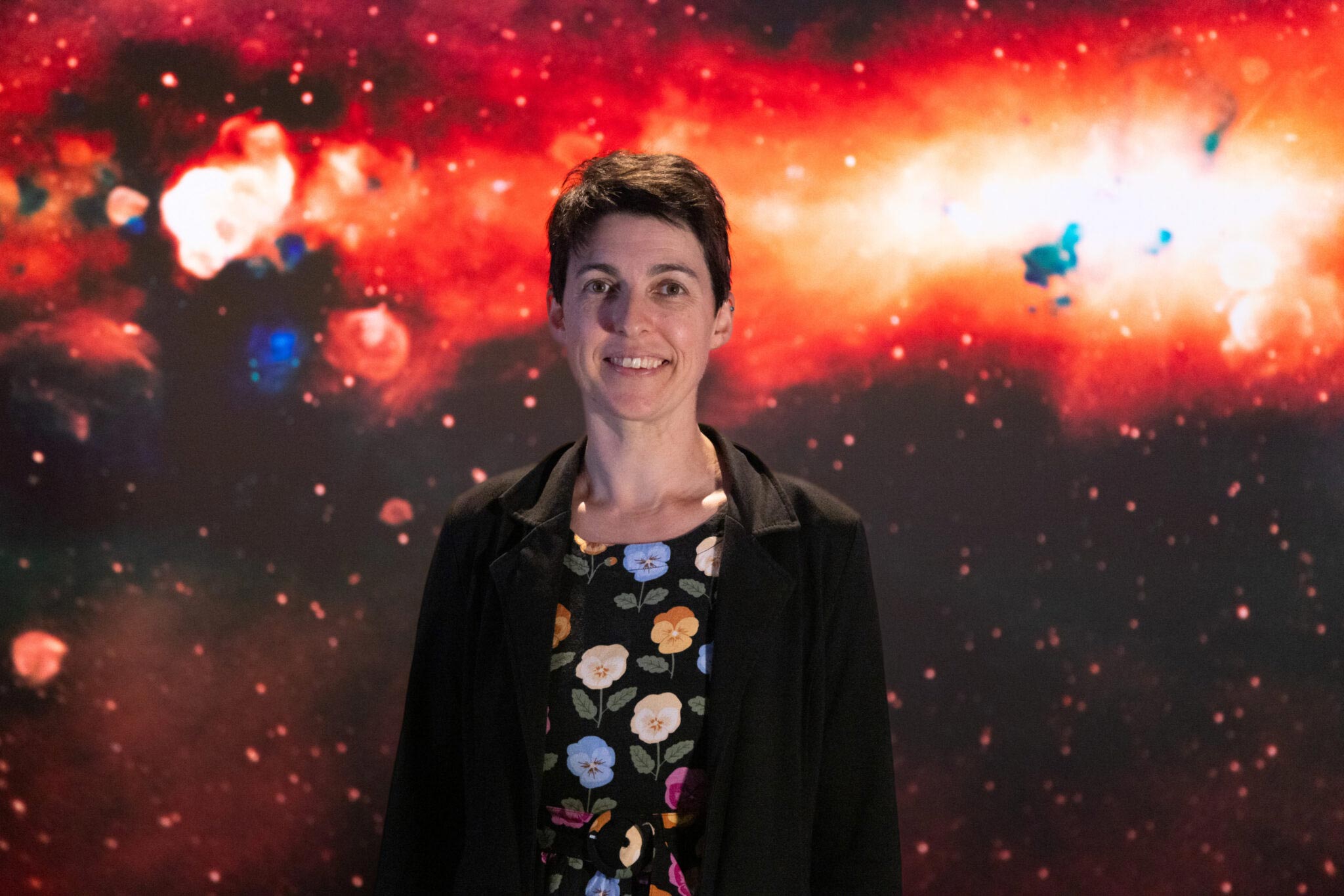
Silvia Mantovanini, a PhD student based at the Curtin University node of ICRAR, spent 18 months assembling the image. The work required around 1M CPU hours, using supercomputers at the Pawsey Supercomputing Research Centre to process and combine data from two large radio surveys.
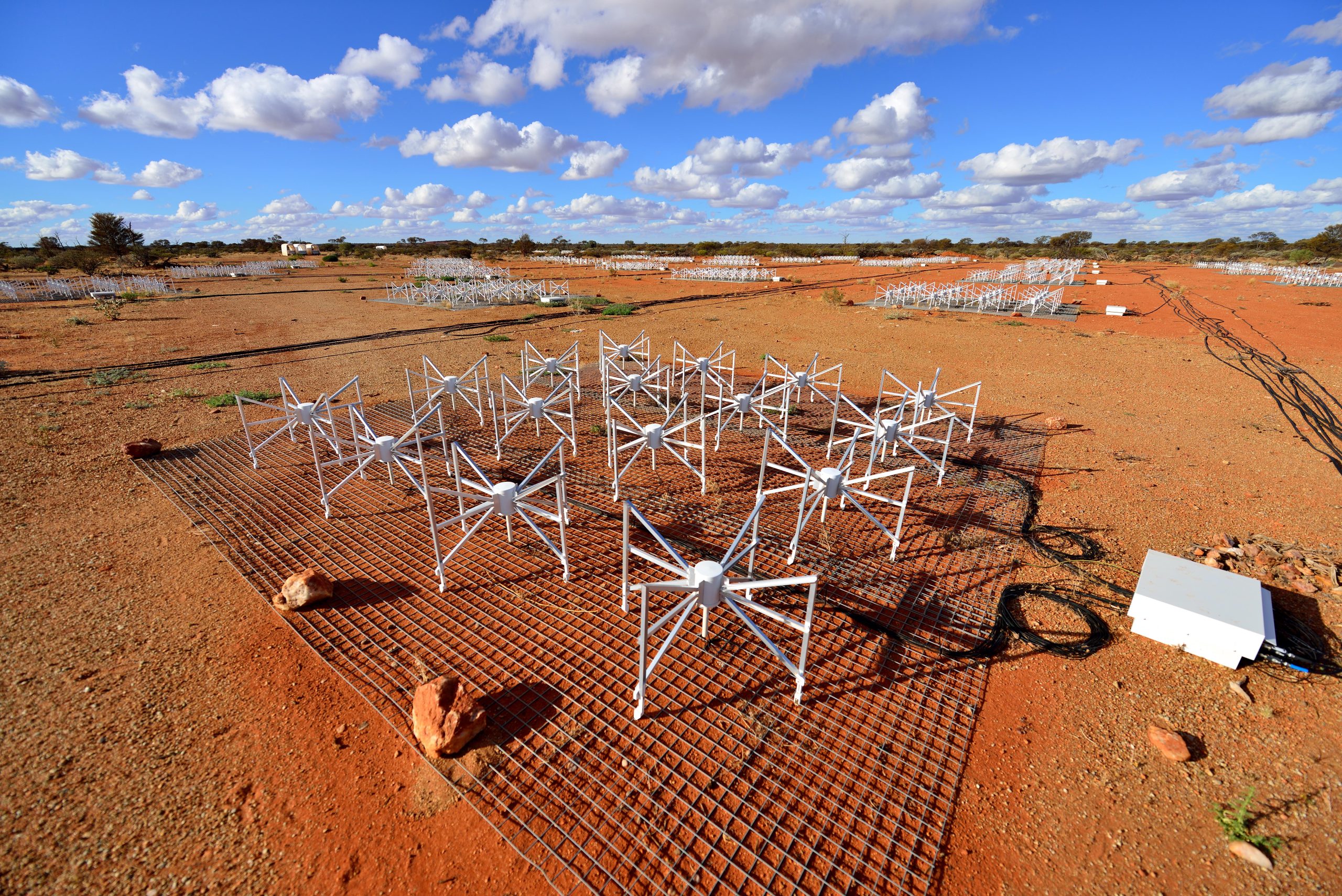
Both surveys were carried out with the Murchison Widefield Array (MWA) telescope, located at Inyarrimanha Ilgari Bundara, the CSIRO Murchison Radio-Astronomy Observatory on Wajarri Yamaji Country in Western Australia.
The datasets came from the GaLactic and Extragalactic All-sky MWA (GLEAM) survey and its extension, GLEAM-X (GLEAM eXtended). These observations were collected over 28 nights in 2013 and 2014, followed by a further 113 nights between 2018 and 2020.
Sharper data unlocks galactic detail
Focusing specifically on the Milky Way, the new image delivers major improvements over the previous GLEAM release from 2019. It achieves twice the resolution, ten times the sensitivity, and covers double the area of the earlier image.
These gains in resolution, sensitivity, and sky coverage allow astronomers to examine the structure of the Galaxy in far greater detail, providing a rich source of new information and scientific insight.

“This vibrant image delivers an unparalleled perspective of our Galaxy at low radio frequencies,” Ms Mantovanini said.
“It provides valuable insights into the evolution of stars, including their formation in various regions of the Galaxy, how they interact with other celestial objects, and ultimately their demise.”

Bottom: The same area of the Milky Way in visible light. Credit: Axel Mellinger
Tracing stellar life and death
Ms Mantovanini’s research focuses on supernova remnants, the expanding clouds of gas and energy left behind when a star explodes at the end of its life. Although hundreds of these remnants have been discovered so far, astronomers suspect that thousands more are waiting to be found.

The image allows them to distinguish between the gas surrounding new stars and that left behind by dead ones, revealing clearer patterns in the cosmic landscape.
“You can clearly identify remnants of exploded stars, represented by large red circles. The smaller blue regions indicate stellar nurseries where new stars are actively forming,” Ms Mantovanini said.
The image may also help unravel the mysteries surrounding pulsars in our Galaxy. By measuring the brightness of pulsars at different GLEAM-X frequencies, astronomers hope to gain a deeper understanding of how these enigmatic objects emit radio waves and where they exist within our Galaxy.
Credit: International Centre for Radio Astronomy Research
Associate Professor Natasha Hurley-Walker from the same ICRAR team, who is the principal investigator of the GLEAM-X survey, emphasized how this is a big step forward in studying the Milky Way’s structure.
“This low-frequency image allows us to unveil large astrophysical structures in our Galaxy that are difficult to image at higher frequencies,”
“No low-frequency radio image of the entire Southern Galactic Plane has been published before, making this an exciting milestone in astronomy.”
A milestone before the next generation
“Only the world’s largest radio telescope, the SKA Observatory’s SKA-Low telescope, set to be completed in the next decade on Wajarri Yamaji Country in Western Australia, will have the capacity to surpass this image in terms of sensitivity and resolution,” concluded Associate Professor Hurley-Walker.
The surveys involved hundreds of hours of data collection using the MWA radio telescope located at Inyarrimanha Ilgari Bundara, the CSIRO Murchison Radio-astronomy Observatory. The ICRAR researchers catalogued an impressive 98,000 radio sources across the Galactic Plane visible from the southern hemisphere, showcasing a diverse mix of pulsars, planetary nebulae, compact HII regions – which are dense, ionized gas clouds in space – and distant galaxies unrelated to the Milky Way.
Reference: “GaLactic and extragalactic all-sky Murchison Widefield Array survey eXtended (GLEAM-X) III: Galactic plane” by Silvia Mantovanini, Natasha Hurley-Walker, Kathryn Ross, Stefan Duchesne, Gemma Anderson and Timothy James Galvin, 28 October 2025, Publications of the Astronomical Society of Australia.
DOI: 10.1017/pasa.2025.10094
Never miss a breakthrough: Join the SciTechDaily newsletter.
Follow us on Google and Google News.