
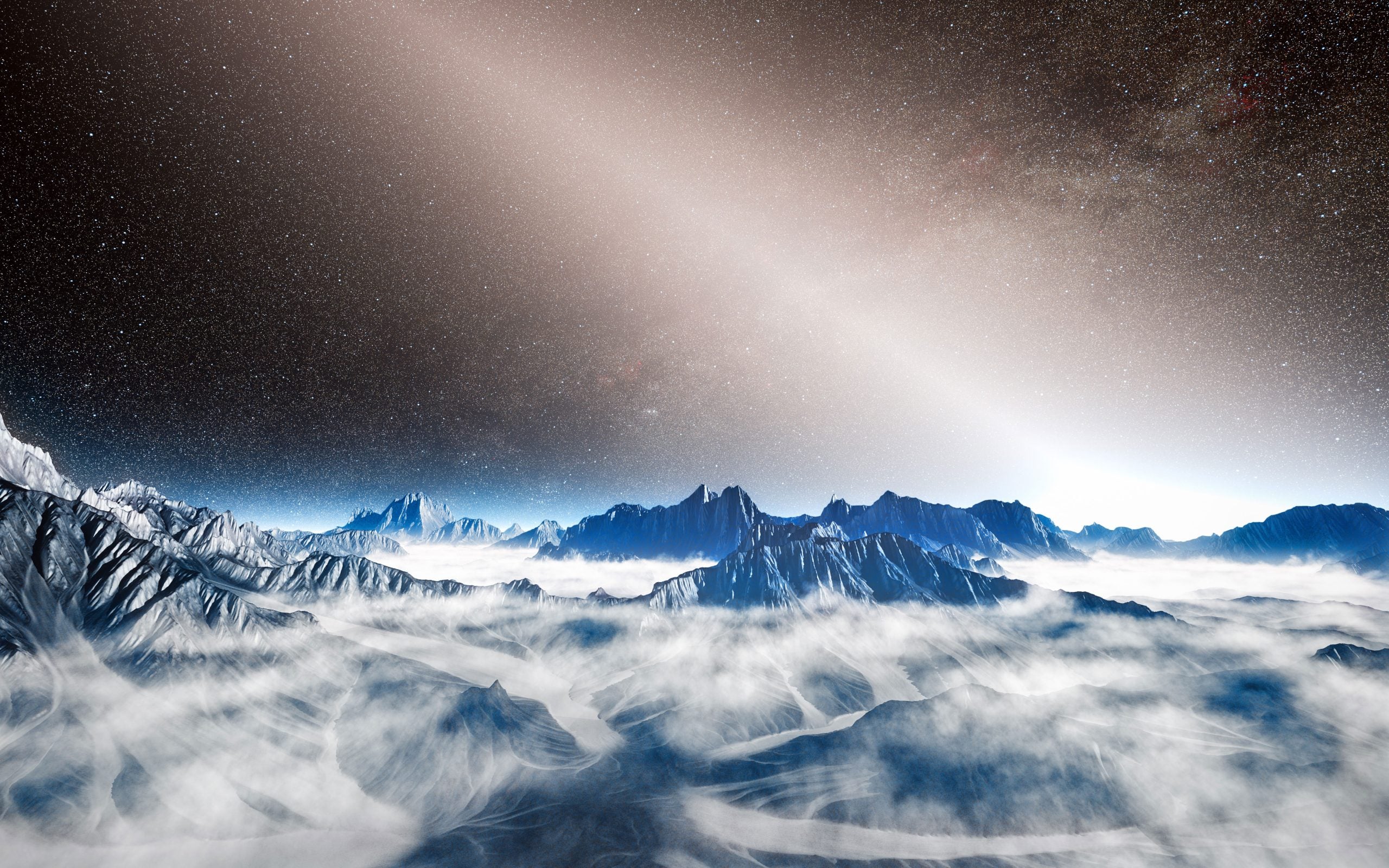
Drawing on the University of Arizona’s renowned strength in interferometry, astronomers from Steward Observatory are leading an effort to unravel the decades-old mystery of the “hot dust” found around certain stars.
Seventy light-years away, the star Kappa Tucanae A hosts one of the most puzzling discoveries in modern astronomy: dust heated to more than 1,000 degrees Fahrenheit that survives extremely close to the star. At such distances, the material should either vaporize or be pushed out of the system almost immediately. Researchers at the University of Arizona have now identified a possible explanation. They found a companion star moving through the same region where the unusual dust remains, offering an important clue to how this material persists.
The finding, reported in the Astronomical Journal and led by Thomas Stuber, a postdoctoral research associate at the U of A’s Steward Observatory, marks the highest-contrast detection of a stellar companion ever made with the European Southern Observatory’s MATISSE instrument. This result gives scientists an invaluable natural setting in which to examine hot exozodiacal dust, a type of material that can interfere with efforts to detect potentially habitable planets around distant stars.
Hot exozodiacal dust continues to challenge researchers who study how planetary systems form and evolve. These grains, as tiny as the particles rising from a fire, orbit so close to their host stars that they should vanish almost immediately under extreme temperatures and strong radiation pressure.
A Dusty Paradox Near Habitable Worlds
“If we see dust in such large amounts, it needs to be replaced rapidly, or there needs to be some sort of mechanism that extends the lifetime of the dust,” Stuber said.
The mystery deepens when considering that this kind of dust appears around stars targeted in the search for Earth-like planets. NASA’s future Habitable Worlds Observatory (HWO), expected to launch in the 2040s, will rely on coronagraphs to block starlight and reveal faint exoplanets. However, hot dust can scatter light in a way researchers call “coronagraphic leakage”, which may obscure the very signals scientists hope to detect. Gaining a clearer understanding of how this dust forms and survives will be essential for guiding exoplanet research in the decades ahead.
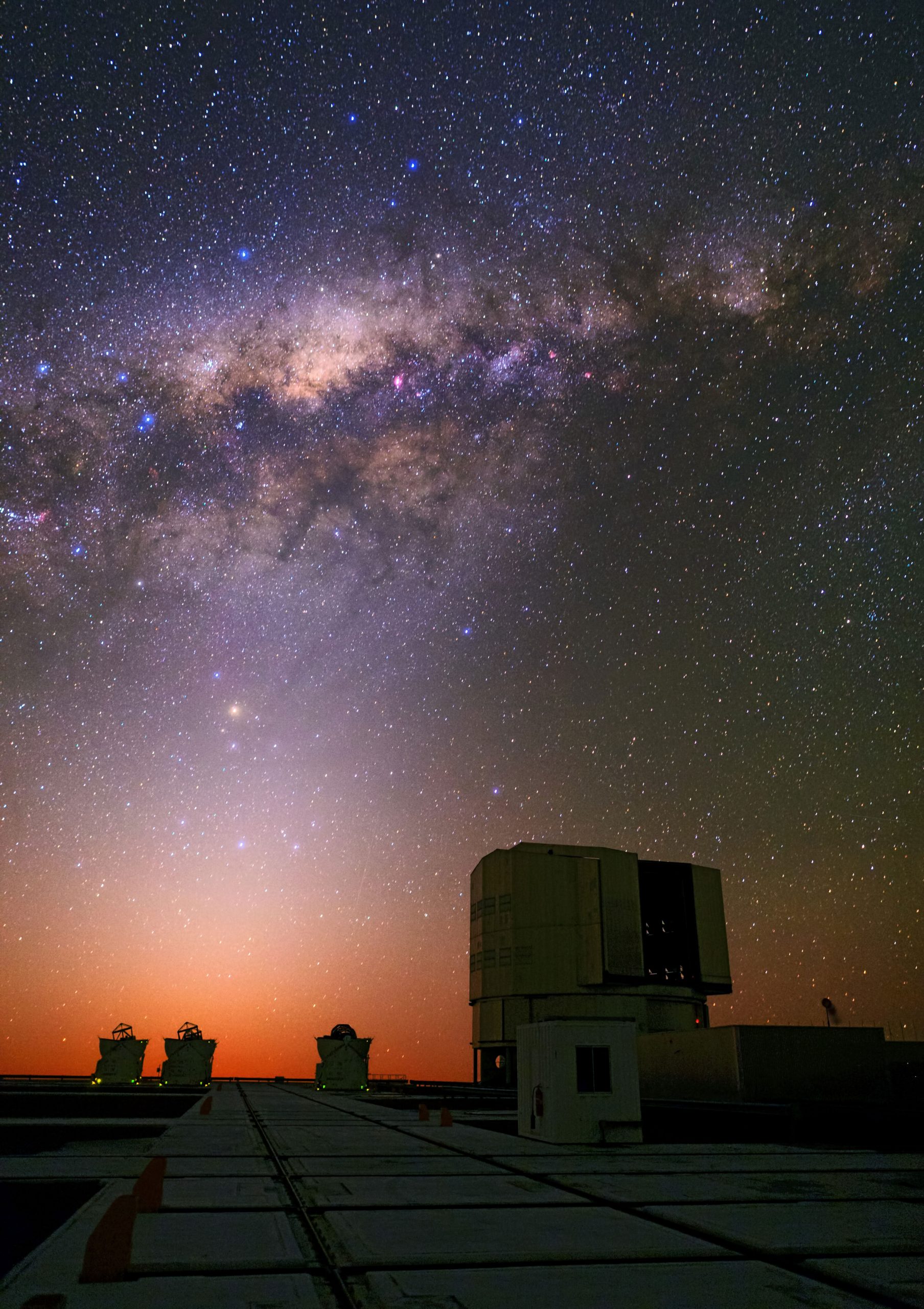
Using a technique called interferometry, which combines light from multiple telescopes to achieve the resolution of a single, much larger telescope, Stuber’s team made repeated observations of Kappa Tucanae A between 2022 and 2024. Having led exozodiacal dust research around the world for over a decade before coming together for this project, the international team expected to study the dust’s behavior over time. Instead, the researchers discovered something entirely unexpected: a stellar companion locked in a highly eccentric orbit that brings it within 0.3 astronomical units of the primary star—closer than any planet in our solar system gets to the sun.
A Dynamic Stellar Laboratory
This discovery transforms Kappa Tucanae A from a puzzling system into a complex stellar laboratory, according to Stuber. The companion star follows an extremely elliptical path, swinging far out into the system before diving back through the dust-rich inner region.
“There’s basically no way that this companion is not somehow connected to that dust production,” notes Steward Observatory Associate Astronomer Steve Ertel, a co-author on the paper. “It has to be dynamically interacting with the dust.”
This breakthrough builds on decades of technological leadership at Steward Observatory in interferometry. The observatory’s Large Binocular Telescope Interferometer (LBTI), funded by NASA and built on Mount Graham, revolutionized the search for warm exozodiacal dust, the less extreme sibling of hot dust, with its unprecedented stability and sensitivity.
A Global Network of Expertise
The LBTI’s unique capabilities propelled Steward to international prominence in the study of exozodiacal dust, attracting major NASA, NSF, and philanthropic funding and positioning the observatory at the forefront of exoplanet research. Now, that expertise is being leveraged for the next generation of instruments, including a new European nulling interferometer that will be 50 times more sensitive than previous observations.
The lineage runs deep: Denis Defrère, who leads the European instrument development, was previously trained at Steward as a postdoctoral researcher, where he helped build the LBTI.
“Steward has established itself as the global leader to this kind of research, which is really critical for exo-Earth imaging,” said Ertel, who obtained a NASA grant to study exozodiacal dust with this new instrument.
The Kappa Tucanae A discovery offers multiple avenues for future research. By studying how the stellar companion interacts with the dust, astronomers hope to understand the origin, composition, grain size, and distribution of hot dust more broadly. The findings could reveal whether magnetic fields trap charged dust particles, as described by Steward researchers George Rieke and András Gáspár, whether cometary material constantly replenishes the supply, as studied by Steward researcher Virginie Faramaz-Gorka, also a co-author on the paper, or whether entirely different physics govern these extreme environments.
The discovery also points toward the possibility that other hot dust systems may harbor similar stellar companions. Steward researchers now hope to revisit previously observed stars, searching for companions that may have been missed.
As NASA’s Habitable Worlds Observatory approaches reality, discoveries like this one provide the foundational knowledge needed to navigate the complex research ahead.
“Considering the Kappa Tucanae A system was observed many times before, we did not even expect to find this companion star,” Stuber said. “This makes it even more exciting to now have this unique system that opens up new pathways to explore the enigmatic hot exozodiacal dust.”
Reference: “Interferometric Detection and Orbit Modeling of the Subcomponent in the Hot-dust System κ Tuc A: A Low-mass Star on an Eccentric Orbit in a Hierarchical-quintuple System” by T. A. Stuber, A. Mérand, F. Kirchschlager, S. Wolf, G. Weible, O. Absil, T. D. Pearce, G. Garreau, J.-C. Augereau, W. C. Danchi, D. Defrère, V. Faramaz-Gorka, J. W. Isbell, J. Kobus, A. V. Krivov, R. Laugier, K. Ollmann, R. G. Petrov, P. Priolet, J. P. Scott, K. Tsishchankava and S. Ertel, 1 December 2025, The Astronomical Journal.
DOI: 10.3847/1538-3881/adfe66
Never miss a breakthrough: Join the SciTechDaily newsletter.
Follow us on Google and Google News.
1 Comment
Being an astronomer must be very stressful. They’re always stunned.