
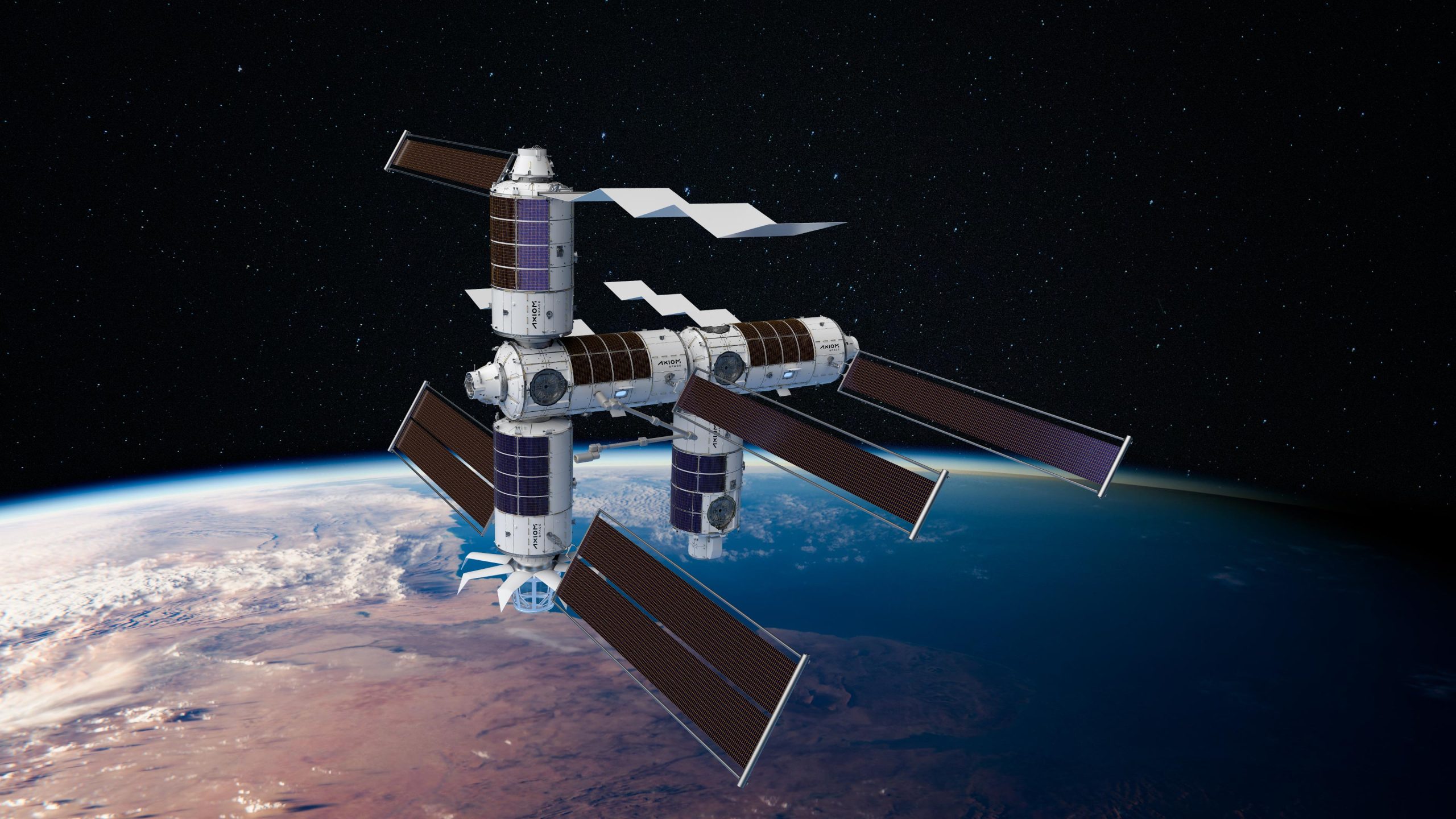
Axiom Space, in collaboration with NASA, is fast-tracking the transition to an independent, commercial space station.
By reordering its assembly timeline, Axiom Station could break free from the ISS as early as 2028, taking a major step toward self-sustaining space operations. This shift not only ensures NASA’s continued presence in low Earth orbit but also paves the way for groundbreaking research, commercial ventures, and the next era of human spaceflight beyond the ISS.
Accelerating Axiom’s Free-Flying Space Station
Axiom Space, in collaboration with NASA, has adjusted its assembly plan to speed up the development of a self-sustaining, free-flying space station. This change aims to reduce reliance on the International Space Station (ISS) during the transition.
In January 2020, NASA awarded Axiom Space a firm-fixed-price, indefinite-delivery, indefinite-quantity contract as part of its effort to expand commercial opportunities in low Earth orbit. The contract supports the creation of at least one habitable commercial module, initially attached to the ISS, with the long-term goal of becoming an independent space station before the ISS retires in 2030.
Initial Plan vs. Updated Assembly Sequence
Originally, Axiom planned to launch its first module, Habitat 1, and attach it to the ISS, followed by three additional modules.
Under the company’s new assembly sequence, the Payload, Power, and Thermal Module will launch to the orbiting laboratory first, allowing it to depart as early as 2028 and become a free-flying destination known as Axiom Station. In free-flight, Axiom Space will continue assembly of the commercial destination, adding the Habitat 1 module, an airlock, Habitat 2 module, and the Research and Manufacturing Facility.
Ensuring a Smooth Transition
“The updated assembly sequence has been coordinated with NASA to support both NASA and Axiom Space needs and plans for a smooth transition in low Earth orbit,” said Angela Hart, manager, Commercial Low Earth Orbit Development Program at NASA’s Johnson Space Center in Houston. “The ongoing design and development of commercial destinations by our partners is critical to the agency’s plan to procure services in low Earth orbit to support our needs in microgravity.”
The revised assembly sequence will enable an earlier departure from the space station, expedite Axiom Station’s ability to support free-flight operations, and ensure the orbiting laboratory remains prepared for the U.S. Deorbit Vehicle and end of operational life no earlier than 2030.
Looking Beyond the International Space Station
“The International Space Station has provided a one-of-a-kind scientific platform for nearly 25 years,” said Dana Weigel, manager, International Space Station Program at NASA Johnson. “As we approach the end of space station’s operational life, it’s critically important that we look to the future of low Earth orbit and support these follow-on destinations to ensure we continue NASA’s presence in microgravity, which began through the International Space Station.”
NASA is supporting the design and development of multiple commercial space stations, including Axiom Station, through funded and unfunded agreements. The current design and development phase will be followed by the procurement of services from one or more companies.
A Future Built on Microgravity Research
NASA’s low Earth orbit microgravity strategy builds on the agency’s extensive human spaceflight experience to advance future scientific and exploration goals. As the International Space Station nears the end of operations, NASA plans to transition to a new low Earth orbit model to continue leveraging microgravity benefits. Through commercial partnerships, NASA aims to maintain its leadership in microgravity research and ensure continued benefits for humanity.
Never miss a breakthrough: Join the SciTechDaily newsletter.
Follow us on Google and Google News.
6 Comments
THANK YOU
Earth is Flat.
Only if you can’t see very far.
Thank-you for having the courage to speak the truth.
Idiots 😀
It just needs pumping up again