
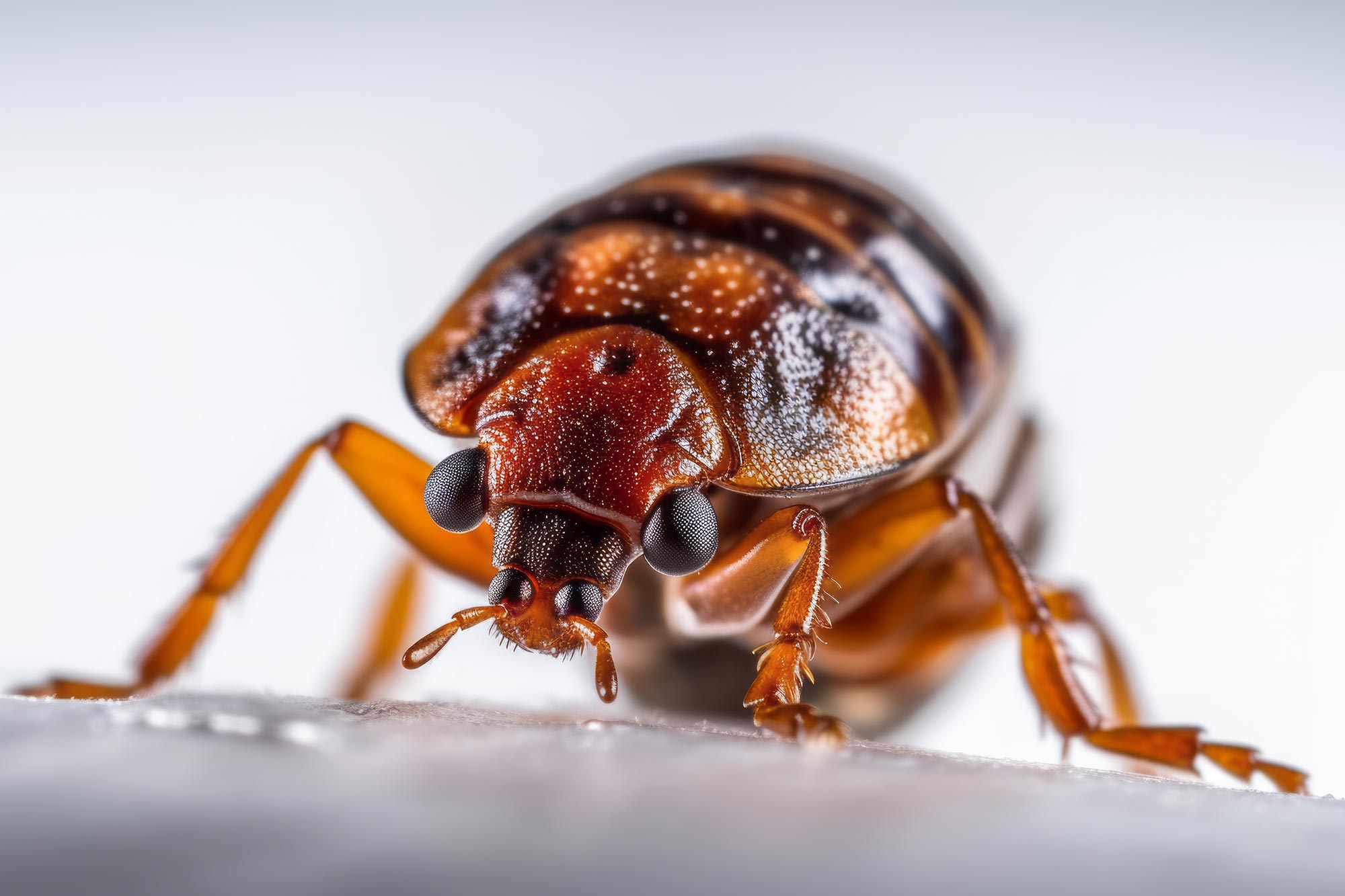
New research reveals that bed bugs strongly avoid water and moisture.
People often dread bed bugs, and for good reason. Once these blood-feeding insects establish themselves inside a home, they can be extremely difficult to eliminate. However, new research has revealed something surprising. Bed bugs themselves appear to avoid water and wet surfaces.
A study from the University of California, Riverside, published in the Journal of Ethology, describes this previously unknown behavior. Dong-Hwan Choe, a UC Riverside entomology professor and co-author of the study, explained that the discovery fits well with the physical structure of the insects.
Bed bugs have very flat bodies and small breathing openings known as spiracles along the sides of their abdomen. “If they physically contact a body of water, they’ll get stuck to its surface, blocking their respiratory openings,” Choe said. “Due to its strong adhesive power, water could be very dangerous from a bed bug’s perspective. So, it’s not surprising to learn that they’re extremely averse to moisture.”
An Accidental Discovery in the Lab
The researchers first noticed this behavior by chance during routine work in the laboratory. Bed bug colonies are typically maintained in small vials. To feed them, scientists place an artificial feeder filled with blood on top of the vial. The insects climb upward and push their mouth parts through a thin membrane to drink the blood.
During one feeding, the membrane holding the blood was slightly damaged. Blood from the feeder slowly leaked out and began soaking into a piece of paper inside the vial that the insects normally use as a surface for gripping.
“The leaked blood was slowly soaking the paper from the top of the vial. I thought the bed bugs would be happy to drink the blood from the paper,” Choe said. “But what I saw was very different. They were actively avoiding the part of paper that became wet with blood. They wouldn’t even walk near the wet areas.”
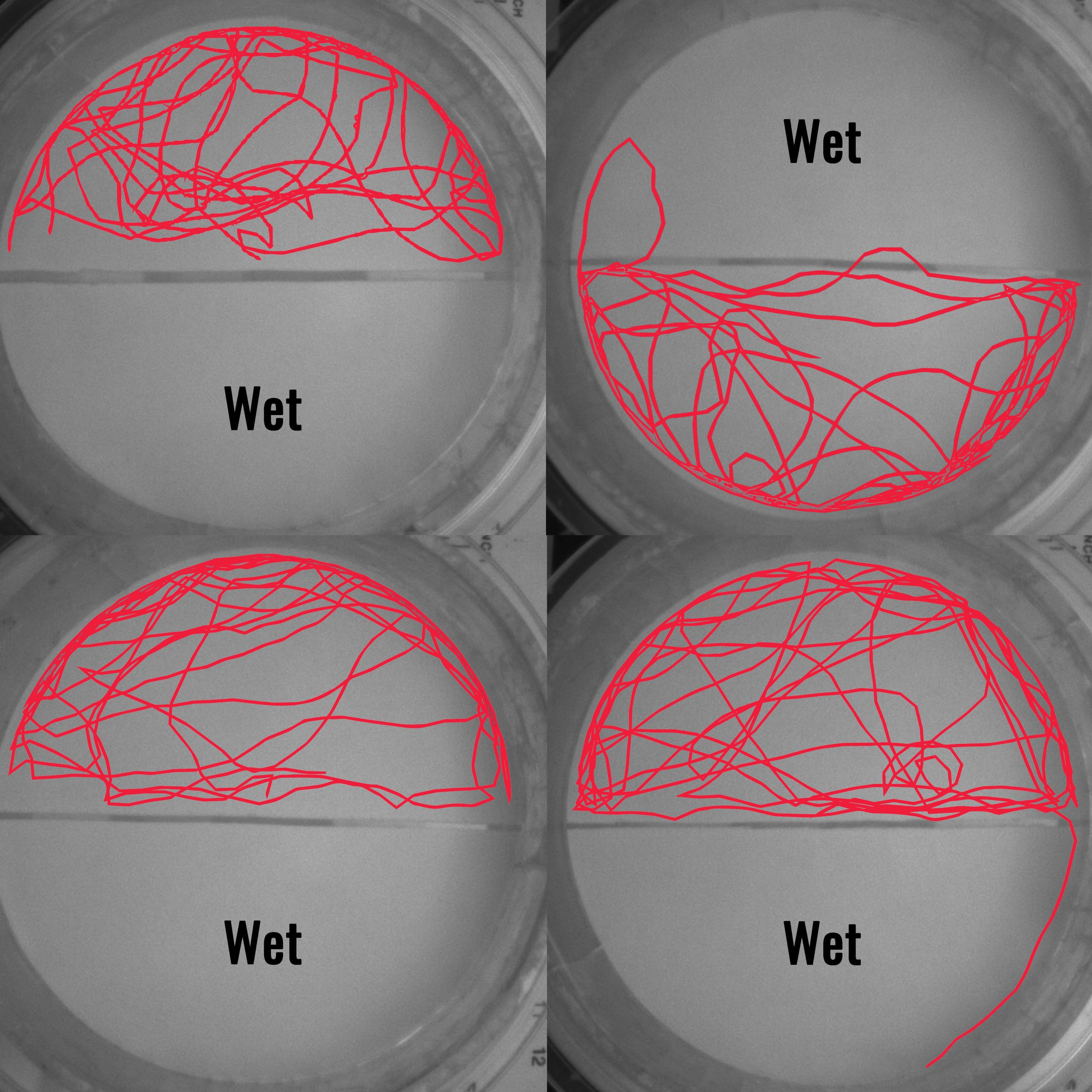
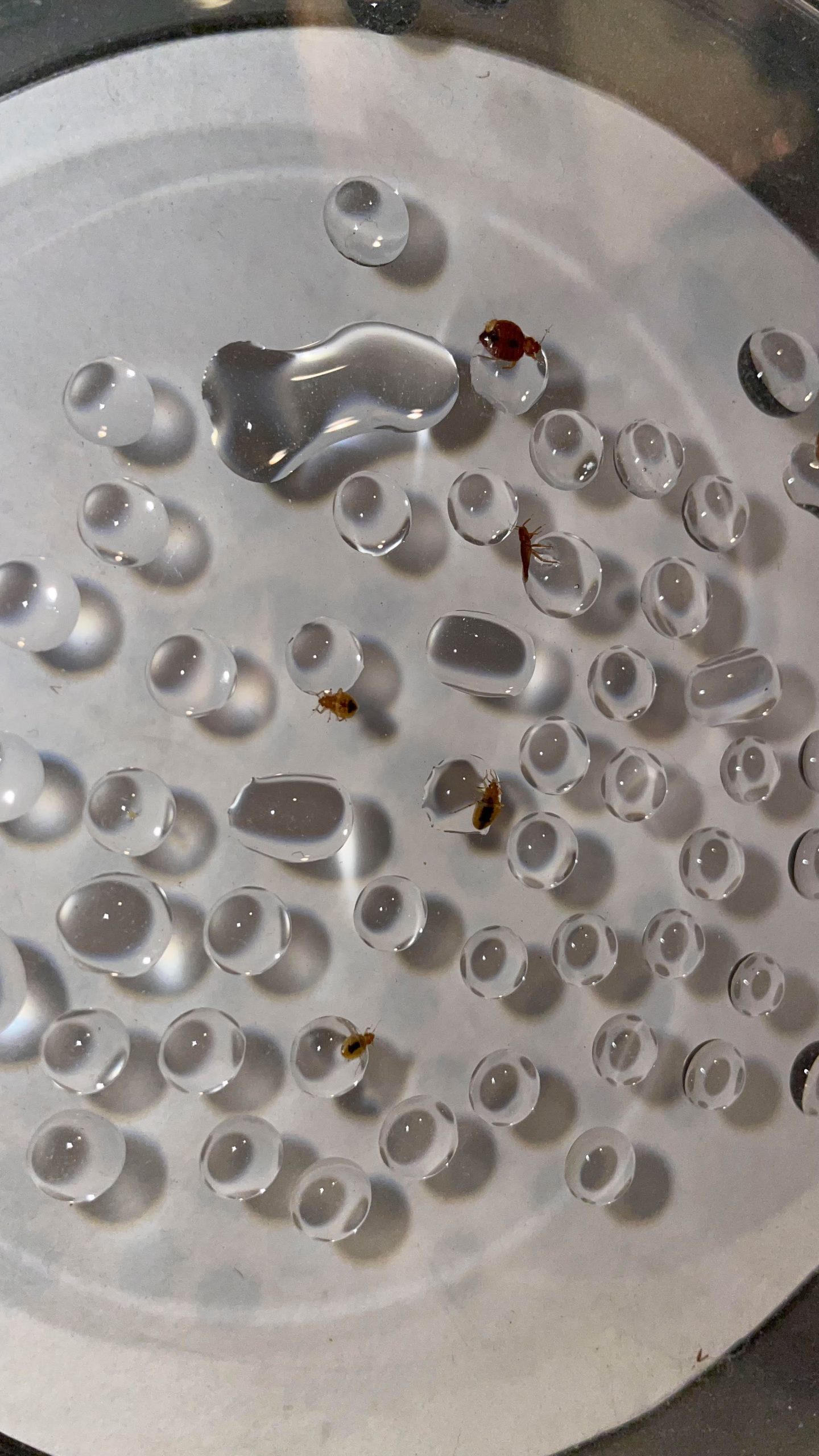
To test whether moisture itself was responsible, the team dampened the paper in the vials with water. The insects avoided those areas as well. This observation encouraged the researchers to investigate the behavior in more detail.
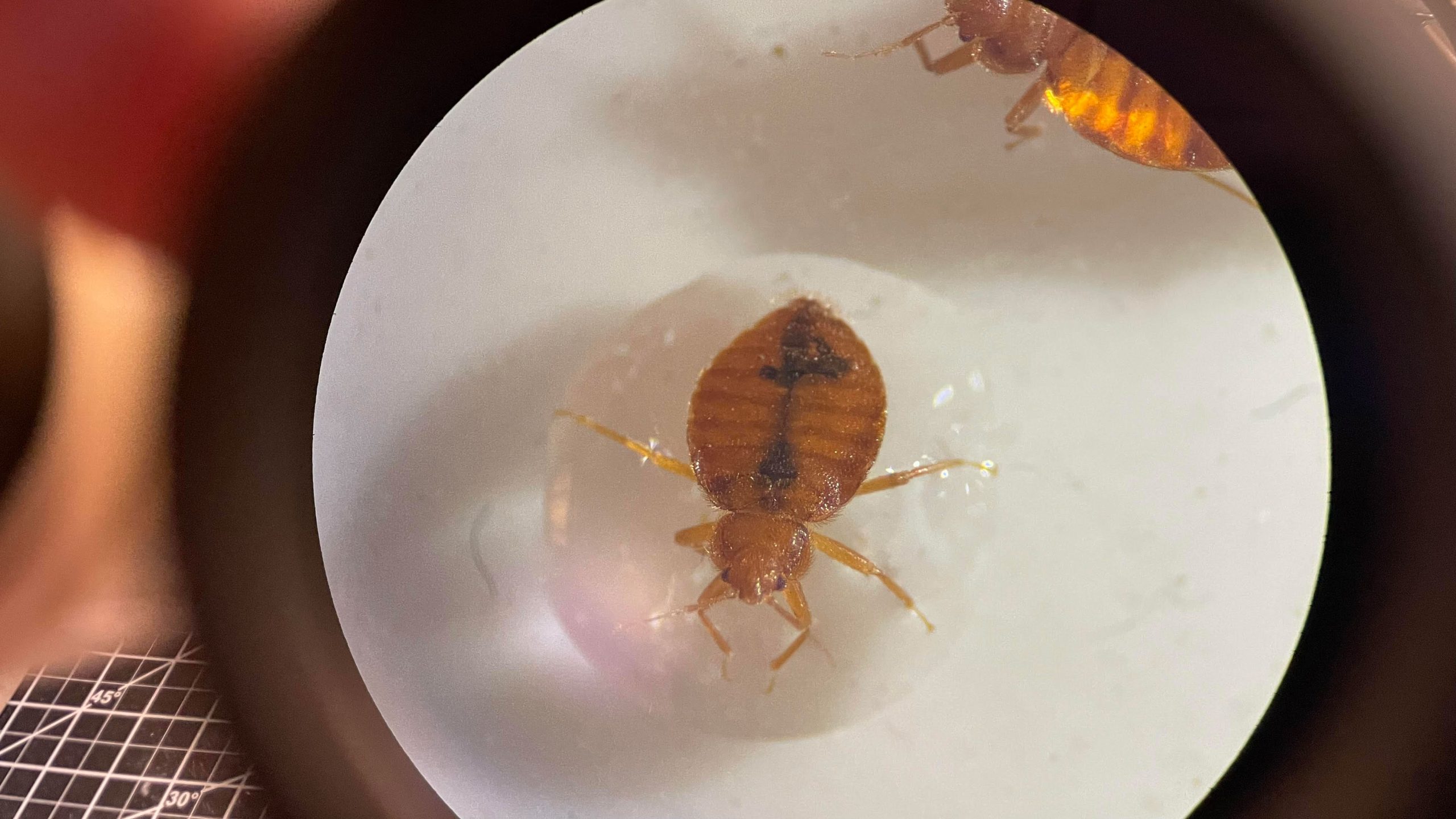
Jorge Bustamante, a postdoctoral researcher in Choe’s laboratory, designed experiments to analyze how bed bugs respond to wet surfaces. Because young bed bugs are extremely small, he used a specialized infrared camera equipped with a magnifying lens to record their movements.
“It’s not easy to work with young, really small bed bugs. They’re maybe only 2 millimeters long or less (about 0.08 inches),” Choe said.
Bustamante used video analysis software to detect color differences between the insects and the background. This allowed him to track their movements and measure how quickly and how far they traveled when encountering moisture. He also examined whether responses differed by age or sex.
A Universal Aversion to Moisture
The results showed that all bed bugs in the study avoided wet surfaces. Males and females behaved similarly, and both younger and older insects showed the same general response. In many cases, the bugs retreated from the wet area faster than they approached it.
However, the smallest and youngest insects reacted even more strongly. When they neared a damp surface, they often performed rapid U turns, indicating that younger bed bugs may be more sensitive to moisture.
Beyond documenting a previously unreported behavior, the findings could influence strategies for controlling infestations. Many pest control products are delivered as water-based insecticide sprays. Because bed bugs actively avoid moisture, treatments may temporarily drive the insects away from treated areas if the chemicals do not kill them quickly.
“If the insecticides don’t kill the bed bugs right away, then they will leave the treated areas and disperse elsewhere,” Choe said.
In addition, there is a simple solution if a person suspects they may have bed bugs on them.
“Take a bath. It’ll solve the problem,” Choe said. “Of course, the bed bugs in the room or on the bed will require different approaches.”
Reference: “Behavioral response of bed Bugs (Hemiptera: Cimicidae) to wet surfaces” by Jorge Bustamante Jr., and Dong-Hwan Choe, 17 December 2025, Journal of Ethology.
DOI: 10.1007/s10164-025-00880-6
Never miss a breakthrough: Join the SciTechDaily newsletter.
Follow us on Google and Google News.
12 Comments
Use etheric oil. No bug like such oils
Invigorating science tips,snippets
Tell me more
Roaches geed on bedbugs. Lots of spraying roaches can increase bedbugs
Hm, if you are spraying it might be a good idea to soak the perimeter of the area and work inwards. Give the bugs no place to go.
{^_^}
We use 3% Hydrogen Peroxide on a spray bottle, it dissolves them. Use higher strength which you can order by gallon cheap.
Theoretically soaking clothing and furniture will remove live bugs but not kill the eggs?
Diatomaceous earth has worked really well for me. Slow but sure.
Housing and Shelter work. I’ve seen these horrible little hard shelled bug walk in groups to stay together, I was told the juvenile ones tend to band together and there mating habits as soon as they mature are another to find this preticular creature one to not like
75 percent isopropyl alcohol kills the eggs and about 99 percent of the rest. It softens their bodies, so that when they do eat, they split open and die.
The photo at the top is wrong. Maybe it’s an “AI-enhanced” photo from Shutterstock, but the antennae and eyes don’t look like a bed bug.
Have a look at the Wikipedia photos for a correct photo:
https://en.wikipedia.org/wiki/Cimex_lectularius
Looks like a Roach,
Not true.
I threw one in the toilet and it was in the water for over 30 min.
I pulled it out to put it in a plastic bag (to show the landlord) & the bedbug was still alive.