
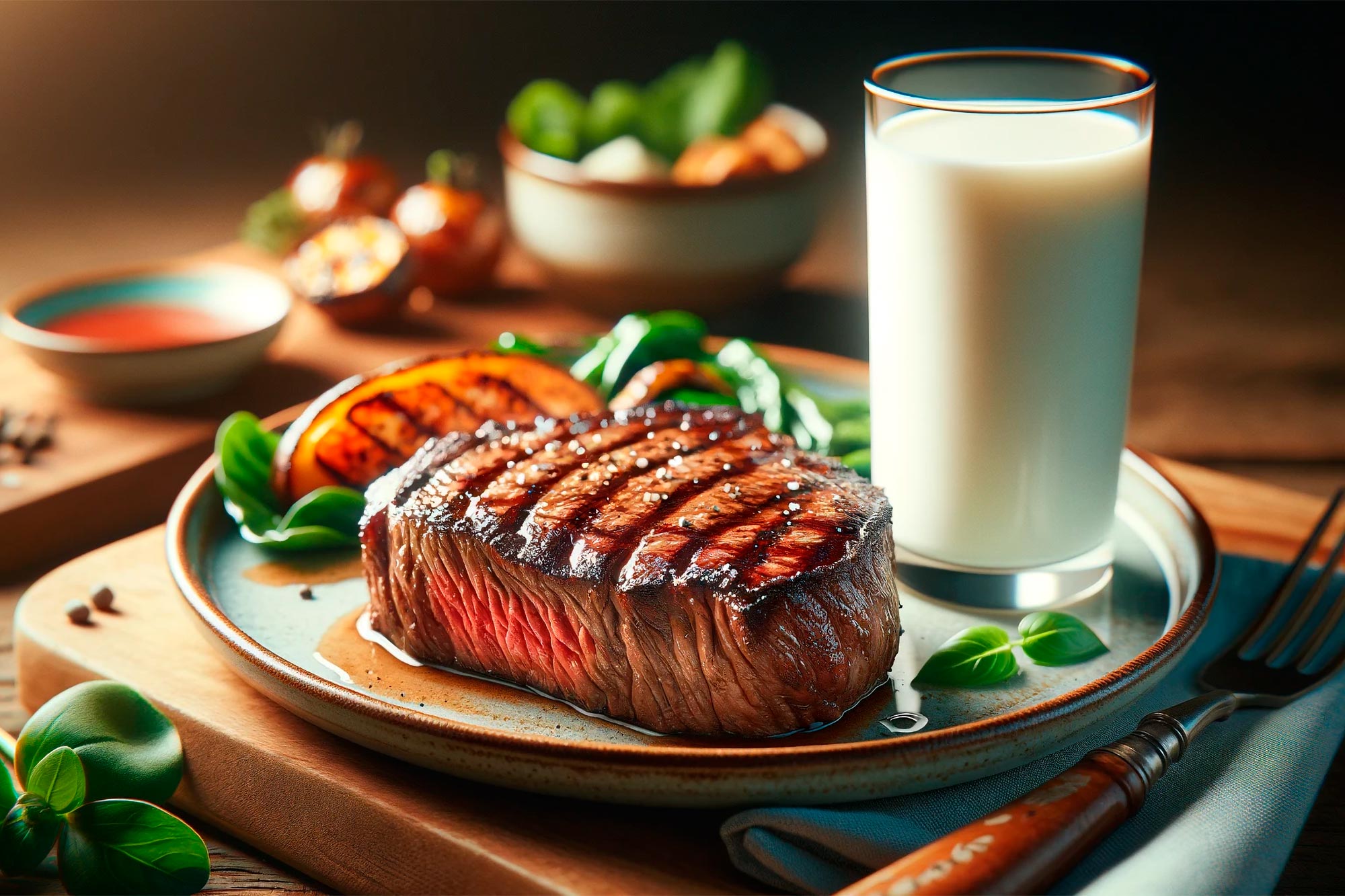
Scientists at the University of Chicago discovered that trans-vaccenic acid (TVA), a fatty acid found in beef, lamb, and dairy products, improves the ability of immune cells to fight tumors.
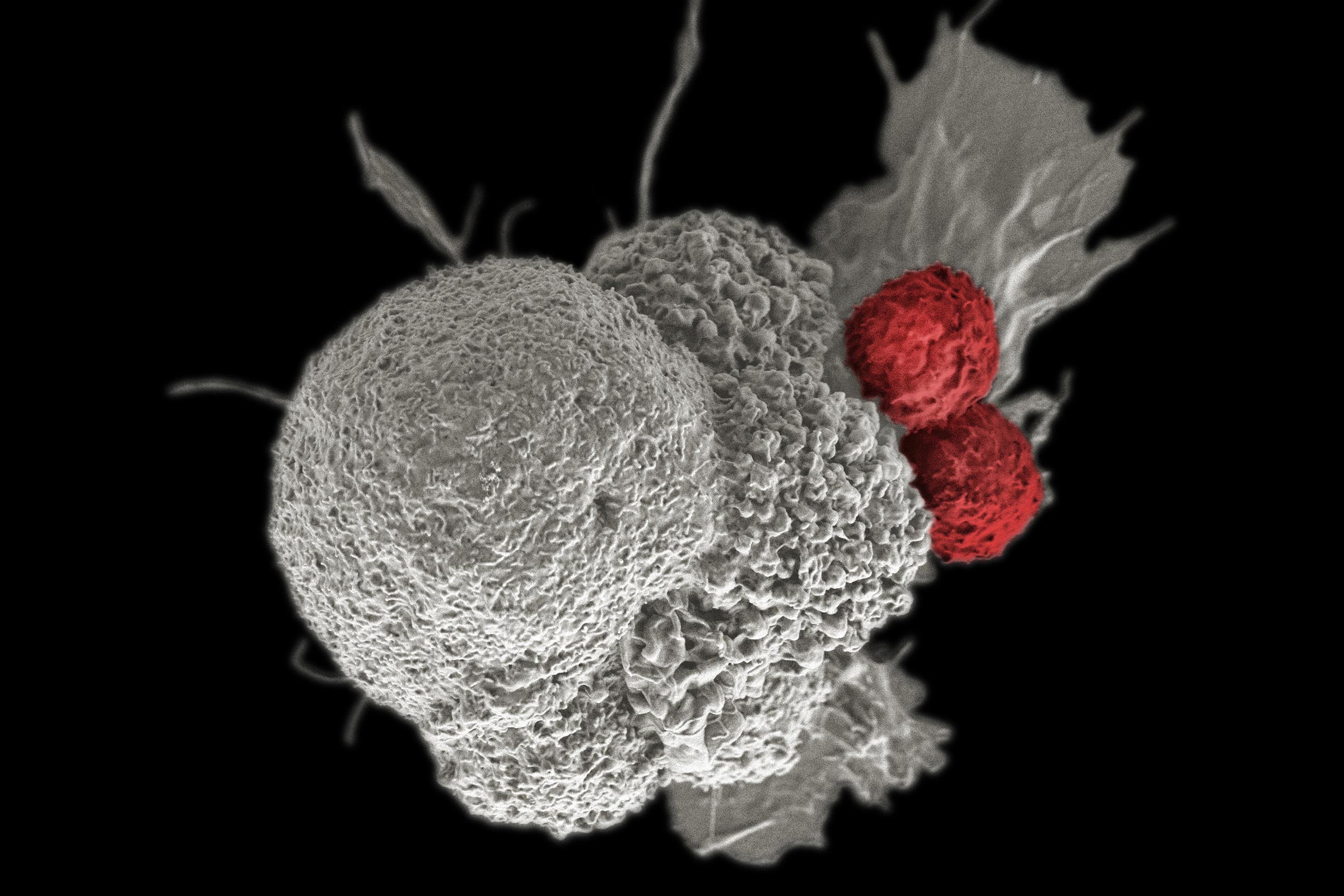
Trans-vaccenic acid (TVA), a long-chain fatty acid found in meat and dairy products from grazing animals such as cows and sheep, improves the ability of CD8+ T cells to infiltrate tumors and kill cancer cells, according to a new study by researchers from the University of Chicago.
The research, published on November 22 in the journal Nature, also shows that patients with higher levels of TVA circulating in the blood responded better to immunotherapy, suggesting that it could have potential as a nutritional supplement to complement clinical treatments for cancer.
“There are many studies trying to decipher the link between diet and human health, and it’s very difficult to understand the underlying mechanisms because of the wide variety of foods people eat. But if we focus on just the nutrients and metabolites derived from food, we begin to see how they influence physiology and pathology,” said Jing Chen, PhD, the Janet Davison Rowley Distinguished Service Professor of Medicine at UChicago and one of the senior authors of the new study. “By focusing on nutrients that can activate T cell responses, we found one that actually enhances anti-tumor immunity by activating an important immune pathway.”
Finding Nutrients That Activate Immune Cells
Chen’s lab focuses on understanding how metabolites, nutrients, and other molecules circulating in the blood influence the development of cancer and response to cancer treatments. For the new study, two postdoctoral fellows, Hao Fan, PhD and Siyuan Xia, PhD, both co-first authors, assembled a “blood nutrient” compound library consisting of 255 bioactive molecules derived from nutrients. They screened the compounds in this new library for their ability to influence anti-tumor immunity by activating CD8+ T cells, a group of immune cells critical for killing cancerous or virally infected cells.
After the scientists evaluated the top six candidates in both human and mouse cells, they saw that TVA performed the best. TVA is the most abundant trans fatty acid present in human milk, but the body cannot produce it on its own. Only about 20% of TVA is broken down into other byproducts, leaving 80% circulating in the blood. “That means there must be something else it does, so we started working on it more,” Chen said.
“To see that a single nutrient like TVA has a very targeted mechanism on a targeted immune cell type … I find that really amazing and intriguing.”
Jing Chen, PhD
The researchers then conducted a series of experiments with cells and mouse models of diverse tumor types. Feeding mice a diet enriched with TVA significantly reduced the tumor growth potential of melanoma and colon cancer cells compared to mice fed a control diet. The TVA diet also enhanced the ability of CD8+ T cells to infiltrate tumors.
The team also performed a series of molecular and genetic analyses to understand how TVA was affecting the T cells. These included a new technique for monitoring transcription of single-stranded DNA called kethoxal-assisted single-stranded DNA sequencing, or KAS-seq, developed by Chuan He, PhD, the John T. Wilson Distinguished Service Professor of Chemistry at UChicago and another senior author of the study. These additional assays, done by both the Chen and He labs, showed that TVA inactivates a receptor on the cell surface called GPR43 which is usually activated by short-chain fatty acids often produced by gut microbiota. TVA overpowers these short-chain fatty acids and activates a cellular signaling process known as the CREB pathway, which is involved in a variety of functions including cellular growth, survival, and differentiation. The team also showed that mouse models where the GPR43 receptor was exclusively removed from CD8+ T cells also lacked their improved tumor-fighting ability.
Finally, the team also worked with Justin Kline, MD, Professor of Medicine at UChicago, to analyze blood samples taken from patients undergoing CAR-T cell immunotherapy treatment for lymphoma. They saw that patients with higher levels of TVA tended to respond to treatment better than those with lower levels. They also tested cell lines from leukemia by working with Wendy Stock, MD, the Anjuli Seth Nayak Professor of Medicine, and saw that TVA enhanced the ability of an immunotherapy drug to kill leukemia cells.
Beyond Diet: Focusing on Nutrient Supplements
The study suggests that TVA could be used as a dietary supplement to help various T cell-based cancer treatments, although Chen points out that it is important to determine the optimized amount of the nutrient itself, not the food source. There is a growing body of evidence about the detrimental health effects of consuming too much red meat and dairy, so this study shouldn’t be taken as an excuse to eat more cheeseburgers and pizza; rather, it indicates that nutrient supplements such as TVA could be used to promote T cell activity. Chen thinks there may be other nutrients that can do the same.
“There is early data showing that other fatty acids from plants signal through a similar receptor, so we believe there is a high possibility that nutrients from plants can do the same thing by activating the CREB pathway as well,” he said.
The new research also highlights the promise of this “metabolomic” approach to understanding how the building blocks of diet affect our health. Chen said his team hopes to build a comprehensive library of nutrients circulating in the blood to understand their impact on immunity and other biological processes like aging.
“After millions of years of evolution, there are only a couple hundred metabolites derived from food that end up circulating in the blood, so that means they could have some importance in our biology,” Chen said. “To see that a single nutrient like TVA has a very targeted mechanism on a targeted immune cell type, with a very profound physiological response at the whole organism level—I find that really amazing and intriguing.”
Reference: “Trans-vaccenic acid reprograms CD8+ T cells and anti-tumour immunity” by Hao Fan, Siyuan Xia, Junhong Xiang, Yuancheng Li, Matthew O. Ross, Seon Ah Lim, Fan Yang, Jiayi Tu, Lishi Xie, Urszula Dougherty, Freya Q. Zhang, Zhong Zheng, Rukang Zhang, Rong Wu, Lei Dong, Rui Su, Xiufen Chen, Thomas Althaus, Peter A. Riedell, Patrick B. Jonker, Alexander Muir, Gregory B. Lesinski, Sarwish Rafiq, Madhav V. Dhodapkar, Wendy Stock, Olatoyosi Odenike, Anand A. Patel, Joseph Opferman, Takemasa Tsuji, Junko Matsuzaki, Hardik Shah, Brandon Faubert, Shannon E. Elf, Brian Layden, B. Marc Bissonnette, Yu-Ying He, Justin Kline, Hui Mao, Kunle Odunsi, Xue Gao, Hongbo Chi, Chuan He and Jing Chen, 22 November 2023, Nature.
DOI: 10.1038/s41586-023-06749-3
The study was supported by the National Institutes of Health (grants CA140515, CA174786, CA276568, 1375 HG006827, K99ES034084), a UChicago Biological Sciences Division Pilot Project Award, the Ludwig Center at UChicago, the Sigal Fellowship in Immuno-oncology, the Margaret E. Early Medical Research Trust, the AASLD Foundation a Harborview Foundation Gift Fund, and the Howard Hughes Medical Institute.
Never miss a breakthrough: Join the SciTechDaily newsletter.
Follow us on Google and Google News.
1 Comment
Really…? You consider cheeseburgers and pizza, meat?