
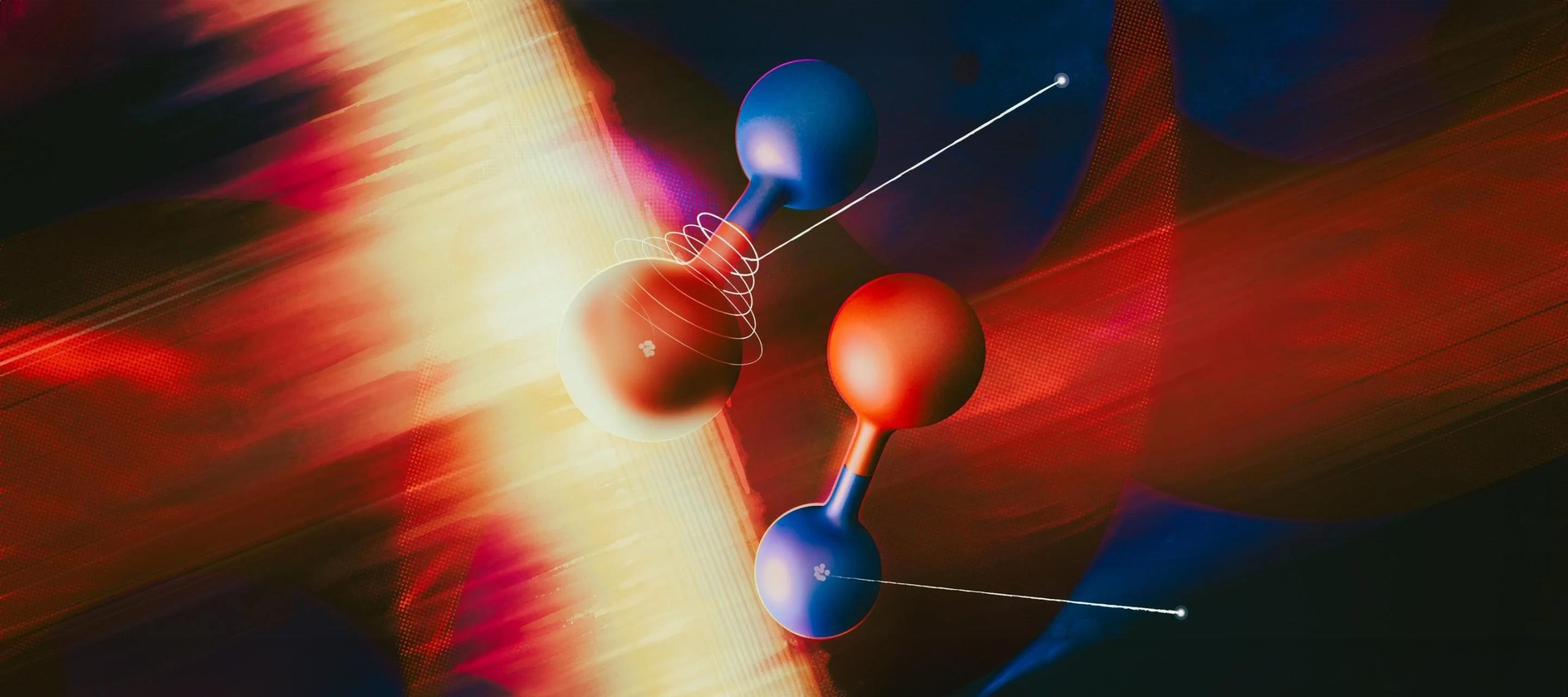
Researchers at SLAC have made groundbreaking strides in understanding the photoelectric effect, initially described by Einstein.
They’ve developed a technique using attosecond X-ray pulses to measure electron-emission delays, revealing discrepancies in existing theories by showing larger-than-expected delays. Their method provides a new tool to study electron-electron interactions, which are fundamental to many technologies, including semiconductors and solar cells.
New Photoelectric Effect Insights
A team of scientists from the Department of Energy’s SLAC National Accelerator Laboratory has uncovered new information about the photoelectric effect, a phenomenon first described by Einstein over a century ago. Their method provides a new tool to study electron-electron interactions, which are fundamental to many technologies, including semiconductors and solar cells. The results were published on August 21 in the journal Nature.
When an atom or molecule absorbs a photon of light, it can emit an electron in a process known as the photoelectric effect. Einstein’s description of the photoelectric effect, also known as photoionization, laid the theoretical foundation for quantum mechanics. However, the instantaneous nature of this effect has been a topic of intense study and debate. Recent advancements in attosecond science have provided the tools necessary to resolve the ultrafast time delays involved in photoionization.
“Einstein won the Nobel Prize for describing the photoelectric effect, but a hundred years later, we’ve only just begun to truly understand the underlying dynamics,” said lead author and SLAC scientist Taran Driver. “Our work marks a significant step forward by measuring these delays in the X-ray domain, a feat that has not been achieved before.”
Breakthroughs in Measuring Photoemission Delays
The team used an attosecond X-ray pulse from SLAC’s Linac Coherent Light Source (LCLS), just billionths of a billionth of a second long, to ionize core-level electrons. This process ejected the electrons from the molecules they were studying. They then used a separate laser pulse, which kicked the electrons in a slightly different direction depending on the time they were emitted, to measure the so-called “photoemission delay.”
The photoemission delay can be thought of as the time between a molecule absorbing a photon and emitting an electron. These delays, reaching up to 700 attoseconds, were significantly larger than previously predicted, challenging existing theoretical models and opening new avenues for understanding electron behavior. The researchers also discovered that interactions between electrons played an important role in this delay.
“By measuring the angular difference in the direction of the ejected electrons, we could determine the time delay with high precision,” said co-author and SLAC scientist James Cryan. “The ability to measure and interpret these delays helps scientists better analyze experimental results, particularly in fields like protein crystallography and medical imaging, where X-ray interactions with matter are crucial.”
Exploring Electron Dynamics
The study is one of the first in a series of planned experiments aimed at exploring the depths of electron dynamics in different molecular systems. Other research groups have already started using the developed technique to study larger and more complex molecules, revealing new facets of electron behavior and molecular structure.
“This is a developing field,” said co-author Agostino Marinelli. “The flexibility of LCLS allows us to probe a wide range of energies and molecular systems, making it a powerful tool for making these types of measurements. This is just the beginning of what we can achieve on these extreme timescales.”
Reference: “Attosecond delays in X-ray molecular ionization” by Taran Driver, Miles Mountney, Jun Wang, Lisa Ortmann, Andre Al-Haddad, Nora Berrah, Christoph Bostedt, Elio G. Champenois, Louis F. DiMauro, Joseph Duris, Douglas Garratt, James M. Glownia, Zhaoheng Guo, Daniel Haxton, Erik Isele, Igor Ivanov, Jiabao Ji, Andrei Kamalov, Siqi Li, Ming-Fu Lin, Jon P. Marangos, Razib Obaid, Jordan T. O’Neal, Philipp Rosenberger, Niranjan H. Shivaram, Anna L. Wang, Peter Walter, Thomas J. A. Wolf, Hans Jakob Wörner, Zhen Zhang, Philip H. Bucksbaum, Matthias F. Kling, Alexandra S. Landsman, Robert R. Lucchese, Agapi Emmanouilidou, Agostino Marinelli and James P. Cryan, 21 August 2024, Nature.
DOI: 10.1038/s41586-024-07771-9
LCLS is a DOE Office of Science user facility.
Never miss a breakthrough: Join the SciTechDaily newsletter.
Follow us on Google and Google News.
1 Comment
“This is a developing field,” said co-author Agostino Marinelli. “The flexibility of LCLS allows us to probe a wide range of energies and molecular systems, making it a powerful tool for making these types of measurements. This is just the beginning of what we can achieve on these extreme timescales.”
VERY GOOD!
The physical phenomena observed in scientific experiments are always just appearances, not the natural essence of things. The natural essence of things needs to be extracted and sublimated based on natural phenomena via mathematical theories. Mathematics is the main environment for modeling problems in other areas. Observations and experiments, theory, and modeling reinforce each other and together lead to our understanding of physical phenomena. After understanding and mastering the natural essence of things, humans can predict more possible natural phenomena, and even manipulate and implement them.
Scientific research guided by correct theories can help humanity avoid detours, failures, and pomposity. Please witness the exemplary collaboration between theoretical physicists and experimentalists (https://scitechdaily.com/microscope-spacecrafts-most-precise-test-of-key-component-of-the-theory-of-general-relativity/#comment-854286). Some people in contemporary physics has always lived in a self righteous children’s story world. Whose values have been overturned by such a comical and ridiculous reality?
From Physical Review Letters (PRL), to Nature, and Science, even the Proceedings of the National Academy of Sciences (PNAS), the so-called academic journals firmly believe that two high-dimensional spacetime objects (such as two sets of cobalt-60) rotating in opposite directions can be transformed into two objects that mirror each other, and that the asymmetry between the amount of created matter and antimatter led to the matter-dominated Universe as we know it today.
Does the facts tell the so-called academic journals that two sets of cobalt-60 rotating in opposite directions can be transformed into two objects that mirror each other? Does mathematics tell the so-called academic journals that matter and antimatter are asymmetric? When physics no longer believes in facts and mathematics, it is no different from theology.
Naked walkers never consider themselves ugly, but rather consider themselves cool.
Space has physical properties of zero viscosity and absolute incompressibility. Zero viscosity and absolute incompressibility are physical characteristics of ideal fluids. The space with ideal fluid physical characteristics forms vortices via topological phase transitions, which is not difficult to understand mathematically. Once the topological vortex is formed, it occupies space and maintains its presence in time. This is the transition from chaos to order via two bidirectional coupled continuous chaotic systems.
From cosmic accretion disks to particle spins, topological vortex fractal structures are ubiquitous. Symmetry of topological vortex can be used to explore particle behavior under spatial, temporal, and quantum reversals, involving quantum gravity, discrete and continuous changes. It underpins the consistency of natural laws and experiment reproducibility.