
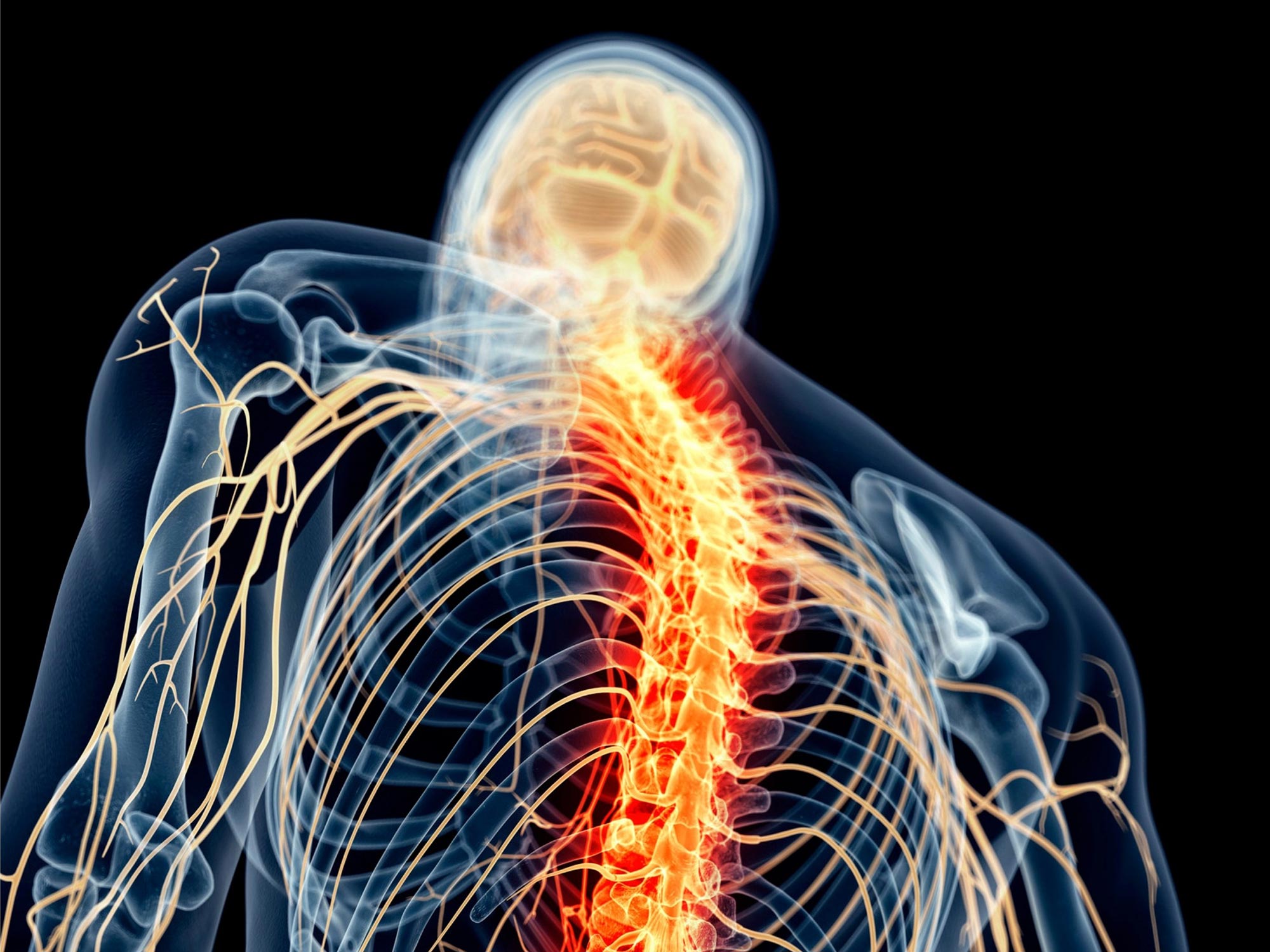
Blocking a receptor involved in prostaglandins reduces pain while allowing inflammation to proceed normally, according to findings from animal and cell studies.
Researchers at the NYU Pain Research Center have pinpointed the specific receptor within prostaglandins, the hormone-like compounds targeted by many pain medications, that triggers pain but not inflammation. Their findings, published in Nature Communications, could pave the way for developing more precise pain treatments that minimize unwanted side effects.
“Inflammation and pain are usually thought to go hand in hand. But being able to block pain and allow inflammation—which promotes healing—to proceed is an important step in improved treatment of pain,” said study author Nigel Bunnett, professor and chair of the Department of Molecular Pathobiology at NYU College of Dentistry and a faculty member in the NYU Pain Research Center.
Why NSAIDs are a double-edged sword
Non-steroidal anti-inflammatory drugs (NSAIDs) are among the most widely used medications in the world, with an estimated 30 billion doses taken annually in the United States. These drugs, available both over the counter (such as ibuprofen and aspirin) and by prescription, are effective but not without risk. Prolonged use can damage the stomach lining and increase the likelihood of bleeding, as well as cause complications involving the heart, kidneys, and liver.
NSAIDs relieve pain by blocking enzymes that generate prostaglandins, which in turn lowers inflammation and discomfort. However, inflammation—the body’s natural defense against injury or infection—also supports healing, meaning that fully suppressing it can be counterproductive.
“Inflammation can be good for you—it repairs and restores normal function,” said study author Pierangelo Geppetti, an adjunct professor at the NYU Pain Research Center, professor emeritus at the University of Florence, and former director of the Headache Center of Careggi University Hospital. “Inhibiting inflammation with NSAIDs may delay healing and could delay recovery from pain. A better strategy to treat prostaglandin-mediated pain would be to selectively reduce the pain without affecting inflammation’s protective actions.”
Investigating prostaglandin signaling in pain
The researchers examined prostaglandin E2 (PGE2), a major molecule involved in inflammatory pain, within Schwann cells—cells found in the peripheral nervous system that contribute to migraine and other pain-related conditions.
PGE2 acts through four distinct receptors. Earlier studies led by Geppetti had suggested that the EP4 receptor was primarily responsible for inflammatory pain. However, the new Nature Communications study employed a more refined approach and discovered that a different receptor, EP2, played the dominant role in producing pain. When the researchers used localized drug delivery to selectively silence the EP2 receptor in Schwann cells, they were able to eliminate pain responses in mice while leaving inflammation unaffected.
“To our great surprise, blocking the EP2 receptor in Schwann cells abolished prostaglandin-mediated pain but the inflammation took its normal course. We effectively decoupled the inflammation from the pain,” said Geppetti.
EP2 receptor offers a safer drug target
In additional studies in human and mouse Schwann cells, activating the EP2 receptor evoked a signal that sustained pain responses through a pathway independent from inflammatory responses, confirming the role of EP2 in pain but not inflammation.
“Antagonism of this ‘druggable’ receptor would thus control pain without the adverse effects of NSAIDs,” noted Bunnett.
The researchers are continuing pre-clinical studies to explore how drugs that target the EP2 receptor could be used to treat pain in conditions like arthritis that would usually be treated with NSAIDs.
“Selective EP2 receptor antagonists could be very useful. While more research is needed on side effects, especially with giving a drug systemically as a pill, targeted administration that acts locally on an area like a knee joint holds promise,” said Geppetti.
Reference: “Targeting prostaglandin E2 receptor 2 in Schwann cells inhibits inflammatory pain but not inflammation” by Romina Nassini, Lorenzo Landini, Matilde Marini, Martina Chieca, Daniel Souza Monteiro de Araújo, Marco Montini, Pasquale Pensieri, Vittorio Donato Abruzzese, Gaetano De Siena, Jin Zhang, Elisa Bellantoni, Vincenzo De Giorgi, Antonia Romitelli, Giulia Brancolini, Raquel Tonello, Chloe J. Peach, Alessandra Mastricci, Irene Scuffi, Martina Tesi, Dane D. Jensen, Brian L. Schmidt, Nigel W. Bunnett, Francesco De Logu and Pierangelo Geppetti, 25 September 2025, Nature Communications.
DOI: 10.1038/s41467-025-63782-8
The research is supported by grants from the National Institutes of Health (NS102722, DE026806, DK118971, DE029951, R01 DK073368, R35 CA197622), the US Department of Defense (W81XWH1810431, W81XWH2210239), the European Research Council, and the European Union – Next Generation EU, National Recovery and Resilience Plan.
Never miss a breakthrough: Join the SciTechDaily newsletter.
Follow us on Google and Google News.
2 Comments
Peripheral sensory nerves can only send data about sensation to the brain: They cannot decide if a stimulus is painful, noxious, or frightening.
All physical stimuli are “tissue-damaging and/or potentially tissue-damaging,” so that the suggestion that only a nociceptor responds to a stimulus which is “tissue-damaging or potentially tissue-damaging” makes no sense.
Physical pain consists of sensation + fear, or a fear response or an aversive response or a danger-alarm response or the emotion of fear or however you wish to describe one’s resistance to what one perceives as an unpleasant sensation, whether real or imagined or a bit of both.
Pain involved judgement. Nerve endings make no judgement calls. How could they?!
Thank you for a great essay!
Tom
Ibuprofen was creating swelling and cramping in my lower legs down to my feet. I had to stop using it.