
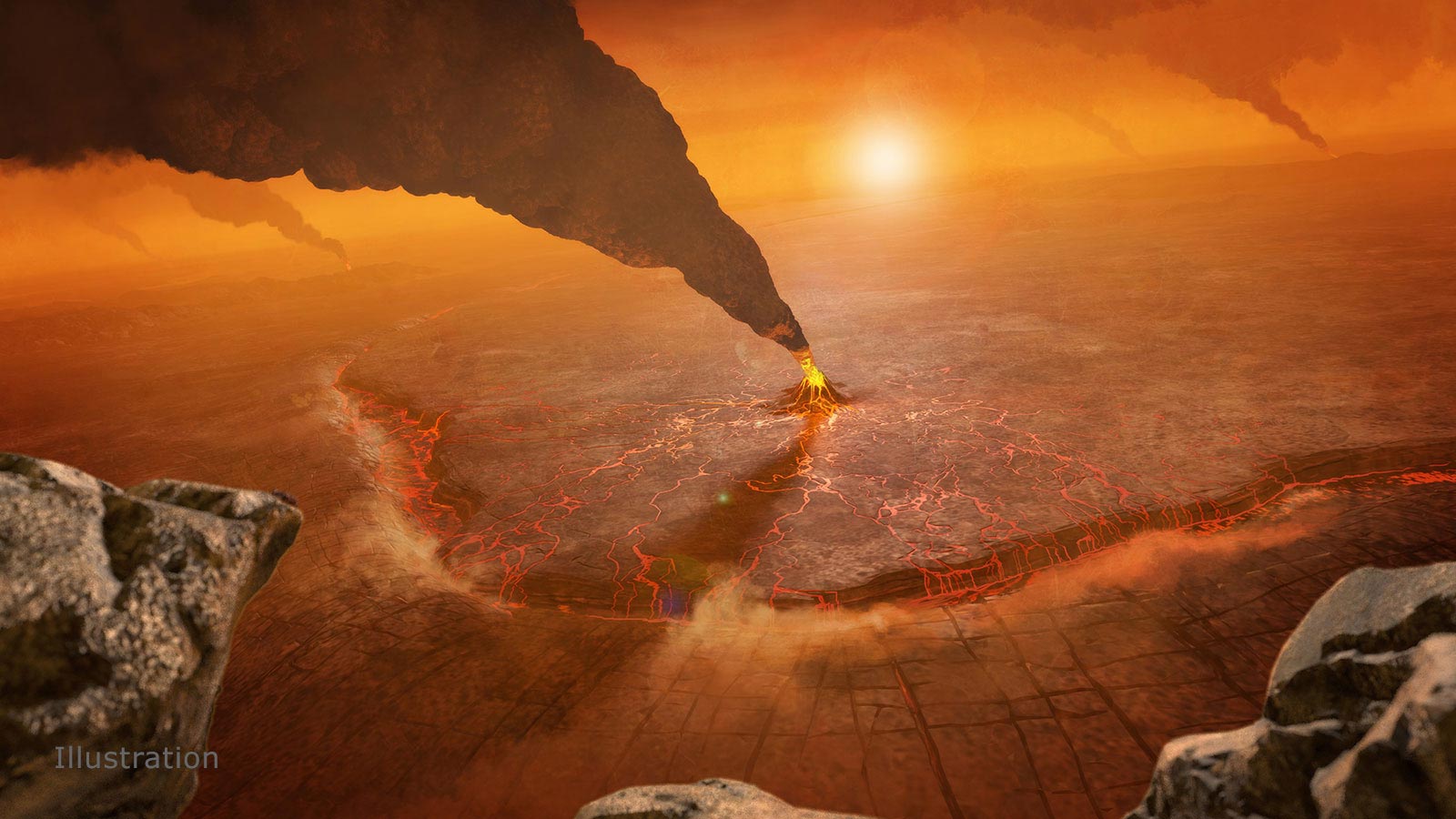
The research uses archival NASA data to show that Venus may be losing heat from geologic activity in regions called coronae, possibly like early tectonic activity on Earth.
Earth and Venus are rocky planets of about the same size and rock chemistry, so they should be losing their internal heat to space at about the same rate. How Earth loses its heat is well known, but Venus’ heat flow mechanism has been a mystery. A study that uses three-decade-old data from NASA’s Magellan mission has taken a new look at how Venus cools and found that thin regions of the planet’s uppermost layer may provide an answer.
Our planet has a hot core that heats the surrounding mantle, which carries that heat up to Earth’s rigid outer rocky layer, or lithosphere. The heat is then lost to space, cooling the uppermost region of the mantle. This mantle convection drives tectonic processes on the surface, keeping a patchwork of mobile plates in motion. Venus doesn’t have tectonic plates, so how the planet loses its heat and what processes shape its surface have been long-running questions in planetary science.
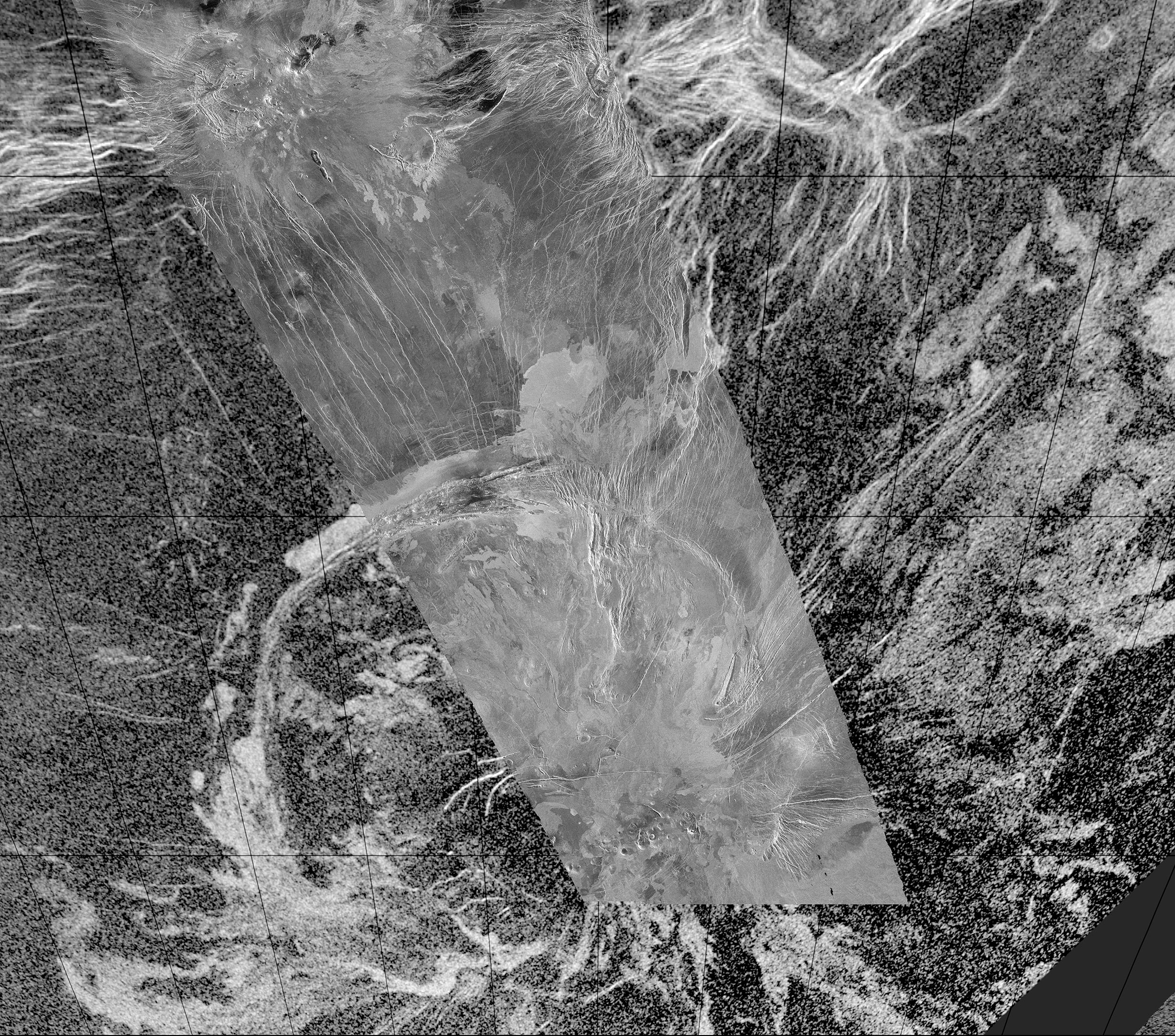
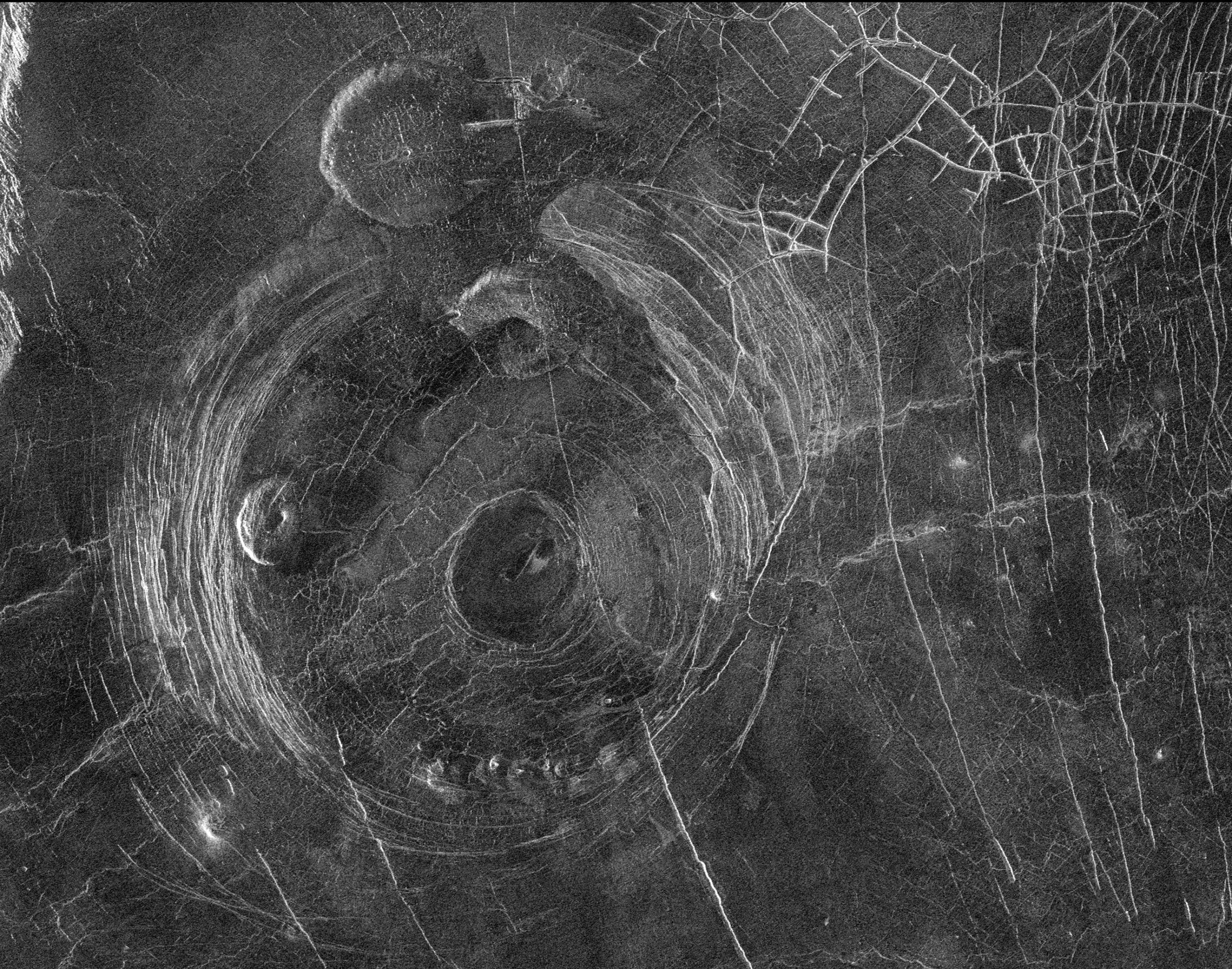
The study looks at the mystery using observations the Magellan spacecraft made in the early 1990s of quasi-circular geological features on Venus called coronae. Making new measurements of coronae visible in the Magellan images, the researchers concluded that coronae tend to be located where the planet’s lithosphere is at its thinnest and most active.
“For so long we’ve been locked into this idea that Venus’ lithosphere is stagnant and thick, but our view is now evolving,” said Suzanne Smrekar, senior research scientist at NASA’s Jet Propulsion Laboratory in Southern California, who led the study published in the journal Nature Geoscience.
Just as a thin bedsheet releases more body heat than a thick comforter, a thin lithosphere allows more heat to escape from the planet’s interior via buoyant plumes of molten rock rising to the outer layer. Typically, where there’s enhanced heat flow, there’s increased volcanic activity below the surface. So coronae likely reveal locations where active geology is shaping Venus’ surface today.
The researchers focused on 65 previously unstudied coronae that are up to a few hundred miles across. To calculate the thickness of the lithosphere surrounding them, they measured the depth of the trenches and ridges around each corona. What they found is that ridges are spaced more closely together in areas where the lithosphere is more flexible, or elastic. By applying a computer model of how an elastic lithosphere bends, they determined that, on average, the lithosphere around each corona is about 7 miles (11 kilometers) thick – much thinner than previous studies suggest. These regions have an estimated heat flow that is greater than Earth’s average, suggesting that coronae are geologically active.
“While Venus doesn’t have Earth-style tectonics, these regions of thin lithosphere appear to be allowing significant amounts of heat to escape, similar to areas where new tectonic plates form on Earth’s seafloor,” said Smrekar.
A Window Into Earth’s Past
To calculate how old a celestial body’s surface material is, planetary scientists count the number of visible impact craters. For a tectonically active planet like Earth, impact craters are erased by the subduction of continental plates and covered by molten rock from volcanoes. If Venus lacks tectonic activity and the regular churn of Earth-like geology, it should be covered in old craters. But by counting the number of Venusian craters, scientists estimate that the surface is relatively young.
Recent studies suggest the youthful appearance of Venus’ surface is likely due to volcanic activity, which drives regional resurfacing today. This finding is supported by the new research indicating higher heat flow in coronae regions – a state that Earth’s lithosphere may have resembled in the past.
“What’s interesting is that Venus provides a window into the past to help us better understand how Earth may have looked over 2.5 billion years ago. It’s in a state that is predicted to occur before a planet forms tectonic plates,” said Smrekar, who is also the principal investigator of NASA’s forthcoming Venus Emissivity, Radio science, InSAR, Topography, And Spectroscopy (VERITAS) mission.
VERITAS will pick up where Magellan left off, improving upon that mission’s data, which is low resolution and comes with large margins of error. Targeting launch within a decade, the mission will use a state-of-the-art synthetic aperture radar to create 3D global maps and a near-infrared spectrometer to figure out what the surface is made of. VERITAS will also measure the planet’s gravitational field to determine the structure of Venus’ interior. The instruments will together fill in the story of the planet’s past and present geologic processes.
“VERITAS will be an orbiting geologist, able to pinpoint where these active areas are, and better resolve local variations in lithospheric thickness. We’ll even be able to catch the lithosphere in the act of deforming,” said Smrekar. “We’ll determine if volcanism really is making the lithosphere ‘squishy’ enough to lose as much heat as Earth, or if Venus has more mysteries in store.”
Reference: “Earth-like lithospheric thickness and heat flow on Venus consistent with active rifting” by Suzanne E. Smrekar, Colby Ostberg and Joseph G. O’Rourke, 14 November 2022, Nature Geoscience.
DOI: 10.1038/s41561-022-01068-0
Never miss a breakthrough: Join the SciTechDaily newsletter.
Follow us on Google and Google News.