
Close Menu
    Facebook X (Twitter) Instagram
    SciTechDaily
    • Biology
    • Chemistry
    • Earth
    • Health
    • Physics
    • Science
    • Space
    • Technology
    Facebook X (Twitter) Pinterest YouTube RSS
    SciTechDaily
    Home»Health»Blood Microbubbles To Acoustically Detect Oxygen Levels
    Health

    Blood Microbubbles To Acoustically Detect Oxygen Levels

    By Acoustical Society of AmericaNovember 29, 2021No Comments2 Mins Read
    Facebook Twitter Pinterest Telegram LinkedIn WhatsApp Email Reddit
    Share
    Facebook Twitter LinkedIn Pinterest Telegram Email Reddit
    Blood Oxygen Levels and Acoustiscs
    Researchers have developed microbubbles to acoustically detect blood oxygen levels. Credit: Shashank Sirsi

    Acoustic Tools Detect Vibrating Microbubbles, Act As Oxygen Sensor

    Blood carries vital oxygen through our circulation system to muscles and organs. Acoustic tools can create small bubbles in our blood, capable of changing in response to oxygen and signifying oxygen levels.

    During the 181st Meeting of the Acoustical Society of America, which will be held November 29 to December 3, Shashank Sirsi, from the University of Texas at Dallas, will discuss how circulating microbubbles can be used to measure oxygen levels. The talk, “Hemoglobin Microbubbles for In Vivo Blood Oxygen Level Dependent Imaging: Boldly Moving Beyond MRI,” will take place Monday, November 29, at 11:25 a.m. Eastern U.S. at the Hyatt Regency Seattle.

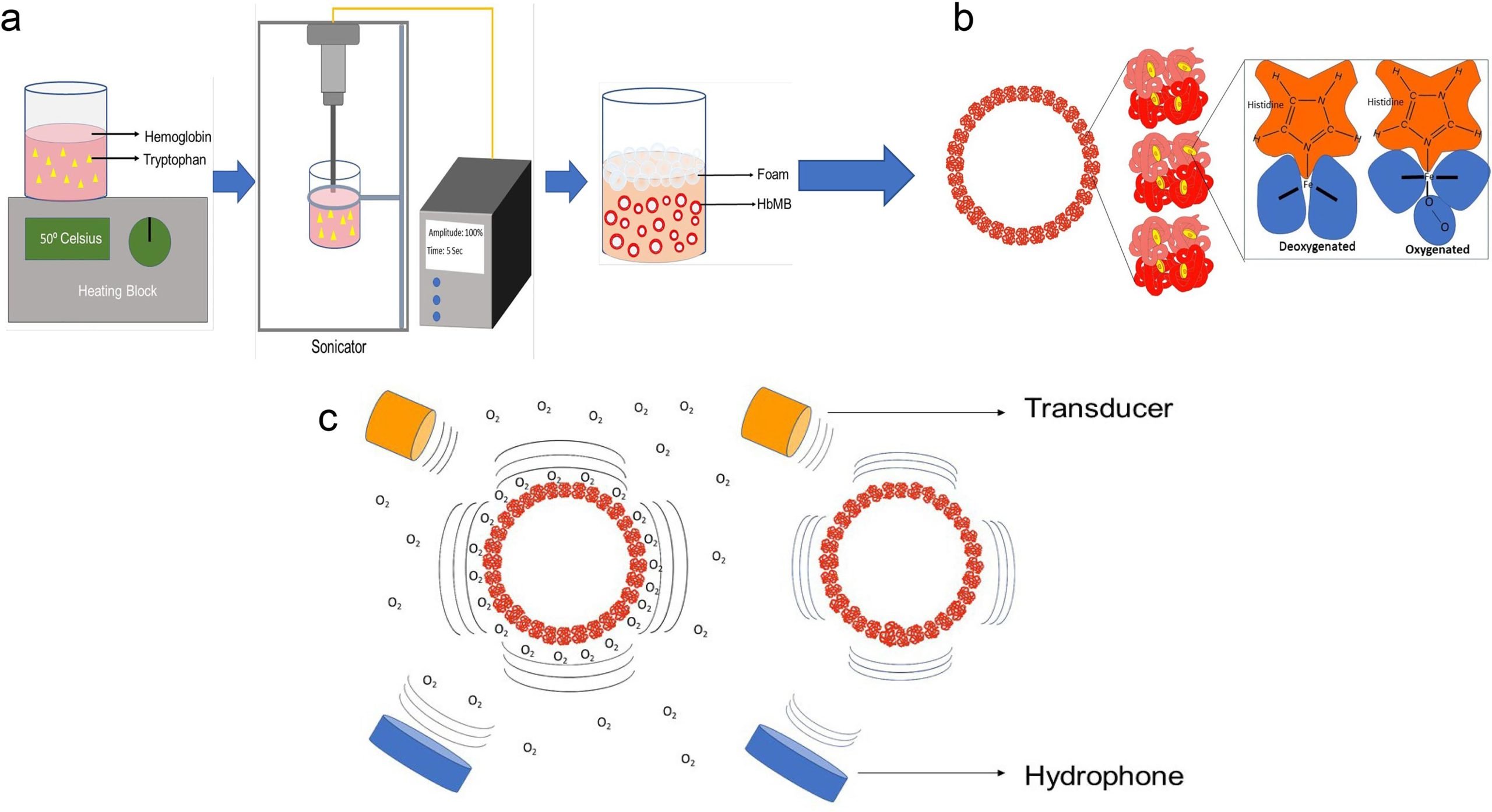
    Microbubbles are smaller than one hundredth of a millimeter in diameter and can be made by emulsifying lipids or proteins with a gas. The gas filling of microbubbles causes them to oscillate and vibrate when ultrasound is applied, scattering energy and generating an acoustic response that can be detected by a clinical ultrasound scanner. They are routinely used in medical imaging to provide greater contrast in tissue.

    Hemoglobin, the protein that gives red blood cells their signature color, will form a stable shell around microbubbles. It then continues to carry out its typical role of binding and releasing oxygen in blood.

    Microbubbles Tuned to Detect Oxygen Levels

    Sirsi and his team developed microbubbles to acoustically detect blood oxygen levels, since the microbubble shells are altered by structural hemoglobin changes in response to oxygen. The hemoglobin shell is continually responsive to oxygen after surrounding the bubble and has been optimized to perform in living organisms’ circulation.

    “When oxygen binds to hemoglobin, there are structural changes in the protein that change the mechanical properties,” said Sirsi. “The mechanical properties of the shell dictate the acoustic response of a bubble, so our hypothesis was that different acoustic responses would be seen as the shell gets stiffer or more elastic.”

    Preliminary results show a strong correlation between oxygen concentration and the acoustic bubble response, highlighting the potential use of microbubbles as oxygen sensors. This capability would have many benefits for medicine and imaging, including evaluating oxygen-deprived regions of tumors and in the brain.

    Meeting: 181st Meeting of the Acoustical Society of America

    Never miss a breakthrough: Join the SciTechDaily newsletter.
    Follow us on Google and Google News.

    Acoustical Society of America Acoustics Blood
    Share. Facebook Twitter Pinterest LinkedIn Email Reddit

    Related Articles

    COVID-19 Creates Hearing and Balance Disorders – Aggravates Tinnitus Symptoms

    Personalized Soundscape To Help People With Dementia With Time and Place Recognition

    Lung Ultrasounds Could Help Physicians Predict if a Patient With COVID-19 Will Worsen

    Smarter Traffic Signs With Doppler Radar, Traffic and Weather Sensors for Real-Time Driver Alerts

    Doctor’s Warn: COVID-19 May Cause Deadly Blood Clots – Higher Risk for Some Women

    Advances in Simple Blood Tests for Alzheimer’s

    Sound Quality Comparison: 3D-Printed vs. Traditional Musical Instruments

    Burps in “Rick and Morty” Analyzed for Latent Linguistic Meaning

    Compound in Panda Blood Could Fight Superbugs

    Leave A Reply Cancel Reply

    • Facebook
    • Twitter
    • Pinterest
    • YouTube

    Don't Miss a Discovery

    Subscribe for the Latest in Science & Tech!

    Trending News

    Beyond Pain Relief: Scientists Discover a Protein That Could Stop Osteoarthritis in Its Tracks

    Scientists Discover Why Alcohol Prevents the Liver From Healing, Even After You Quit

    Scientists Stunned As Volcano Removes Methane From the Air

    Scientists Discover Signs Africa May Be Splitting Apart Beneath Zambia

    Common Blood Pressure Drug Supercharges Cancer Treatment in Surprising New Study

    540-Million-Year-Old Fossils Reveal a Huge Surprise About Early Life on Earth

    Scientists Reverse Stroke Damage Using Stem Cells in Breakthrough Study

    Eating One Egg a Day Could Cut Alzheimer’s Risk by 27%

    Follow SciTechDaily
    • Facebook
    • Twitter
    • YouTube
    • Pinterest
    • Newsletter
    • RSS
    SciTech News
    • Biology News
    • Chemistry News
    • Earth News
    • Health News
    • Physics News
    • Science News
    • Space News
    • Technology News
    Recent Posts
    • Physicists Observe Strange Quantum Rotation Effect That Defies Intuition
    • Europe Was Never a Giant Dark Forest, New 20-Million-Year Study Reveals
    • Scientists Discover Bizarre 100-Million-Year-Old Insect With Giant Claws
    • New Study Challenges What We Know About Consciousness and the Brain
    • Scientists Discover Ancient “Language Switches” Hidden in Human DNA
    Copyright © 1998 - 2026 SciTechDaily. All Rights Reserved.
    • Science News
    • About
    • Contact
    • Editorial Board
    • Privacy Policy
    • Terms of Use

    Type above and press Enter to search. Press Esc to cancel.