
Geoscientists from Goethe University create sedimentary archive with annual resolution.
The hurricanes in the Caribbean became more frequent and their force varied noticeably around the same time that classical Mayan culture in Central America suffered its final demise: We can gain these and other insights by looking at the climate archive created under the leadership of geoscientists from Goethe University and now presented in an article in Nature journal’s Scientific Reports on July 16, 2020.
Tropical cyclones in the Atlantic (hurricanes) are a substantial threat for the lives and property of the local population in the Caribbean and neighboring regions, such as the south-east of the USA. The storms’ increasing force, described in Chapter 15 of the report by the Intergovernmental Panel on Climate Change (IPCC Report), raises the probability of ecological and social catastrophes, as the occurrence of such cyclones over the past 20 years, which caused devastating damage, has shown.
The climate models used to date, which could help to estimate the danger better, are, however, based on data that are lacking in spatial and temporal depth. Instrumental climate data, such as regular measurement of sea surface temperatures and reliable chronicling of hurricanes, date back only to the 19th century, at most.
In the framework of a research project (Gi 222/31) funded by the German Research Foundation, the Biosedimentology Working Group at the Department of Geosciences of the Faculty of Geosciences and Geography (Professor Eberhard Gischler) of Goethe University has now been able to build up and analyze a sedimentary “storm archive” that covers almost the entire Common Era (2,000 years) with annual resolution.
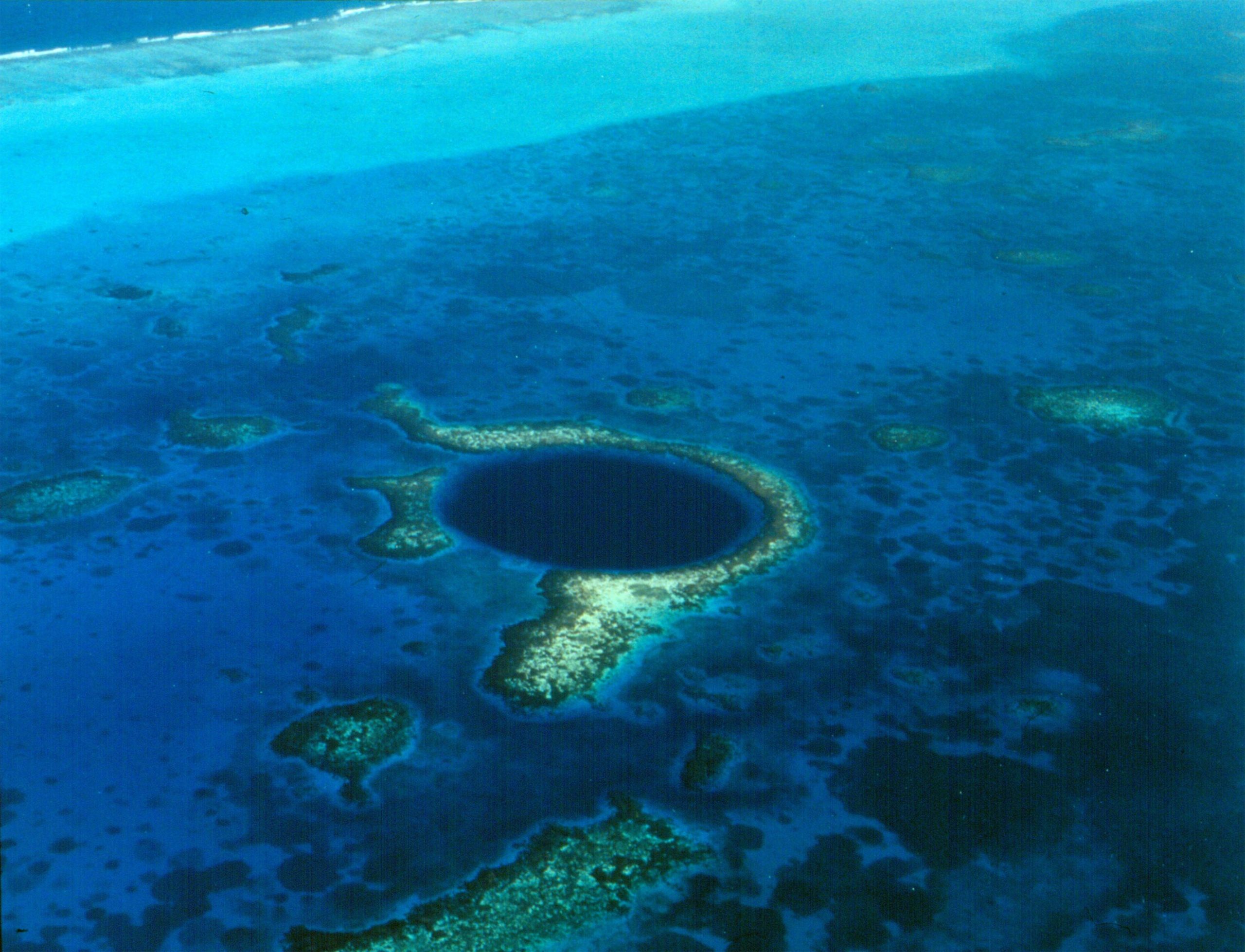
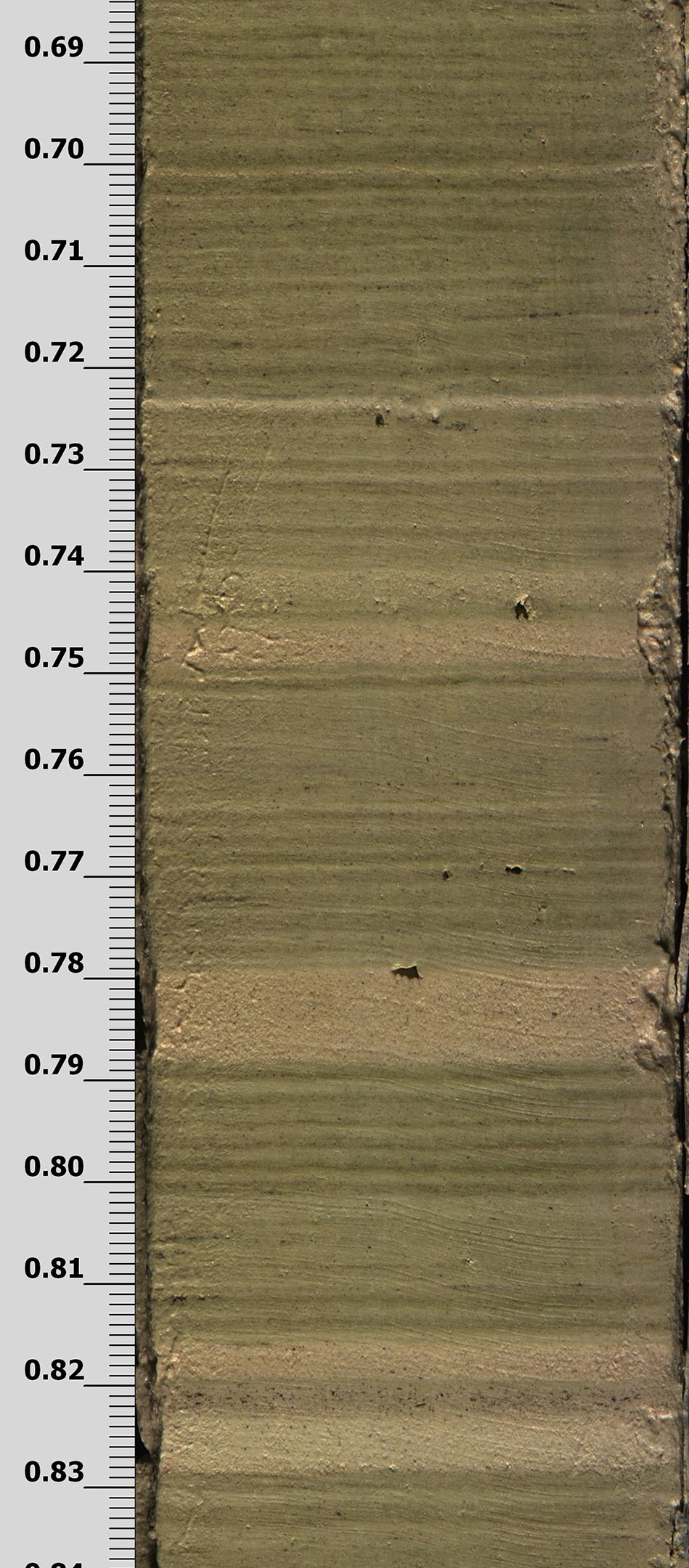
The archive comprises fine-grained annual layers of sediments from the 125-meter-deep bottom of the Blue Hole, a flooded karst sinkhole on the Lighthouse Reef Atoll off the coast of Belize (Central America). There, 2.5 mm of lime mud, composed of shell debris from organisms in the reef lagoon along with changing amounts of organic matter, collect year after year. Coarser layers up to several centimeters thick that constitute tempestites (storm sediments) are intercalated in these fine-grained sediments. They mostly consist of shell debris from reef organisms living on the edge of the atoll. The almost 9-meter-long (30-foot-long) drill core from the bottom of the Blue Hole, which was recovered with the help of an electrical vibracorer, spans the last 1,885 years with a total of 157 storm layers.
In the framework of extensive studies conducted by doctoral researcher Dominik Schmitt and collaboration between the Biosedimentology Working Group and colleagues at the University of Bern (Switzerland), it has become apparent that both short-term and long-term climate phenomena, such as the El Niño Southern Oscillation (ENSO), the North Atlantic Oscillation (NAO) and the Atlantic Multidecadal Oscillation (AMO), have influenced storm activity over the last 2,000 years and are mirrored in the new climate archive.
The beginning of the Medieval Warm Period (approx. AD 900-1100) constitutes an important transition period when the activity of tropical cyclones changed substantially, presumably in conjunction with the shift of the Intertropical Convergence Zone (the low-pressure zone where northern and southern trade winds converge) towards the south: From AD 100-900, storm activity in the region tended to be more stable and weaker, while since AD 900 up until today it has been more variable and more vigorous.
Interestingly, this change in the increase of cyclone frequency goes hand in hand with the occurrence of a few, very thick, coarse-grained storm layers and coincides with the final demise of the classical Mayan culture in Central America. It is possible that the increased impact of hurricanes on the Central American mainland, combined with extensive flooding of cultivated land in the Mayan lowlands and rainfall-induced erosion in the backlands of the Mayan Mountains of Belize — apart from the recurring periods of drought already known — was another environmental factor that influenced the end of the Maya’s high culture.
Reference: “Caribbean cyclone activity: an annually-resolved Common Era record” by Dominik Schmitt, Eberhard Gischler, Flavio S. Anselmetti and Hendrik Vogel, 16 July 2020, Scientific Reports.
DOI: 10.1038/s41598-020-68633-8
Never miss a breakthrough: Join the SciTechDaily newsletter.
Follow us on Google and Google News.