
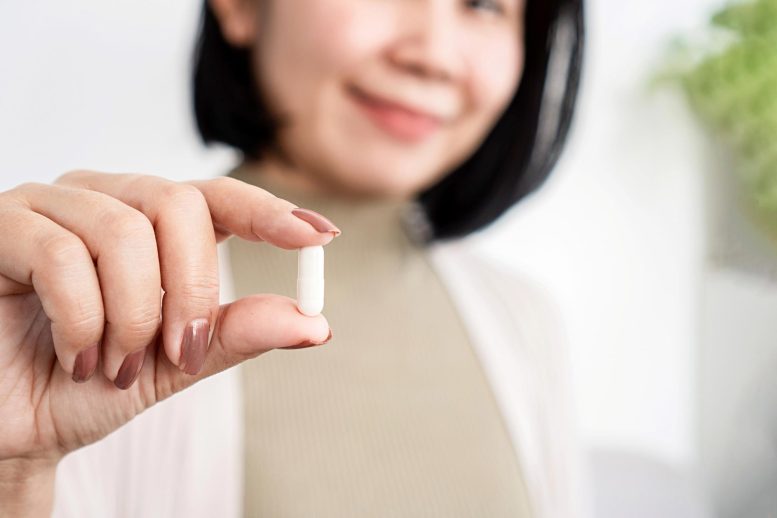
RUSH researchers found that HMB, a bodybuilding supplement, may help protect memory and prevent Alzheimer’s disease progression. Studies in mice have demonstrated its potential effectiveness in reducing plaques and enhancing neuronal growth, signaling a promising avenue for Alzheimer’s treatment.
A Potential Breakthrough in Memory Protection
A staple of a bodybuilder’s diet may be the secret to protecting your memory. RUSH researchers recently discovered that a muscle-building supplement called beta-hydroxy beta-methylbutyrate, also called HMB, may help protect memory, reduce plaques, and ultimately help prevent the progression of Alzheimer’s disease.
HMB is not a prescription drug or a steroid, but an over-the-counter supplement that is available in sports and fitness stores. Bodybuilders regularly use HMB to increase exercise-induced gains in muscle size and strength while improving exercise performance. HMB is considered safe even after long-term use, with no known side effects.
Potential Alzheimer’s Treatment
“This may be one of the safest and the easiest approaches to halt disease progression and protect memory in Alzheimer’s disease patients,” said Kalipada Pahan, PhD, the Floyd A. Davis, MD, Professor of Neurology and professor of neurological sciences, biochemistry, and pharmacology at RUSH Medical College.
Studies in mice with Alzheimer’s disease have shown that HMB successfully reduces plaques and increases factors for neuronal growth to protect learning and memory, according to neurological researchers at RUSH.
Understanding Alzheimer’s Disease
“Understanding how the disease works is important to developing effective drugs to protect the brain and stop the progression of Alzheimer’s disease,” Pahan said.
Previous studies indicate that a family of proteins known as neurotrophic factors are drastically decreased in the brains of people with Alzheimer’s disease and have been found to help in survival and function of neurons, which are cells that receive and send messages from the body to the brain and vice versa.
HMB’s Role in the Brain
“Our study found that after oral consumption, HMB enters into the brain to increase these beneficial proteins, restore neuronal connections and improve memory and learning in mice with Alzheimer’s-like pathology, such as plaques and tangles,” Pahan said.
The study findings indicate that HMB stimulates a nuclear hormone receptor called PPARα within the brain that regulates the transport of fatty acids, which is key to the success of HMB as a neuroprotective supplement.
The Future of Treatment
“If mouse results with HMB are replicated in Alzheimer’s disease patients, it would open up a promising avenue of treatment of this devastating neurodegenerative disease,” Pahan said.
Alzheimer’s disease is an irreversible, progressive brain disease that slowly destroys memory and thinking skills and, eventually, even the ability to carry out the simplest tasks. In most people with Alzheimer’s, symptoms first appear after age 60. Alzheimer’s disease is the most common cause of dementia among older people, affecting as many as 6 million Americans and more than 10% of people age 65 and older. About two-thirds of Americans with Alzheimer’s disease are women.
Results from the study, funded by the National Institutes of Health, were recently published in the journal Cell Reports.
Reference: “Muscle-building supplement β-hydroxy β-methylbutyrate binds to PPARα to improve hippocampal functions in mice” by Ramesh K. Paidi, Sumita Raha, Avik Roy and Kalipada Pahan, 11 July 2023, Cell Reports.
DOI: 10.1016/j.celrep.2023.112717
Other RUSH researchers involved in this study are Ramesh K. Paidi, PhD, Sumita Raha, PhD, and Avik Roy, PhD.
Never miss a breakthrough: Join the SciTechDaily newsletter.
Follow us on Google and Google News.