
Lemurs Show There’s No Single Formula for Lasting Love
Humans aren’t the only mammals that form long-term bonds with a single, special mate — some bats, wolves, beavers, foxes, and other animals do, too. But new research suggests the brain circuitry that makes love last in some species may not be the same in others.
The study, appearing February 12 in the journal Scientific Reports, compares monogamous and promiscuous species within a closely related group of lemurs, distant primate cousins of humans from the island Madagascar.
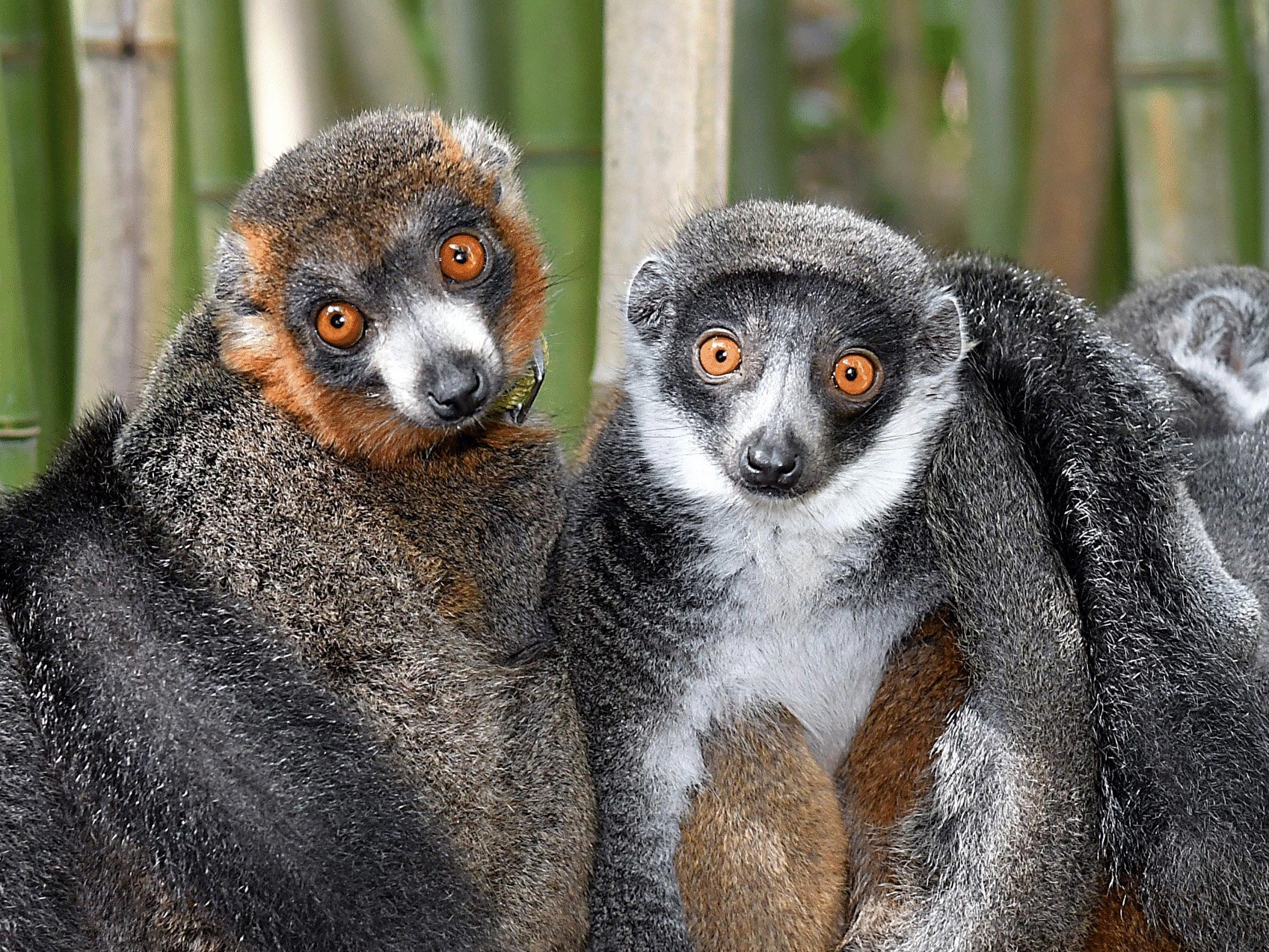
Red-bellied lemurs and mongoose lemurs are among the few species in the lemur family tree in which male-female partners stick together year after year, working together to raise their young and defend their territory.
Once bonded, pairs spend much of their waking hours grooming each other or huddled side by side, often with their tails wrapped around each other’s bodies. Males and females of these species spend a third of their lifetime with the same mate. The same cannot be said of their closest relatives, who change partners often.
The Rarity of Mammalian Monogamy
To biologists, monogamy is somewhat a mystery. That’s in part because in many animal groups it’s rare. While around 90% of bird species practice some form of fidelity to one partner, only 3% to 5% of mammals do. The vast majority of the roughly 6,500 known species of mammals have open relationships, so to speak.
“It’s an uncommon arrangement,” said lead author Nicholas Grebe, a postdoctoral associate in professor Christine Drea’s lab at Duke University.
Which raises a question: what makes some species biologically inclined to pair up for the long haul while others play the field?
Hormones Behind Lasting Bonds
Studies over the last 30 years in rodents point to two hormones released during mating, oxytocin, and vasopressin, suggesting that the key to lasting love may lie in differences in how they act on the brain.
Some of the first clues came from influential research on prairie voles, small mouse-like mammals that, unlike most rodents, mate for life. When researchers compared the brains of monogamous prairie voles with their promiscuous counterparts, montane voles, and meadow voles, they found that prairie voles had more “docking sites” for these hormones, particularly in parts of the brain’s reward system.
Since these “cuddle chemicals” were found to enhance male-female bonds in voles, researchers have long wondered if they might work the same way in humans.
That’s why the Duke-led team turned to lemurs. Despite being our most distant primate relatives, lemurs are a closer genetic match to humans than voles are.
The researchers used an imaging technique called autoradiography to map binding sites for oxytocin and vasopressin in the brains of 12 lemurs that had died of natural causes at the Duke Lemur Center.
The animals represented seven species: monogamous red-bellied and mongoose lemurs along with five promiscuous species in the same genus.
“They’re really the only comparable natural experiment to look for biological signatures of monogamy in primates,” Grebe said.
Comparing the brain imaging results in lemurs with previous results in voles and monkeys revealed some noticeable differences in the density and distribution of hormone receptors. In other words, oxytocin and vasopressin appear to act on different parts of the brain in lemurs — which means they may also have different effects, depending on their target cell’s location.
But within lemurs, the researchers were surprised to find few consistent differences between monogamous species and promiscuous ones.
“We don’t see evidence of a pair-bond circuit” akin to that found in rodent brains, Grebe said.
Testing the Limits of Oxytocin
As a next step, the team is looking at how lemur couples behave toward each other if the actions of oxytocin are blocked, by feeding them an antagonist that temporarily prevents oxytocin from binding to its receptors in the brain.
So what can lemurs teach us about love? The authors say their findings caution against drawing simple conclusions based on rodent experiments about how human social behaviors came to be.
Oxytocin may be the “potion of devotion” for voles, but it may be the combined actions and interactions of multiple brain chemicals, along with ecological factors, that create long-lasting bonds in lemurs and other primates, including humans, Grebe said.
“There are probably a number of different ways through which monogamy is instantiated within the brain, and it depends on what animals we’re looking at,” Grebe said. “There’s more going on than we originally thought.”
Reference: “Neural Correlates of Mating System Diversity: Oxytocin and Vasopressin Receptor Distributions in Monogamous and Non-Monogamous Eulemur” by Nicholas M. Grebe, Annika Sharma, Sara M. Freeman, Michelle C. Palumbo, Heather B. Patisaul, Karen L. Bales and Christine M. Drea, 12 February 2021, Scientific Reports.
DOI: 10.1038/s41598-021-83342-6
Other authors were: Annika Sharma at Duke, Sara Freeman at Utah State University, Michelle Palumbo at the California National Primate Research Center, Heather Patisaul at North Carolina State University, and Karen Bales at the University of California, Davis.
This work was supported by grants from the National Science Foundation (SBE-1808803), the National Institute of Mental Health (NIMH R21MH115680), the Josiah Charles Trent Memorial Foundation Endowment Fund, the Charles Lafitte Foundation for Research, and Duke University.
Never miss a breakthrough: Join the SciTechDaily newsletter.
Follow us on Google and Google News.