
Close Menu
    Facebook X (Twitter) Instagram
    SciTechDaily
    • Biology
    • Chemistry
    • Earth
    • Health
    • Physics
    • Science
    • Space
    • Technology
    Facebook X (Twitter) Pinterest YouTube RSS
    SciTechDaily
    Home»Biology»Brain’s Reading Centers Are Culturally Universal No Matter What Language
    Biology

    Brain’s Reading Centers Are Culturally Universal No Matter What Language

    By SciTechDailyNovember 27, 2012No Comments3 Mins Read
    Facebook Twitter Pinterest Telegram LinkedIn WhatsApp Email Reddit
    Share
    Facebook Twitter LinkedIn Pinterest Telegram Email Reddit
    mandarin-flash-cards
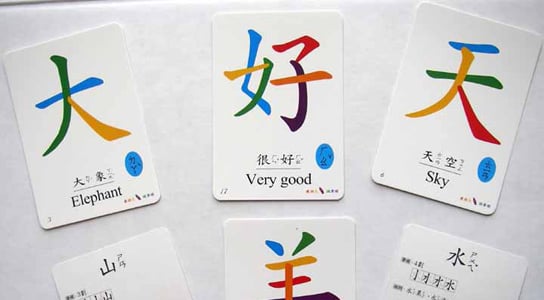
    People utilize the same brain areas for reading regardless of the language they are reading.

    The brain scans of French and Mandarin native speakers have shown that people use the same areas in the brain for reading, no matter what language they are reading.

    The scientists published their findings in the journal Proceedings of the National Academy of Sciences. Reading is connected to two neural systems, one that recognizes the shape of the word and another that assesses the physical movement used to make the marks on a page, states Stanislas Dehaene, a cognitive neuroscientist at the National Institute of Health and Medical Research in Gif-sur-Yvette, France.

    Yet it has been unclear whether the brain networks for reading are universal or culturally distinct. Previous studies have indicated that alphabetic writing systems, like English and French, and logographic ones, like Mandarin, Korean, Kanji, might engage different networks in the brain. Dehaene and his colleagues used functional magnetic resonance imaging (fMRI) to examine brain activity in Chinese and French people while they read their native languages.

    Both Chinese and French people use the visual and gestural systems while reading, but with different emphases that reflect the demands of each language. Hand and eye are critical players in reading. This could help explain why people with dyslexia have very poor handwriting as well as poor spelling.

    This could also help develop strategies for general literacy, and ways to attune them to children or adults. All languages activate a shape-recognition region in the brain’s posterior left hemisphere, the visual word-forming area (VWFA). But some research has indicated that readers of Chinese, which places a great emphasis on the order and direction of strokes, also use other brain networks involved win motor skills.

    Motor processing is used universally for writing and involves the Exner’s area in the brain. This region is also activated in reading to interpret the gestures assumed to have gone into making the marks.

    Dehaene measured Chinese and French readers’ response times in recognizing words on a screen. The responses were being manipulated by a process called priming, in which other words or world-like symbols appear for just 50 milliseconds before the target word is shown. This is too brief to be registered in the prime consciousness.

    The images helped assist or hinder the recognition process by tampering with the visual or the gestural reading system. Researchers found that both the VWFA and Exner’s area were activated in French and Chinese subjects, but the effects of gestural direction were stronger for Chinese.

    Reference: “Universal brain systems for recognizing word shapes and handwriting gestures during reading” by Kimihiro Nakamura, Wen-Jui Kuo, Felipe Pegado, Laurent Cohen, Ovid J. L. Tzeng and Stanislas Dehaene, 26 November 2012, Proceedings of the National Academy of Sciences.
    DOI: 10.1073/pnas.1217749109

    Never miss a breakthrough: Join the SciTechDaily newsletter.
    Follow us on Google and Google News.

    Brain Brain Activity Language Neurology Neuroscience Reading
    Share. Facebook Twitter Pinterest LinkedIn Email Reddit

    Related Articles

    Why Older People Are More Susceptible to Fraud

    Brain Scans of Rappers During Improvisation Show Creativity At Work

    Study Shows Broca’s Area Has Multiple Roles

    Growth in Brain’s White Matter Tracts Could Predict Literacy

    Life Long Learning and Experiences Are Good for the Brain

    Von Economo Neuron Discovered in the Insula of Macaque Monkeys

    Researchers Use FDDNP–PET Scanning to Predict Cognitive Decline

    Neuroscientists Create Model to Study Burst Suppression and Brain States

    Researchers Use fMRI to Study How Humor Activates Kids’ Brain Regions

    Leave A Reply Cancel Reply

    • Facebook
    • Twitter
    • Pinterest
    • YouTube

    Don't Miss a Discovery

    Subscribe for the Latest in Science & Tech!

    Trending News

    AI Could Detect Early Signs of Alzheimer’s in Under a Minute – Far Before Traditional Tests

    What if Dark Matter Has Two Forms? Bold New Hypothesis Could Explain a Cosmic Mystery

    This Metal Melts in Your Hand – and Scientists Just Discovered Something Strange

    Beef vs. Chicken: Surprising Results From New Prediabetes Study

    Alzheimer’s Breakthrough: Scientists Discover Key Protein May Prevent Toxic Protein Clumps in the Brain

    Quantum Reality Gets Stranger: Physicists Put a Lump of Metal in Two Places at Once

    Scientists May Have Found the Key to Jupiter and Saturn’s Moon Mystery

    Scientists Uncover Brain Changes That Link Pain to Depression

    Follow SciTechDaily
    • Facebook
    • Twitter
    • YouTube
    • Pinterest
    • Newsletter
    • RSS
    SciTech News
    • Biology News
    • Chemistry News
    • Earth News
    • Health News
    • Physics News
    • Science News
    • Space News
    • Technology News
    Recent Posts
    • One of the Universe’s Largest Stars May Be Getting Ready To Explode
    • Scientists Discover Enzyme That Could Supercharge Ozempic-Like Weight Loss Drugs
    • Asthma and Depression Don’t Mix the Way Scientists Expected
    • Why Promising Cancer Drugs Failed: Scientists Uncover the Missing Piece
    • Popular Sweetener Linked to DNA Damage – “It’s Something You Should Not Be Eating”
    Copyright © 1998 - 2026 SciTechDaily. All Rights Reserved.
    • Science News
    • About
    • Contact
    • Editorial Board
    • Privacy Policy
    • Terms of Use

    Type above and press Enter to search. Press Esc to cancel.