
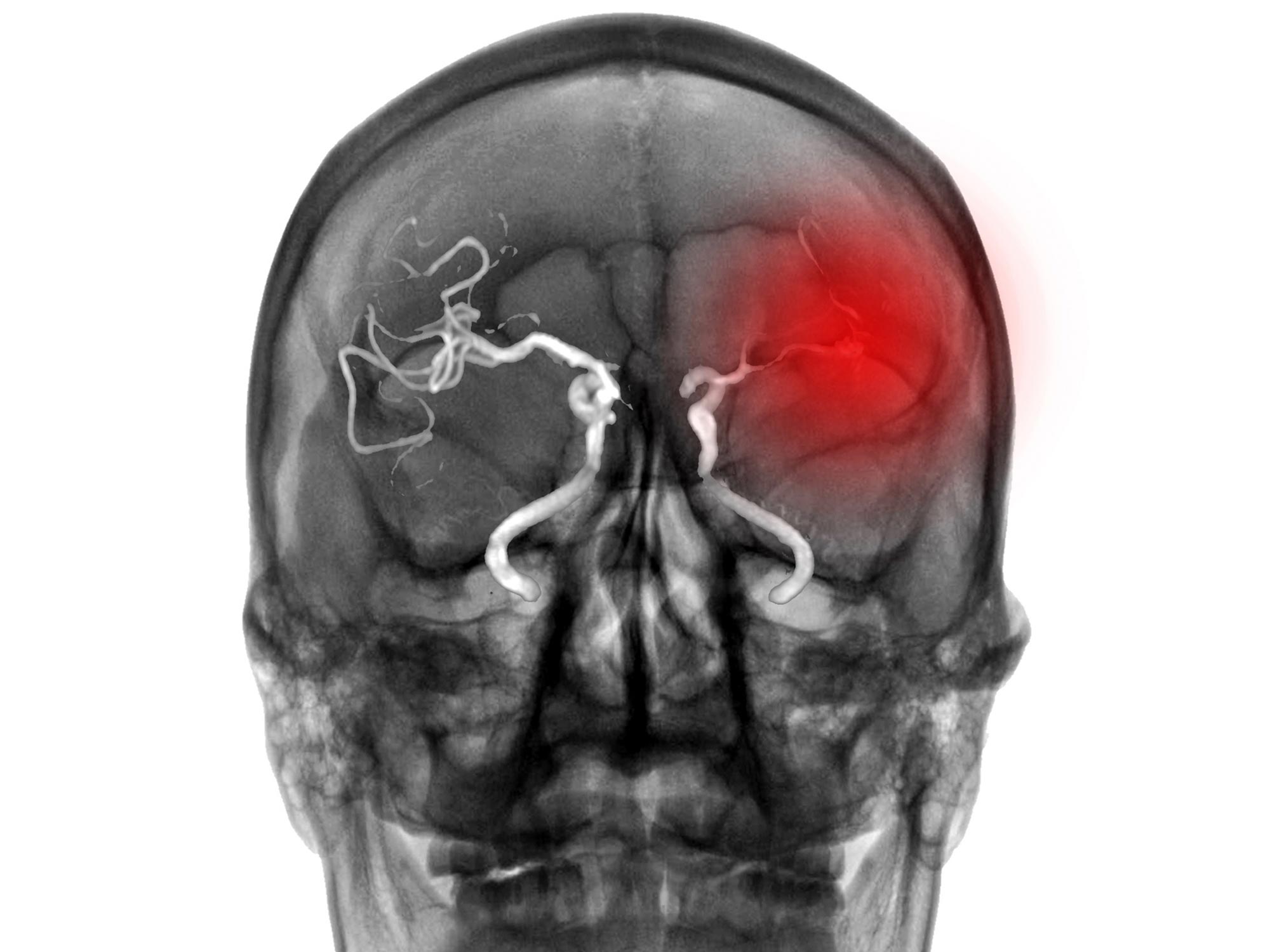
Chronic stress could be a hidden stroke risk for younger women, according to new research.
Scientists found that women aged 18 to 49 who reported moderate stress levels had a significantly higher likelihood of stroke compared to those with low stress. Interestingly, the connection wasn’t seen in men, leaving researchers with more questions than answers.
Chronic Stress and Stroke Risk in Younger Adults
People who experience chronic stress may face a higher risk of stroke, according to a study published today (March 5, 2025) in Neurology, the medical journal of the American Academy of Neurology. The study focused on younger adults and found a link between stress and stroke of unknown cause in women but not in men. However, the research does not prove that stress directly causes strokes — it only highlights a connection.
“Younger people often experience stress due to the demands and pressures associated with work, including long hours and job insecurity, as well as financial burdens,” said Nicolas Martinez-Majander, MD, PhD, of the Helsinki University Hospital in Finland. “Previous research has shown that chronic stress can negatively affect physical and mental health. Our study found it may increase the risk of stroke in younger women.”
Study Design and Participant Selection
Researchers analyzed 426 adults aged 18 to 49 who had experienced an ischemic stroke with no known cause. They were compared to 426 people of the same age and sex who had not had a stroke. Ischemic strokes occur when blood flow to part of the brain is blocked, potentially causing weakness, difficulty speaking, vision problems, or even death.
Participants completed a questionnaire about stress levels over a one-month period. Those with stroke were asked after their stroke to record stress levels in the month prior to their stroke. Participants were asked 10 questions, such as “In the last month, how often have you felt that you were unable to control the important things in your life?” Scores for each question ranged from zero to four, with four meaning “very often.” A total score of 0 to 13 represented low stress; 14 to 26, moderate stress; and 27 to 40, high stress. Those with stroke had an average score of 13 compared to those without stroke who had an average score of 10.
Striking Differences in Stress and Stroke Risk
People with stroke were more likely to have at least moderate stress levels. Of those with stroke, 46% had moderate or high stress levels compared to 33% of those who did not have stroke.
After adjusting for factors that could affect risk of stroke such as education level, alcohol use and blood pressure, researchers found for female participants, moderate stress was associated with a 78% increased risk of stroke and high stress was associated with a 6% increased risk. Researchers did not find a link between stress and stroke in male participants.
Unanswered Questions and Future Research
“More research is needed to understand why women who feel stressed, but not men, may have a higher risk of stroke,” said Martinez-Majander. “In addition, we need to further explore why the risk of stroke in women was higher for moderate stress than high stress. Knowing more about how stress plays a role could help us to create better ways to prevent these strokes.”
A limitation of the study was that people experiencing higher levels of stress may have been less likely to enroll in the study, which could have affected the results.
Reference: “Association Between Self-Perceived Stress and Cryptogenic Ischemic Stroke in Young AdultsA Case-Control Study” by Shakar Kutal, Lauri Juhani Tulkki, Tomi Sarkanen, Petra Redfors, Katarina Jood, Annika Nordanstig, Nilüfer Yeşilot, Mine Sezgin, Pauli Ylikotila, Marialuisa Zedde, Ulla Junttola, Annette Fromm, Kristina Ryliskiene, Radim Licenik, Phillip Ferdinand, Dalius Jatužis, Liisa Kõrv, Janika Kõrv, Alessandro Pezzini, Juha Sinisalo, Mika Lehto, Eva Gerdts, Jaana Autere, Ana Catarina Fonseca, Ulrike Waje-Andreassen, Bettina Von Sarnowski, Tiina Sairanen, Turgut Tatlisumak, Juha Huhtakangas, Pekka Jäkälä, Jukka Putaala and Nicolas Martinez-Majander, 5 March 2025, Neurology.
DOI: 10.1212/WNL.0000000000213369
The study was supported by the Helsinki and Uusimaa Hospital District, Academy of Finland, The Finnish Medical Foundation, The Sigrid Jusélius Foundation and Sahlgrenska University Hospital.
Never miss a breakthrough: Join the SciTechDaily newsletter.
Follow us on Google and Google News.