
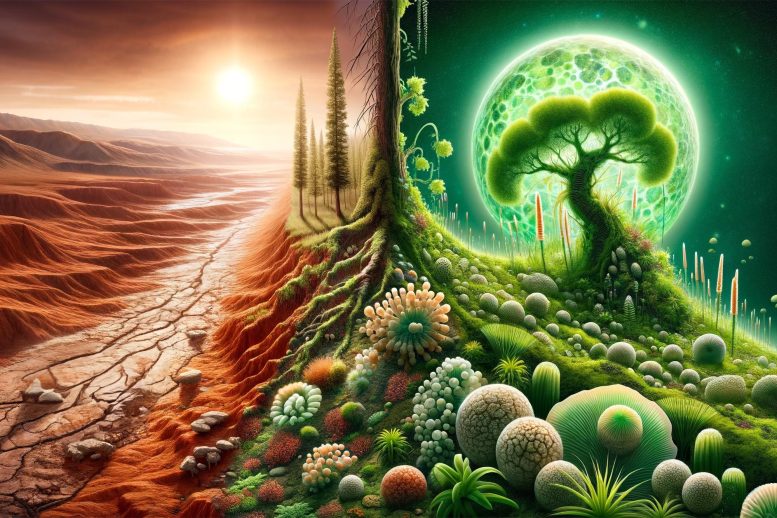
Microfossils found in Western Australia suggest a significant leap in life’s complexity during the Great Oxidation Event, hinting at the early evolution of complex organisms like algae.
Microfossils from Western Australia may capture a jump in the complexity of life that coincided with the rise of oxygen in Earth’s atmosphere and oceans, according to an international team of scientists.
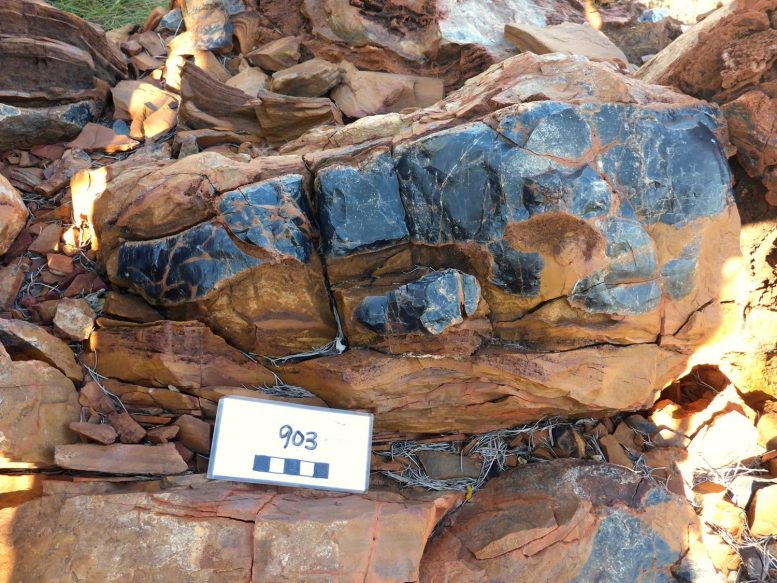
The findings, published in the journal Geobiology, provide a rare window into the Great Oxidation Event, a time roughly 2.4 billion years ago when the oxygen concentration increased on Earth, fundamentally changing the planet’s surface. The event is thought to have triggered a mass extinction and opened the door for the development of more complex life, but little direct evidence had existed in the fossil record before the discovery of the new microfossils, the scientists said.
First Direct Evidence Linking Environmental Change and Complex Life
“What we show is the first direct evidence linking the changing environment during the Great Oxidation Event with an increase in the complexity of life,” said corresponding author Erica Barlow, an affiliate research professor in the Department of Geosciences at Penn State. “This is something that’s been hypothesized, but there’s just such little fossil record that we haven’t been able to test it.”
Comparison to Modern Organisms and Algae
When compared to modern organisms, the microfossils more closely resembled a type of algae than simpler prokaryotic life — organisms like bacteria, for example — that existed prior to the Great Oxidation Event, the scientists said. Algae, along with all other plants and animals, are eukaryotes, more complex life whose cells have a membrane-bound nucleus.
More work is required to determine if the microfossils were left behind by eukaryotic organisms, but the possibility would have significant implications, the scientists said. It would push back the known eukaryotic microfossil record by 750 million years.
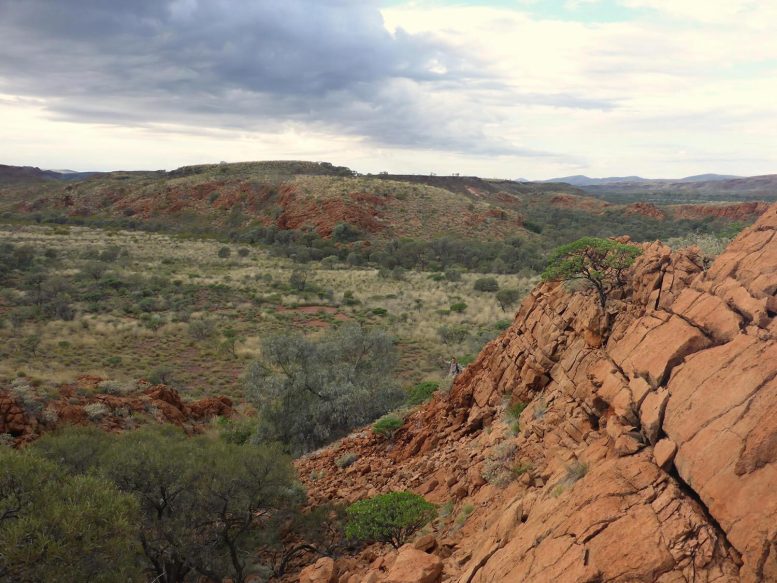
“The microfossils have a remarkable similarity to a modern family called Volvocaceae,” Barlow said. “This hints at the fossil being possibly an early eukaryotic fossil. That’s a big claim, and something that needs more work, but it raises an exciting question that the community can build on and test.”
Barlow discovered the rock containing the fossils while conducting her undergraduate research at the University of New South Wales (USNW) in Australia, and she conducted the current work as part of her doctoral work at UNSW and then while a postdoctoral researcher at Penn State.
Implications and Future Research
“These specific fossils are remarkably well preserved, which allowed for the combined study of their morphology, composition, and complexity,” said Christopher House, professor of geosciences at Penn State and a co-author of the study. “The results provide a great window into a changing biosphere billions of years ago.”
The scientists analyzed the chemical makeup and carbon isotopic composition of the microfossils and determined the carbon was created by living organisms, confirming that the structures were indeed biologic fossils. They also uncovered insights into the habitat, reproduction, and metabolism of the microorganisms.
Barlow compared the samples to microfossils from before the Great Oxidation Event and could not find comparable organisms. The microfossils she found were larger and featured more complex cellular arrangements, she said.
“The record seems to reveal a burst of life — there’s an increase in diversity and complexity of this fossilized life that we are finding,” Barlow said.
Compared to modern organisms, Barlow said, the microfossils have explicit similarities with algal colonies, including in the shape, size, and distribution of both the colony and individual cells and membranes around both cell and colony.
“They have a remarkable similarity and so, by that way of comparison, we could say these fossils were relatively complex,” Barlow said. “There is nothing like them in the fossil record, and yet, they have quite striking similarities to modern algae.”
Broader Implications for Understanding Life on Earth and Beyond
The findings have implications for both how long it took complex life to form on early Earth — the earliest, uncontroversial evidence of life is 3.5 billion years old — and what the search for life elsewhere in the solar system may reveal, the scientists said.
“I think finding a fossil that is this relatively large and complex, relatively early on in the history of life on Earth, kind of makes you question — if we do find life elsewhere, it might not just be bacterial prokaryotic life,” Barlow said. “Maybe there’s a chance there could be something more complex preserved — even if it’s still microscopic, it could be something of a slightly higher order.”
Reference: “Distinctive microfossil supports early Paleoproterozoic rise in complex cellular organisation” by Erica V. Barlow, Christopher H. House, Ming-Chang Liu, Maxwell T. Wetherington and Martin J. Van Kranendonk, 6 October 2023, Geobiology.
DOI: 10.1111/gbi.12576
Also contributing were Maxwell Wetherington, staff scientist at Penn State; Ming-Chang Liu, staff scientist at the Lawrence Livermore National Laboratory; and Martin Van Kranendonk, professor at the University of New South Wales in Australia.
The Australian Research Council, NASA and the National Science Foundation provided funding for this work.
Never miss a breakthrough: Join the SciTechDaily newsletter.
Follow us on Google and Google News.
1 Comment
Really painstaking findings of ĺìfe òn Earth and extending to further environment.
Thanks for the researchers and others who accompanied .