
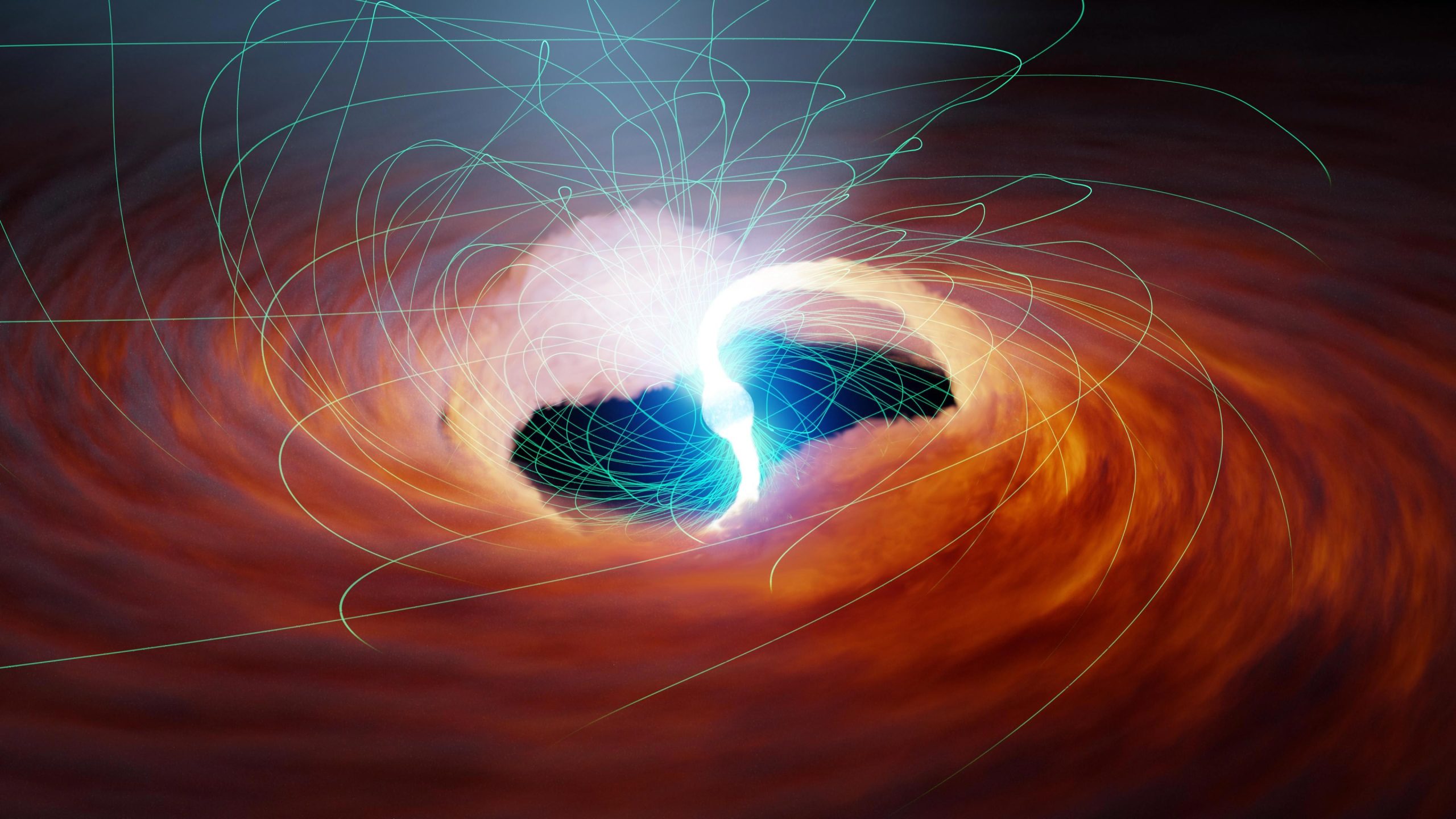
NASA’s Nuclear Spectroscopic Telescope Array (NuSTAR) has collected data showing that Ultra-luminous X-ray sources (ULXs) can exceed the Eddington limit, traditionally viewed as the maximum possible brightness for an object. The phenomenon might be due to powerful magnetic fields reshaping absorbed atoms, allowing neutron stars like M87 X-2 to accumulate more mass and emit more light than previously thought possible.
At the extreme end of astrophysics, there are all sorts of phenomena that seem to be counter-intuitive. For example, how can an object not possibly get any brighter? For a long time, this limit, known as the Eddington limit, was thought to be an upper bound on how bright an object could be, and it was directly correlated with the mass of that object. But observations showed that some objects were even brighter than this theoretical limit, and now data collected by NASA’s Nuclear Spectroscopic Telescope Array (NuSTAR) confirms that these objects are, in fact, breaking the Eddington limit. But why?
The simple answer is magnetic fields. Or at least that is the most likely answer. Unfortunately, the only way to test this answer is by observing astronomical objects, as the magnetic fields around these Ultra-luminous X-ray sources (ULXs) are billions of times stronger than anything we could produce on Earth.
Luckily, the universe is a vast place, so there are plenty of ULXs to look at to determine whether magnetic fields are the cause, but first, it’s essential to understand what causes the limit in the first place.
Video discussing some of the study’s findings.
Anyone familiar with the concept of solar sailing understands that photons can exert pressure when they run into an object. It might not be much pressure, but it is some, at least. When ULXs get towards the brighter end of the spectrum, they emit so many photons that the pressure from those photons should push the gas and dust that is the source of those photons away, stopping their supply and thereby dimming the object.
Various explanations have been offered for why some objects might appear brighter. One of the most common ones is that many ULXs are strongly directional. In these instances, a “wind” would form a cone structure around the source object and push photons in a specific direction. If that direction happened to be pointed at Earth, the object would appear brighter than the Eddington limit.
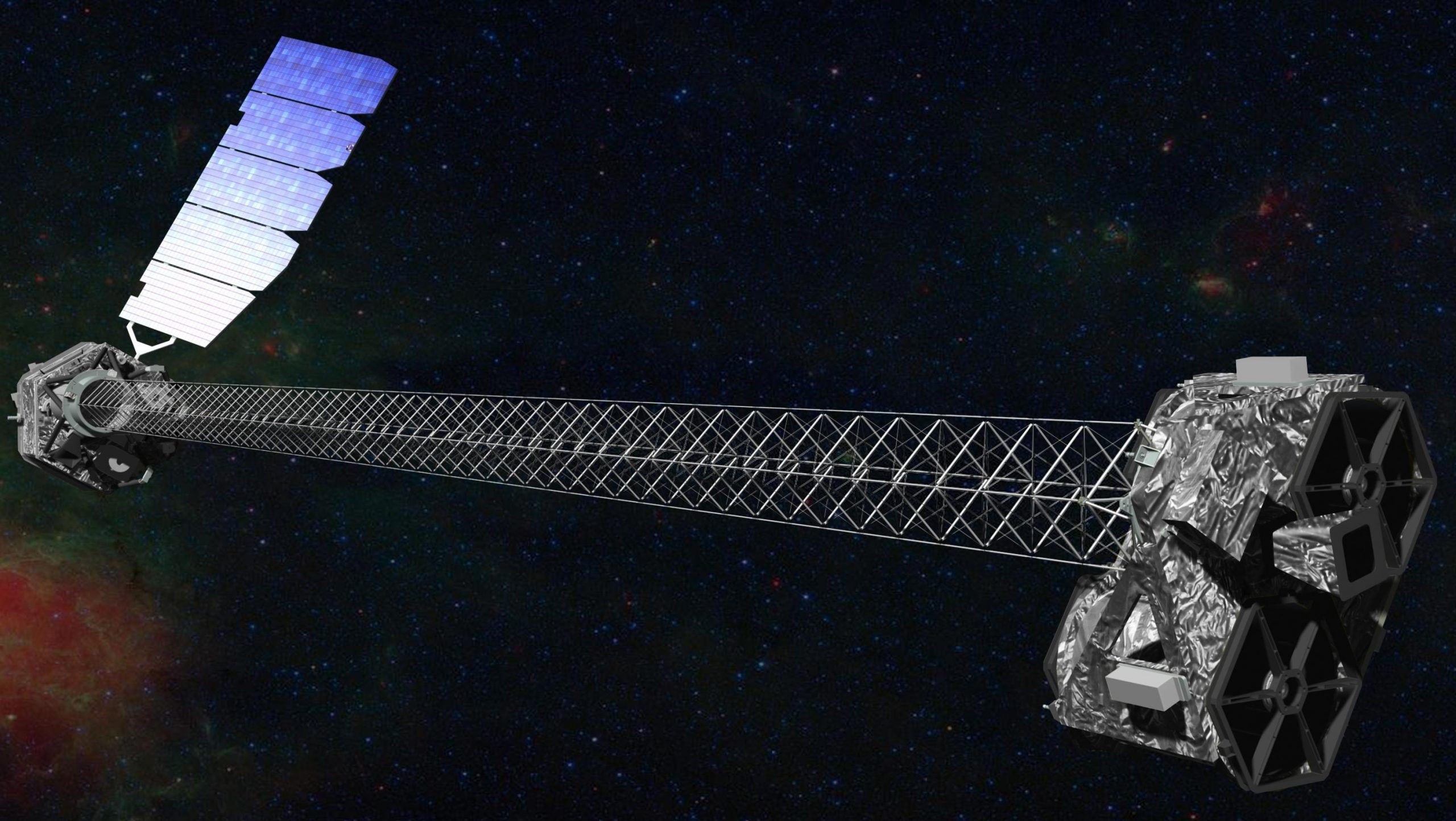
But the new study offers up a different explanation. It used data from NuSTAR on an object originally found to be a neutron star in 2014. The object, M82 X-2, thereby disproved a previous theory that all ULXs had to be black holes. Neutron stars are slightly less massive than black holes but still have an immense gravitational pull that vaporizes any particles in their vicinity. Those vaporized particles are what create the X-ray energy that is detectable by NuSTAR.
Kurzgesagt video describing neutron stars, which form the basis of the ULX in the study.
M87 X-2 happens to be creating a lot of that energy, and the researchers found that was because it was stealing 9 billion trillion tons of material every year from a nearby star. That is the equivalent of swallowing 1.5 Earths every year. Taking that material transfer as a starting point, the researchers calculated the expected brightness of M87 X-2, finding a value consistent with observations. And that value is also higher than the Eddington limit.
This points back to why exactly it is higher. In the case of M87 X-2, the data endorse a theory where the atoms themselves that are being absorbed into the neutron star are forced by extreme magnetic fields into shapes almost like strings instead of their usual spherical configuration. That makes them more challenging for photons to push away, thereby allowing more mass to agglomerate onto the star and for it to keep producing photons on a massive scale.
Further observation of M87 X-2 and other ULXs is necessary to test the theory more. There will undoubtedly be plenty more of that kind of data coming long as NuSTAR and other X-Ray observatories continue their work.
Adapted from an article originally published on Universe Today.
For more on this topic, see NASA Unveils the Secret Behind Ultra-Luminous X-Ray Sources.
Never miss a breakthrough: Join the SciTechDaily newsletter.
Follow us on Google and Google News.
1 Comment
The only limits in this universe are the limited minds perceiving it.