
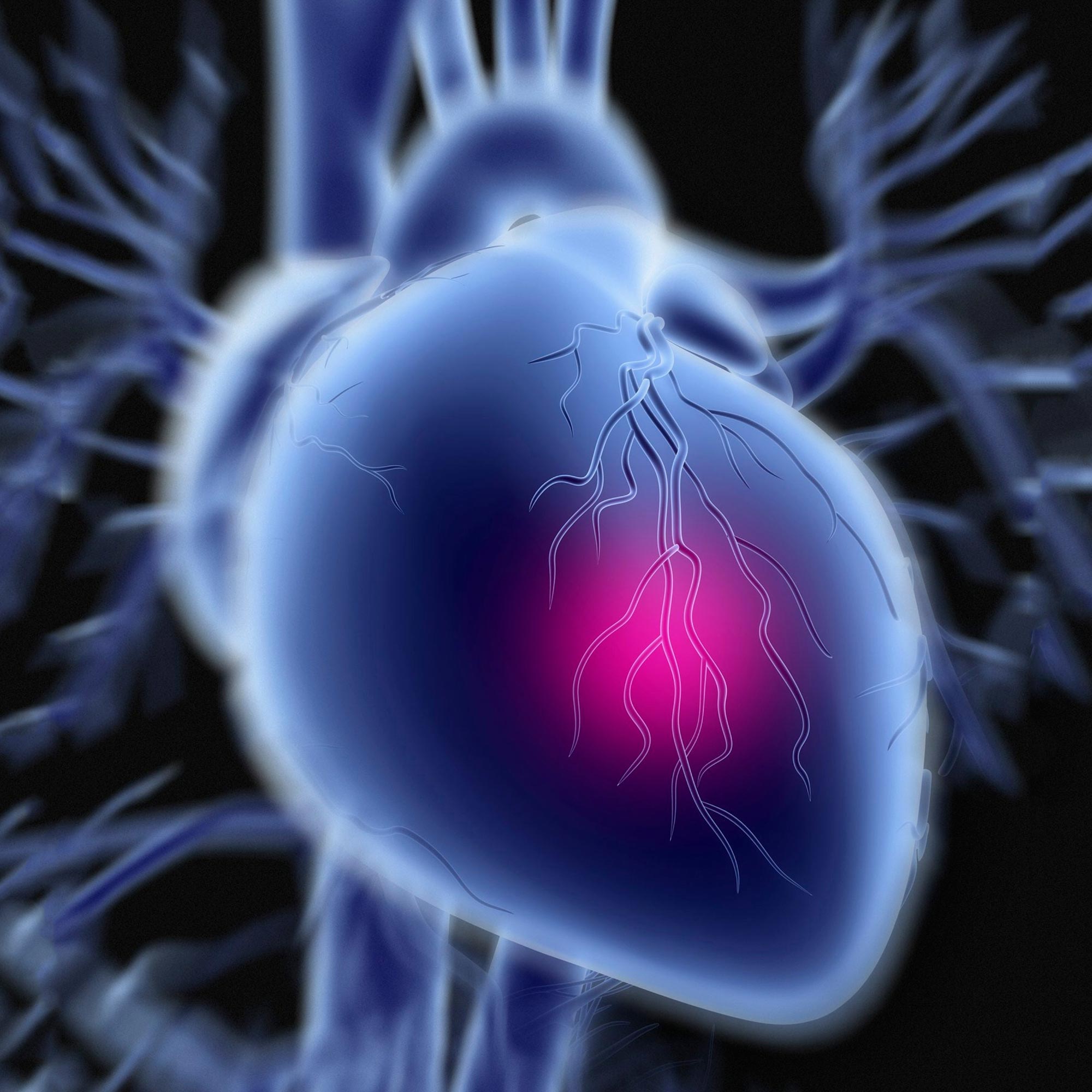
Scientists have developed a method to regenerate heart muscle cells in mice, potentially offering new treatments for heart defects and heart attack recovery.
Researchers at the Stanley Manne Children’s Research Institute of the Ann & Robert H. Lurie Children’s Hospital of Chicago have developed a method to regenerate damaged heart muscle cells in mice. This breakthrough could open new possibilities for treating congenital heart defects in children and repairing heart attack damage in adults, according to a study in the Journal of Clinical Investigation.
Hypoplastic left heart syndrome, or HLHS, is a rare congenital heart defect that occurs when the left side of a baby’s heart doesn’t develop properly during pregnancy. The condition affects one in 5,000 newborns and is responsible for 23 percent of cardiac deaths in the first week of life.
Cardiomyocytes, the cells responsible for contracting the heart muscle, can regenerate in newborn mammals, but lose this ability with age, said senior author Paul Schumacker, PhD, Patrick M. Magoon Distinguished Professor in Neonatal Research at Lurie Children’s and Professor of Pediatrics, Cell and Molecular Biology, and Medicine at Northwestern University Feinberg School of Medicine.
Heart Cell Regeneration in Newborns
“At the time of birth, the cardiac muscle cells still can undergo mitotic cell division,” Dr. Schumacker said. “For example, if the heart of a newborn mouse is damaged when it’s a day or two old, and then you wait until the mouse is an adult, if you look at the area of the heart that was damaged previously, you’d never know that there was damage there.”
In the current study, Dr. Schumacker and his collaborators sought to understand if adult mammalian cardiomyocytes could revert to that regenerative fetal state.
Because fetal cardiomyocytes survive on glucose, instead of generating cellular energy through their mitochondria, Dr. Schumacker and his collaborators deleted the mitochondria-associated gene UQCRFS1 in the hearts of adult mice, forcing them to return to a fetal-like state.
Promising Findings for Heart Repair
In adult mice with damaged heart tissue, investigators observed that the heart cells began regenerating once UQCRFS1 was inhibited. The cells also began to take in more glucose, similar to how fetal heart cells function, according to the study.
The findings suggest that causing increased glucose utilization can also restore cell division and growth in adult heart cells and may provide a new direction for treating damaged heart cells, Dr. Schumacker said.
“This is a first step to being able to address one of the most important questions in cardiology: How do we get heart cells to remember how to divide again so that we can repair hearts?” said Dr. Schumacker.
Building off this discovery, Dr. Schumacker and his collaborators will focus on identifying drugs that can trigger this response in heart cells without genetic manipulation.
“If we could find a drug that would turn on this response in the same way the gene manipulation did, we could then withdraw the drug once the heart cells have grown,” Dr. Schumacker said. “In the case of children with HLHS, this may allow us to restore the normal thickness to the left ventricular wall. That would be lifesaving.”
The approach could also be used for adults who have suffered damage due to a heart attack, Dr. Schumacker said.
Reference: “Mitochondria regulate proliferation in adult cardiac myocytes” by Gregory B. Waypa, Kimberly A. Smith, Paul T. Mungai, Vincent J. Dudley, Kathryn A. Helmin, Benjamin D. Singer, Clara Bien Peek, Joseph Bass, Lauren Beussink-Nelson, Sanjiv J. Shah, Gaston Ofman, J. Andrew Wasserstrom, William A. Muller, Alexander V. Misharin, G.R. Scott Budinger, Hiam Abdala-Valencia, Navdeep S. Chandel, Danijela Dokic, Elizabeth T. Bartom, Shuang Zhang, Yuki Tatekoshi, Amir Mahmoodzadeh, Hossein Ardehali, Edward B. Thorp and Paul T. Schumacker, 9 May 2024, The Journal of Clinical Investigation.
DOI: 10.1172/JCI165482
The study was supported by National Institutes of Health grants HL35440, HL122062, HL118491 and HL109478.
Never miss a breakthrough: Join the SciTechDaily newsletter.
Follow us on Google and Google News.
2 Comments
This is very interesting. I wonder if it would also apply to other structures/organs in the body? Perhaps regrow spinal discs and realign the spine this way? I hope others are working on this methodology.
Speaking of which, it is really annoying that our bodies are incapable of repairing essential systems, such as the heart, teeth, lungs, etc.
My son passed away from HLHS almost 20 years ago. I wish this would have been a possibility then. But maybe it will save other kids before it’s too late..