
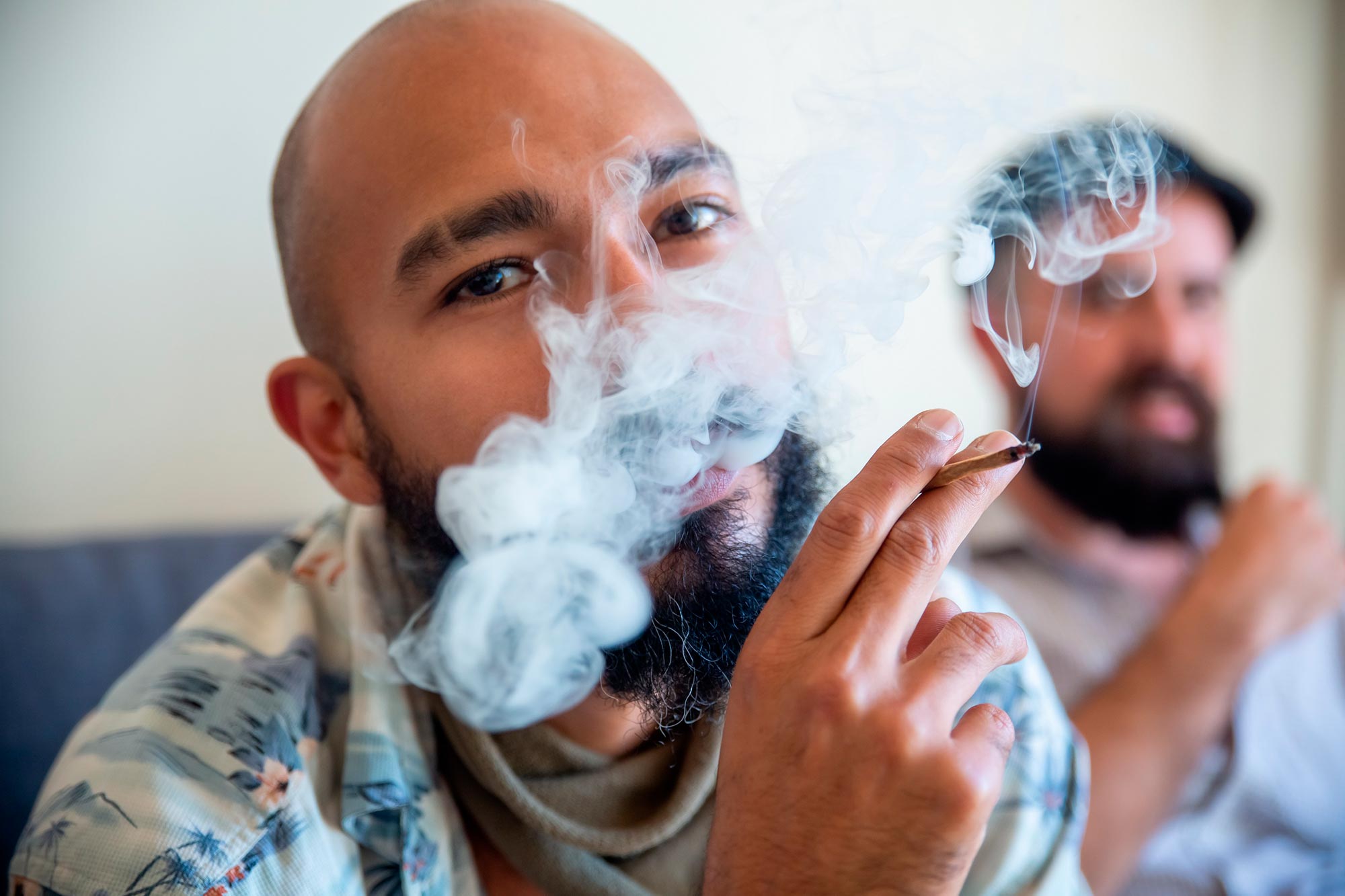
Recent research shows that cannabis use is linked to increased asthma prevalence, highlighting potential public health concerns as cannabis consumption rises.
Asthma is more common among U.S. individuals who reported cannabis use in the past 30-days, with the odds of asthma being significantly even greater among individuals who reported cannabis use 20 to 30 days per month, according to a new study by researchers at Columbia University Mailman School of Public Health, City University of New York and Children’s National Hospital at George Washington University. Until now little was known about the use of cannabis among youth and its relationship with asthma. The findings are published in the journal, Preventive Medicine.
The study results show that the more frequent the use, the higher the likelihood of asthma and there is little change after adjusting for cigarette use.
“With the growing use of cannabis across the U.S., understanding potential links between cannabis use and asthma is increasingly relevant to population health. This relationship is an emerging area and requires thorough collaborative investigation by experts in these fields,” said corresponding author Renee Goodwin, PhD, in the Department of Epidemiology at Columbia Mailman School of Public Health and Epidemiology at the City University of New York.
Data were drawn from the 2020 National Survey on Drug Use and Health a representative, annual survey of 32,893 individuals aged 12 and older in the United States. The researchers used regression modeling to examine the relationship between the frequency of any cannabis and/or blunt (i.e., cannabis smoked in a hollowed-out cigar) use in the past 30 days among individuals with current asthma, and adjusting further for demographics and current cigarette smoking.
Current asthma was more common among individuals who reported cannabis use in the past 30 days, relative to those who did not (10 percent vs. 7.4 percent.) The odds of asthma were significantly greater among individuals reporting cannabis use 20-30 days/month and blunt use, 6-15 and 20-30 days/month respectively, than in individuals without asthma. Overall, the prevalence of asthma was 7.4 percent in the sample.
“Our findings add a significant layer to the nascent body of research on potential harms associated with cannabis use by being the first to show a link between cannabis use in the community and respiratory health risks; specifically increased asthma prevalence. Examining asthma prevalence in both adolescents and adults helps to inform public health initiatives and policies geared towards mitigating its risks, and underscores the importance of understanding the interplay between cannabis use and respiratory health.”
Reference: “Cannabis use and the prevalence of current asthma among adolescents and adults in the United States” by Renee D. Goodwin, Chaoqun Zhou, Kevin D. Silverman, Deepa Rastogi and Luisa N. Borrell, 19 December 2023, Preventive Medicine.
DOI: 10.1016/j.ypmed.2023.107827
Co-authors are Chaoqun Zhou, Columbia University; Kevin D. Silverman, City University of New York; Deepa Rastogi, Albert Einstein College of Medicine; and Luisa N. Borrell, City College of New York.
The study was supported by the National Institutes of Health/National Heart, Lung and Blood Institute, grant 1R21HL149773-01.
Never miss a breakthrough: Join the SciTechDaily newsletter.
Follow us on Google and Google News.
3 Comments
I wonder what these people enjoy in imitating locomotives.
This could have been interesting. Smoke isn’t supposed to be in lungs often, and inhaled particulates could make mild asthma symptomatic, or even cause it, so this would be worth studying. Somehow, the study didn’t distinguish between ingesting “any cannabis and/or blunt (i.e., cannabis smoked in a hollowed-out cigar)” smoking, so the participants may actually be not inhaling it. In any case, the simple correlation means the asthmatics are more likely using cannabis to treat asthmatic inflammation and as a bronchodiolator. Congratulations to the NIH for funding yet another garbage study that intentionally misses the point in order to scare people.
I got asthma as a teen living in Atlanta in the 1980s. They used coal to power the southeast. I flew into ATL around 1985 at dawn and saw the thick brown dome of haze over the city from petrol chemicals.
I also had lots of fluid/mucus in my upper and lower respiratory system since I moved there at age 8. “Doctors” (arrogant under-educated fools) gave me WAY too many antibiotics that did nothing to help, and now I know they only screwed up the microbiome in my gut, weakening my immune system, feeding the candida fungus that was the real problem, and making me more sick.
Then I started burning the magic green herb around 1986. It is an expectorant and decongestant when used in moderation. It is an irritant when used in excess. (This is why the “more potent” buds are better for your health these days than the “dad’s leaf” that was commonly sold in the past.) I could breathe again. Then I went hiking in the mountains one day and felt >>shocked<< how easy it was to breathe, even without medications (by the way, big-pharma's inhalers made me feel sick, nauseous, and too "light-headed" to drive, yet did not help my symptoms).
Around 1999, the stuff that the magic green herb released from my lungs started containing black speckles. I new I had to quit smoking. (I NEVER smoked anything else) Then in 2000, I took a 1 month vacation to Oregon. My friend drove his van, hit a rockfall in a blind turn that took out his transmission, and we did NOTHING for 4 weeks except sit in a cold room. I smoked TWICE as much as usual, because I was bored. YET MY MUCUS WAS CLEAR. And I could breathe find. Upon returning to Atlanta, it turned to black speckles again, and the asthma was back.
That's when I realized it was pollution from the diesel trucks. When the "new" pollution laws kicked in around 2006, the black went away – only brown if I'm in town. And now I stay OUT OF TOWN.
Those days I can't breathe and I feel the congestion, I cough and cough and nothing…then I try a small puff and out it comes; and in goes the air like nothing. All clear, if I stay out of town.
Last month I was stuck in a room next to the freeway for 5 weeks. Even the magic green herb didn't completely help. I still have problems taking a full breath, even hiking mountains in the "wilderness", but it's getting better…slowly.