
Close Menu
    Facebook X (Twitter) Instagram
    SciTechDaily
    • Biology
    • Chemistry
    • Earth
    • Health
    • Physics
    • Science
    • Space
    • Technology
    Facebook X (Twitter) Pinterest YouTube RSS
    SciTechDaily
    Home»Space»We Asked a NASA Technologist: How Do We Communicate With Spacecraft?
    Space

    We Asked a NASA Technologist: How Do We Communicate With Spacecraft?

    By NASAJuly 27, 2023No Comments3 Mins Read
    Facebook Twitter Pinterest Telegram LinkedIn WhatsApp Email Reddit
    Share
    Facebook Twitter LinkedIn Pinterest Telegram Email Reddit
    Communication Satellite
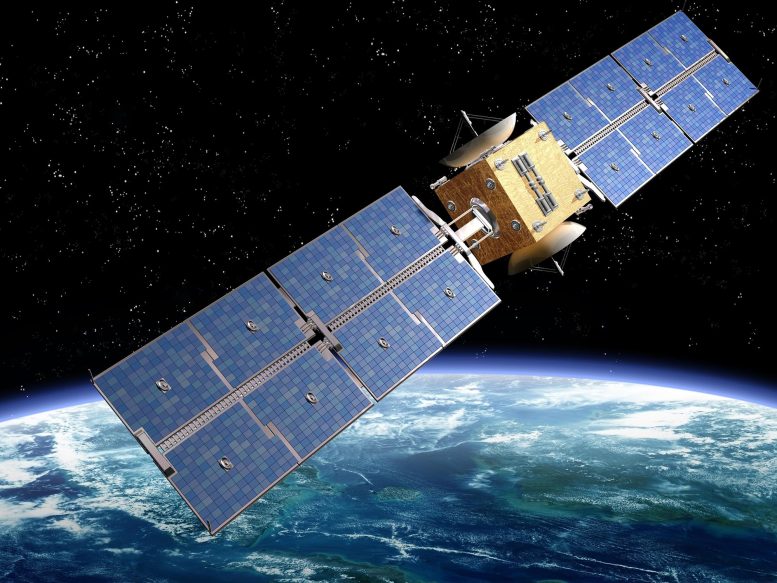
    NASA uses a global network of antennas and satellites to communicate with spacecraft primarily via radio waves. Additionally, it’s advancing laser communication technology to transmit data at higher rates, with ongoing projects like the LCRD and TBIRD. This technology is planned for use in future missions, including the Artemis lunar mission.

    How Do We Communicate With Spacecraft?

    We communicate with spacecraft in a lot of different ways.

    We have a network of antennas all over the world across all seven continents, along with satellites in space that help transmit these radio waves.

    Astronauts, mission controllers, and scientists rely on this network to transmit messages and commands and receive data such as never before seen images of our solar system and universe.

    Spacecraft in orbit can only communicate directly to ground stations on Earth if the satellite has a clear view of the ground station, which typically only occurs for a short period of time.

    The tracking and data relay satellites, or TDRS, are a fleet of specialized communications satellites in geosynchronous orbit. These satellites relay data from other spacecraft to ground stations, allowing NASA to provide near-continuous global communications coverage to missions in low-Earth orbit.


    How do we communicate with spacecraft? For decades, satellites have beamed data back to Earth by way of radio waves, with a network of ground-based antennas collecting the incoming information. Now, we’re exploring laser communications, technology that will allow us to receive more data from farther than ever before — faster, too. NASA space communications expert Risha George tells us more. Credit: NASA

    NASA is also developing ways to communicate with invisible infrared lasers.

    Laser communications offer missions higher data rates than ever before, allowing us to transmit more data at once.

    One mission doing that now is the Laser Communications Relay Demonstration or LCRD. LCRD will work with the International Space Station, allowing more science and exploration data so we can continue making discoveries about our planet.

    We also have a demonstration called TBIRD, which is testing laser communications with huge bursts of data from a small satellite in low-Earth orbit.

    And in the future, NASA plans to use laser communications when humans return to the Moon with Artemis.

    So how do we communicate with spacecraft? Mostly via radio waves between space and ground. But NASA is pushing the boundaries with laser communications to be able to receive more data from further than ever before.

    We Asked a NASA Expert Video Series

    • Is Polar Ice Melting?
    • Why is Sea Level Rising?
    • Why is Venus Called Earth’s Evil Twin?
    • Is NASA Really Crashing a Spacecraft Into an Asteroid?
    • Is NASA Aware of Any Earth-Threatening Asteroids?
    • When Was the Last Time an Asteroid Hit Earth?
    • How Did Perseverance Mars Rover Pick Its Landing Spot?
    • What if an Asteroid Was Going To Hit Earth?
    • Did Mars Ever Look Like Earth?
    • What Are Lagrange Points?
    • What Are the Trojan Asteroids?
    • Is There Oxygen on Mars?
    • Does NASA Know About All the Asteroids?
    • Do Aliens Exist?
    • Is There Weather on Mars?
    • Will an Asteroid Ever Hit Earth?
    • Is Mars Habitable?
    • Could Microbes Survive a Trip to Mars?

    Never miss a breakthrough: Join the SciTechDaily newsletter.
    Follow us on Google and Google News.

    NASA Telecommunications
    Share. Facebook Twitter Pinterest LinkedIn Email Reddit

    Related Articles

    4K From the Moon: Artemis II to Trial High-Speed Laser Communications

    NASA’s ILLUMA-T: Pioneering the Next Era of Laser Space Communications

    Broadband for Mars: Laser Boost for NASA’s Deep Space Communications

    NASA Selects 6 Companies for Development of Space Communication Services

    NASA’s Laser Communications Relay Demonstration – Bringing Optical Speeds to the Final Frontier

    NASA’s Laser Communication Relay Demonstration: Getting Space Data to the Ground With Lasers

    NASA’s Revolutionary Laser Communications Mission: 6 Things You Need To Know

    NASA’s High Bandwidth Laser Communications Relay Demonstration Gears Up for Launch

    NASA Selects Nokia to Build First-Ever Cellular Network on the Moon

    Leave A Reply Cancel Reply

    • Facebook
    • Twitter
    • Pinterest
    • YouTube

    Don't Miss a Discovery

    Subscribe for the Latest in Science & Tech!

    Trending News

    Breakthrough Bowel Cancer Trial Leaves Patients Cancer-Free for Nearly 3 Years

    Natural Compound Shows Powerful Potential Against Rheumatoid Arthritis

    100,000-Year-Old Neanderthal Fossils in Poland Reveal Unexpected Genetic Connections

    Simple “Gut Reset” May Prevent Weight Gain After Ozempic or Wegovy

    2.8 Days to Disaster: Scientists Warn Low Earth Orbit Could Suddenly Collapse

    Common Food Compound Shows Surprising Power Against Superbugs

    5 Simple Ways To Remember More and Forget Less

    The Atomic Gap That Could Cost the Semiconductor Industry Billions

    Follow SciTechDaily
    • Facebook
    • Twitter
    • YouTube
    • Pinterest
    • Newsletter
    • RSS
    SciTech News
    • Biology News
    • Chemistry News
    • Earth News
    • Health News
    • Physics News
    • Science News
    • Space News
    • Technology News
    Recent Posts
    • Popular Vitamin D Supplement Has “Previously Unknown” Negative Effect, Study Finds
    • Powerful Antioxidant Found To Play a Key Role in Proper Protein Folding
    • MIT Laser Breakthrough Lets Scientists Watch Drugs Enter the Brain in Real Time
    • Study Reveals Malaria’s Hidden Role in Human Evolution
    • Scientists Print Artificial Neurons That Can Talk to the Brain
    Copyright © 1998 - 2026 SciTechDaily. All Rights Reserved.
    • Science News
    • About
    • Contact
    • Editorial Board
    • Privacy Policy
    • Terms of Use

    Type above and press Enter to search. Press Esc to cancel.