
Close Menu
    Facebook X (Twitter) Instagram
    SciTechDaily
    • Biology
    • Chemistry
    • Earth
    • Health
    • Physics
    • Science
    • Space
    • Technology
    Facebook X (Twitter) Pinterest YouTube RSS
    SciTechDaily
    Home»Space»We Asked a NASA Scientist: Could Microbes Survive a Trip to Mars? [Video]
    Space

    We Asked a NASA Scientist: Could Microbes Survive a Trip to Mars? [Video]

    By NASASeptember 17, 20213 Comments2 Mins Read
    Facebook Twitter Pinterest Telegram LinkedIn WhatsApp Email Reddit
    Share
    Facebook Twitter LinkedIn Pinterest Telegram Email Reddit
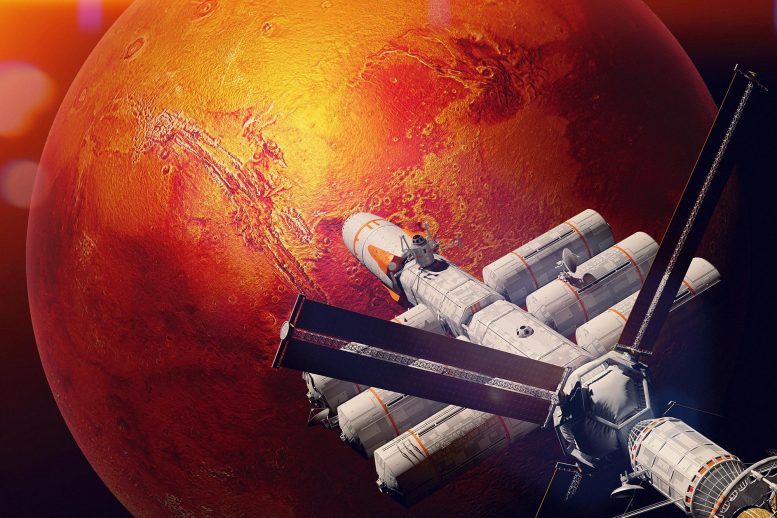
    Spaceship to Mars Illustration
    Could Earth-based microbes survive a trip to Mars?

    Could Earth-based microbes survive a trip to Mars? Yes! That’s why we made sure NASA’s Perseverance Mars rover met cleanliness requirements before leaving our home planet. Dr. Moogega Cooper from NASA’s Jet Propulsion Laboratory is here to fill us in.

    Yes, it is possible for microorganisms to survive the journey from Earth to Mars. That’s why we have a program specifically dedicated to ensuring the spacecraft is as clean as possible before leaving Earth—if we ever detect life on Mars, we are certain that it did not come from our own planet.

    The journey to Mars includes the harsh vacuum of space, UV and ionizing radiation, and drastic temperature changes depending on if you’re facing the Sun or shielded away from it. While most microbes on Earth could not survive these conditions, one prominent type of microbe that could survive the journey are called bacteria endospores, which can form seed-like structures that allow them to stay dormant until better conditions arise. This “superpower” is why spore forming bacteria are given special focus when NASA cleans spacecraft being sent to Mars.

    Just to give you an idea, the Mars 2020 mission – which includes NASA’s Perseverance rover – carried 10 times less bacteria than what you’d find in a teaspoon of seawater.

    So yes, it is possible for a microbe to survive the journey from Earth to Mars, which is why it’s our job to make sure it doesn’t hitch a ride on NASA spacecraft.

    We Asked a NASA Expert Video Series

    • Why is Venus Called Earth’s Evil Twin?
    • Is NASA Really Crashing a Spacecraft Into an Asteroid?
    • Is NASA Aware of Any Earth-Threatening Asteroids?
    • When Was the Last Time an Asteroid Hit Earth?
    • How Did Perseverance Mars Rover Pick Its Landing Spot?
    • What if an Asteroid Was Going To Hit Earth?
    • Did Mars Ever Look Like Earth?
    • What Are Lagrange Points?
    • What Are the Trojan Asteroids?
    • Is There Oxygen on Mars?
    • Does NASA Know About All the Asteroids?
    • Do Aliens Exist?
    • Is There Weather on Mars?
    • Will an Asteroid Ever Hit Earth?
    • Is Mars Habitable?
    • Could Microbes Survive a Trip to Mars?

    Never miss a breakthrough: Join the SciTechDaily newsletter.
    Follow us on Google and Google News.

    Astrobiology Mars Microbiology NASA
    Share. Facebook Twitter Pinterest LinkedIn Email Reddit

    Related Articles

    Inside Krokodillen: NASA Hunts Signs of Life in Mars’ Oldest Rocks

    Scientists Just Found 3.7 Billion-Year-Old Organic Chains on Mars That May Point to Life

    Life on Mars? NASA’s Curiosity Rover Finds Prebiotic Clues in a 3.7-Billion-Year-Old Rock

    NASA: Potential Life Beneath Martian Ice

    Mars Revealed: NASA’s Curiosity Rover Uncovers the Red Planet’s Shocking Climate Shift

    NASA’s Perseverance Mars Rover To Begin Epic Climb up Steep Martian Crater Rim

    Potential Evidence of Life Discovered on Mars by NASA’s Perseverance Rover

    Tracing Water on Mars: From Ice Caps to Hidden Oceans and the Quest for Life

    Perseverance Triumphs: How SHERLOC Was Brought Back to Life on Mars

    3 Comments

    1. slovak on September 21, 2021 5:48 pm

      include link to description of radioDurensis bacteria ( wikipedia ? )

      Reply
      • Mike O'Neill on September 21, 2021 6:03 pm

        Deinococcus radiodurans is an extremophilic bacterium and one of the most radiation-resistant organisms known. It can survive cold, dehydration, vacuum, and acid, and therefore is known as a polyextremophile. It has been listed as the world’s toughest known bacterium in The Guinness Book Of World Records.

        https://en.wikipedia.org/wiki/Deinococcus_radiodurans

        Reply
    2. alex cokonis on December 31, 2021 7:43 am

      I still can’t see why going to Mars is important. To be politically correct they should ask the bacteria whether they want to go.

      Reply
    Leave A Reply Cancel Reply

    • Facebook
    • Twitter
    • Pinterest
    • YouTube

    Don't Miss a Discovery

    Subscribe for the Latest in Science & Tech!

    Trending News

    Largest-Ever Study Finds Medicinal Cannabis Ineffective for Anxiety, Depression, PTSD

    250-Million-Year-Old Egg Solves One of Evolution’s Biggest Mysteries

    Living With Roommates Might Be Changing Your Gut Microbiome Without You Knowing

    Century-Old Cleaning Chemical Linked to 500% Increased Risk of Parkinson’s Disease

    What if Your Memories Never Happened? Physicists Take a New Look at the Boltzmann Brain Paradox

    One of the Universe’s Largest Stars May Be Getting Ready To Explode

    Scientists Discover Enzyme That Could Supercharge Ozempic-Like Weight Loss Drugs

    Popular Sweetener Linked to DNA Damage – “It’s Something You Should Not Be Eating”

    Follow SciTechDaily
    • Facebook
    • Twitter
    • YouTube
    • Pinterest
    • Newsletter
    • RSS
    SciTech News
    • Biology News
    • Chemistry News
    • Earth News
    • Health News
    • Physics News
    • Science News
    • Space News
    • Technology News
    Recent Posts
    • Challenging the Narrative: New Study Shows U.S. Life Expectancy Is Rising Across All States
    • Mystery Illness Kills 5 in Burundi As Doctors Scramble for Answers
    • Bone-Strengthening Discovery Could Reverse Osteoporosis
    • The Most Elusive Number in Physics Just Got Even More Mysterious
    • Scientists Uncover Hidden Trigger Behind Stem Cell Aging
    Copyright © 1998 - 2026 SciTechDaily. All Rights Reserved.
    • Science News
    • About
    • Contact
    • Editorial Board
    • Privacy Policy
    • Terms of Use

    Type above and press Enter to search. Press Esc to cancel.