
Close Menu
    Facebook X (Twitter) Instagram
    SciTechDaily
    • Biology
    • Chemistry
    • Earth
    • Health
    • Physics
    • Science
    • Space
    • Technology
    Facebook X (Twitter) Pinterest YouTube RSS
    SciTechDaily
    Home»Space»We Asked a NASA Scientist: Why Is Venus Called Earth’s Evil Twin?
    Space

    We Asked a NASA Scientist: Why Is Venus Called Earth’s Evil Twin?

    By NASAMay 10, 2023No Comments3 Mins Read
    Facebook Twitter Pinterest Telegram LinkedIn WhatsApp Email Reddit
    Share
    Facebook Twitter LinkedIn Pinterest Telegram Email Reddit
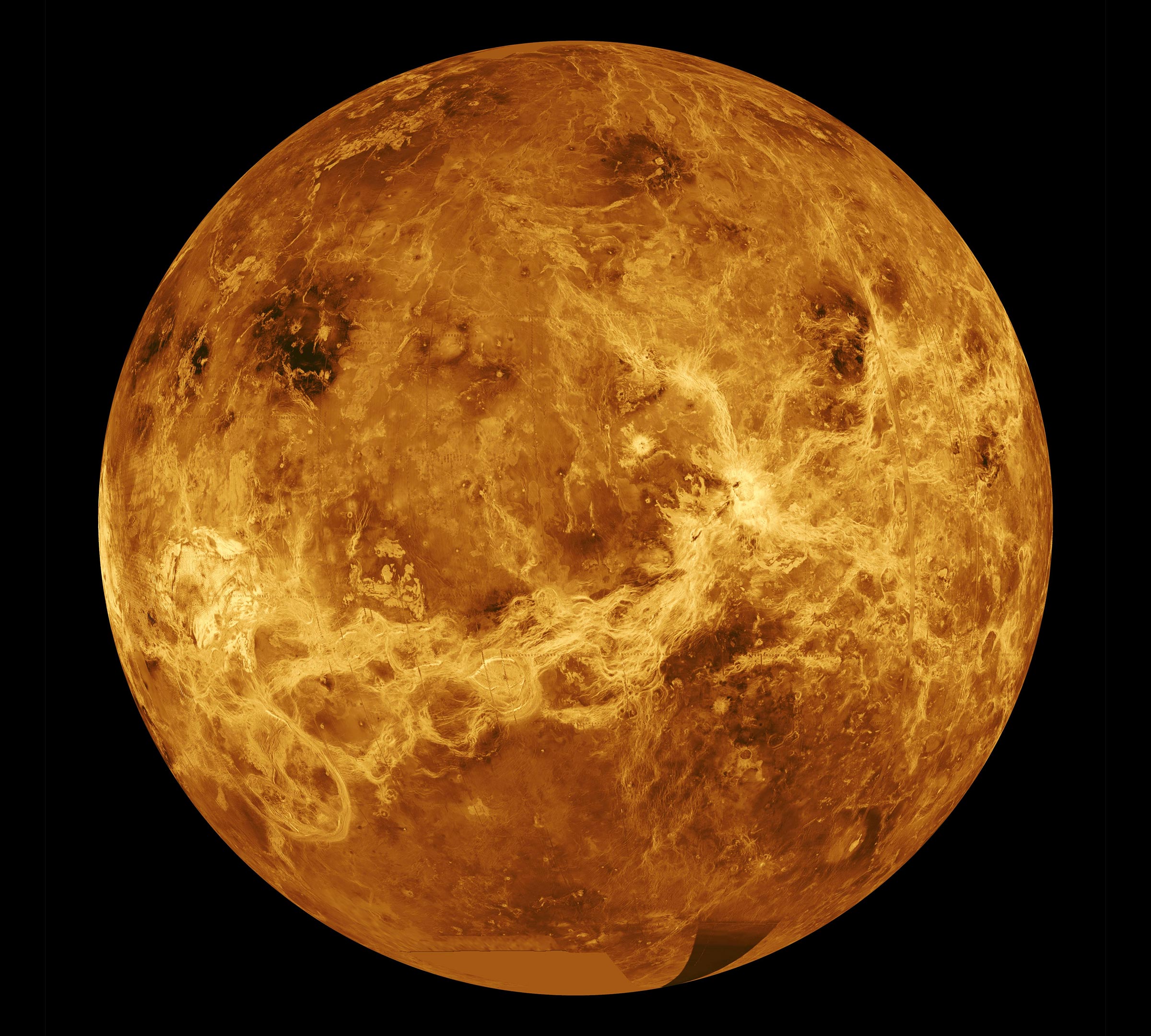
    Venus Global View Magellan Mapping
    Venus, often referred to as Earth’s “Evil Twin,” is the second planet from the Sun and shares many similarities with our home planet, such as size, mass, and composition. However, Venus is shrouded in an opaque, toxic atmosphere comprised primarily of carbon dioxide and sulfuric acid clouds, which create a runaway greenhouse effect, trapping heat and raising surface temperatures to a scorching 900 degrees Fahrenheit (475 degrees Celsius). This inhospitable environment is characterized by intense air pressure, powerful winds, and extreme volcanic activity, making Venus a stark contrast to Earth’s relatively mild and life-supporting conditions. Credit: NASA/Jet Propulsion Laboratory-Caltech

    Why is Venus called Earth’s evil twin?

    Venus and Earth are sometimes called twins because they’re pretty much about the same size. Venus is almost as big as Earth. They also formed in the same inner part of the solar system. Venus is in fact our closest neighbor to Earth. So they were formed in the same part of the solar system, made out of the same materials. They’re about the same size. So you would think that they would have turned out very, very similar.

    But what happened is somewhere along the way, they went two very different paths. Some people like to say Venus went bad or something went wrong. I like to say that somewhere along the way, something good happened on Earth. But on Venus, what happened is its large, thick carbon dioxide atmosphere is driving a greenhouse effect. In fact, it’s so hot on Venus that you can melt lead. The temperatures on the surface of Venus are over 900 degrees Fahrenheit, and then Venus is covered in a 15-mile-thick layer of clouds. And those clouds are made of sulfuric acid. So it is a crazy place, but really interesting.

    And we really want to understand why Venus and Earth turned out so differently. So NASA and ESA are embarking on a decade of Venus, where together we’re sending three missions where we’re all going to learn more about how Venus formed, how it evolved, and why it’s so different from Earth.

    So that’s why sometimes she’s called our evil twin.

    We Asked a NASA Expert Video Series

    • Is NASA Really Crashing a Spacecraft Into an Asteroid?
    • Is NASA Aware of Any Earth-Threatening Asteroids?
    • When Was the Last Time an Asteroid Hit Earth?
    • How Did Perseverance Mars Rover Pick Its Landing Spot?
    • What if an Asteroid Was Going To Hit Earth?
    • Did Mars Ever Look Like Earth?
    • What Are Lagrange Points?
    • What Are the Trojan Asteroids?
    • Is There Oxygen on Mars?
    • Does NASA Know About All the Asteroids?
    • Do Aliens Exist?
    • Is There Weather on Mars?
    • Will an Asteroid Ever Hit Earth?
    • Is Mars Habitable?
    • Could Microbes Survive a Trip to Mars?

    Never miss a breakthrough: Join the SciTechDaily newsletter.
    Follow us on Google and Google News.

    NASA Planets Venus
    Share. Facebook Twitter Pinterest LinkedIn Email Reddit

    Related Articles

    NASA Just Found New Signs of Life Inside Venus – Geologic Life, That Is

    NASA Finds Venus Has a Surprisingly Thin Crust – And Something Stranger

    NASA’s DAVINCI Mission: A Daring Dive Into Venus’ Inferno

    NASA’s DAVINCI: A High-Tech Mission To Unveil Venus’ Lost Continents

    NASA to Send Two Missions to Study “Lost Habitable” World of Venus

    NASA’s Parker Solar Probe Discovers Radio Signal in Venus’ Atmosphere

    NASA’s Parker Solar Probe Delivers 1st Complete View of Venus’ Orbital Dust Ring

    NASA’s Parker Solar Probe Captures Stunning View of Venus

    VERITAS: Exploring the Deep Truths of Venus to Reveal the Inner Workings of Earth’s Mysterious “Twin”

    Leave A Reply Cancel Reply

    • Facebook
    • Twitter
    • Pinterest
    • YouTube

    Don't Miss a Discovery

    Subscribe for the Latest in Science & Tech!

    Trending News

    Mezcal “Worm” in a Bottle Mystery: DNA Testing Reveals a Surprise

    New Research Reveals That Your Morning Coffee Activates an Ancient Longevity Switch

    This Is What Makes You Irresistible to Mosquitoes

    Shockingly Powerful Giant Octopuses Ruled the Seas 100 Million Years Ago

    Scientists Stunned by New Organic Molecules Found on Mars

    Rewriting Dinosaur Evolution: Scientists Unearth Remarkable 150-Million-Year-Old Stegosaur Skull

    Omega-3 Supplements Linked to Cognitive Decline in Surprising New Study

    First-of-Its-Kind Discovery: Homer’s Iliad Found Embedded in a 1,600-Year-Old Egyptian Mummy

    Follow SciTechDaily
    • Facebook
    • Twitter
    • YouTube
    • Pinterest
    • Newsletter
    • RSS
    SciTech News
    • Biology News
    • Chemistry News
    • Earth News
    • Health News
    • Physics News
    • Science News
    • Space News
    • Technology News
    Recent Posts
    • This Tiny World in the Outer Solar System Should Be Airless, but It Has an Atmosphere
    • NASA’s Webb Space Telescope Reveals a Dark Airless Super-Earth That Looks Like Mercury
    • These Simple Daily Habits Can Quickly Improve Blood Pressure and Heart Risk Factors
    • A Common Nutrient May Play a Surprising Role in Anxiety
    • Doing This After 9 p.m. Could Double Your Risk of Gut Issues
    Copyright © 1998 - 2026 SciTechDaily. All Rights Reserved.
    • Science News
    • About
    • Contact
    • Editorial Board
    • Privacy Policy
    • Terms of Use

    Type above and press Enter to search. Press Esc to cancel.