
The Contamination Is Causing Disproportionate Harm to Low-Income Communities
Scientists have discovered that the water in California’s Central Valley contains excessive amounts of manganese, which can result in cognitive disabilties and impaired motor function in children, as well as symptoms similar to Parkinson’s disease in adults.
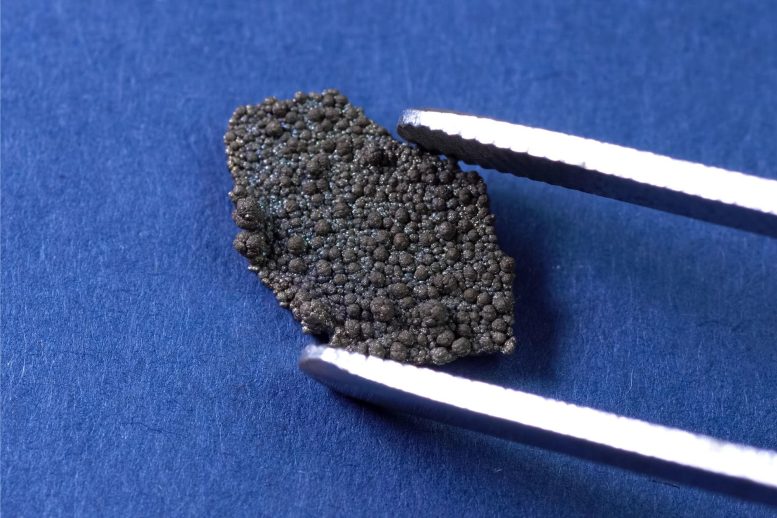
Manganese, a naturally occurring metal, is present in water sources globally. In many Southeast Asian countries where the warm climate leads to leaching into groundwater, it is regulated as a primary contaminant. However, in the United States, it is only regulated as a secondary contaminant, with no enforceable maximum limit.
Disproportionate Impact on Disadvantaged Communities
A new UC Riverside-led study shows that, among Central Valley communities, the highest concentrations of manganese are in private, untreated well water systems. However, the researchers also found it in public water systems at higher concentrations than what studies have shown can have adverse health effects.
The study, published in the journal Environmental Science & Technology, not only measured levels of manganese in Central Valley water supplies, but also mapped the highest concentration areas according to annual income levels.
Overall, the research team estimates nearly half of all domestic well water users in the Central Valley live in disadvantaged communities, as defined by annual income. Within this population, nearly 89% have a high likelihood of accessing water that is highly contaminated with manganese.
“It is a relatively small number of people, compared to the total population of the state, who are getting the tainted water. But for them, the health risks are high,” said Samantha Ying, UCR soil scientist and principal study investigator. “These people are particularly concentrated in disadvantaged communities, so if they wanted to monitor and treat the water, they would have a hard time doing so,” Ying said.
Point-of-use treatment options range from oxidation and precipitation filters to water softeners, chlorination, and reverse osmosis systems. But devices for monitoring water quality can cost up to $400 annually, and treatments for manganese-tainted water are just as expensive.
“It is possible to purchase filters for manganese, but a lot of people cannot afford them. We are hoping people in these communities can be subsidized to buy treatment options,” Ying said.
Previously, the research team found that manganese-contaminated groundwater tends to occur in relatively shallow depths, compared to arsenic. They wondered if digging deeper wells would avoid the manganese contamination. Unfortunately, that strategy is unlikely to be effective.
“Using existing groundwater model predictions of manganese concentrations at deeper depths did not change the number of wells likely to be contaminated,” Ying said.
Regulation and Overlooked Safety Concerns
The conditions that cause arsenic and manganese to leach are similar, so they tend to show up in groundwater in tandem. Arsenic has long been regulated as a primary contaminant in the U.S. “Wells are labeled unsafe if they contain arsenic, but not if they contain manganese,” Ying said. “Thus, the number of wells considered safe may be greatly overestimated.”
Furthermore, the researchers used a benchmark of 300 parts per billion of manganese to assess water quality. This is a level of manganese contamination that some studies have associated with neurological development issues, particularly for fetuses and infants during early growth periods. It is likely though that adverse effects can occur at lower levels.
“New studies from Canada, where manganese is now a primary contaminant, show there may be effects at 100 parts per billion,” Ying said. “We were being conservative at 300.”
This study focused on the Central Valley in part because the conditions that cause manganese to move from aquifer materials into water are so prevalent there. It is likely that drinking water from wells in other parts of the state is similarly tainted. Over 1.3 million Californians rely on unmonitored private wells.
“The population being exposed is much bigger than we might think. There are a lot of communities statewide drinking from private wells,” Ying said.
Reference: “Disparities in Drinking Water Manganese Concentrations in Domestic Wells and Community Water Systems in the Central Valley, CA, USA” by Miranda L. Aiken, Clare E. Pace, Maithili Ramachandran, Kurt A. Schwabe, Hoori Ajami, Bruce G. Link and Samantha C. Ying, 25 January 2023, Environmental Science & Technology.
DOI: 10.1021/acs.est.2c08548
Never miss a breakthrough: Join the SciTechDaily newsletter.
Follow us on Google and Google News.