
Close Menu
    Facebook X (Twitter) Instagram
    SciTechDaily
    • Biology
    • Chemistry
    • Earth
    • Health
    • Physics
    • Science
    • Space
    • Technology
    Facebook X (Twitter) Pinterest YouTube RSS
    SciTechDaily
    Home»Health»Caution: Drug Discount Cards Could Actually Make Medicine Cost More
    Health

    Caution: Drug Discount Cards Could Actually Make Medicine Cost More

    By University of British ColumbiaNovember 11, 2019No Comments3 Mins Read
    Facebook Twitter Pinterest Telegram LinkedIn WhatsApp Email Reddit
    Share
    Facebook Twitter LinkedIn Pinterest Telegram Email Reddit

    Medicine Costs Drug Discount Cards

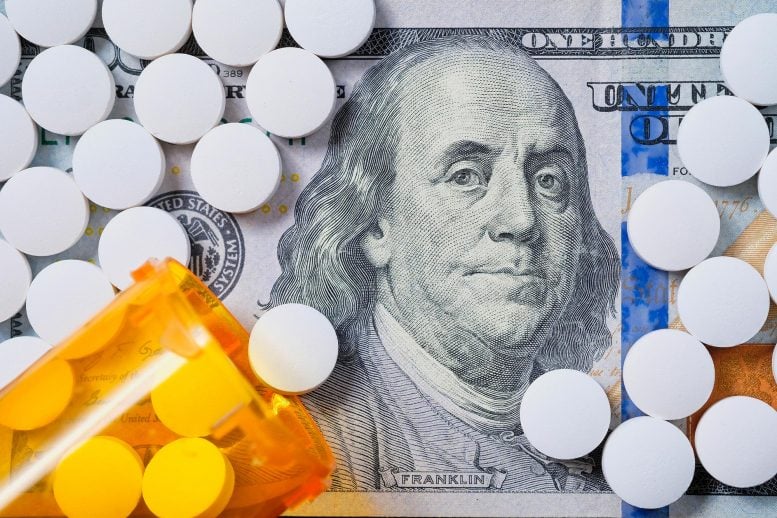
    New research published today (November 11, 2019) in the Canadian Medical Association Journal (CMAJ) reveals that brand-name drug discount cards are leading to higher health care spending in Canada—increased costs that are ultimately passed on to patients.

    Brand-name drug discount cards—also known as co-pay cards—are coupons offered by brand drug manufacturers to encourage patients to use brand-name drugs even after much cheaper generics become available.

    Despite often boasting savings for customers, however, the study’s findings show drug discount cards actually increased private insurer costs by 46 percent and public insurer costs by 1.3 percent, compared to if patients purchased generics instead.

    While discount cards decreased some patients’ out-of-pocket costs by seven percent on average, the study surprisingly found that many patients who filled prescriptions using a card were worse off financially as a result. This wasn’t the case for all drugs, but in some cases, patients could pay up to $10 more out-of-pocket when using a discount card.

    “We know that generic drugs are equally effective for the vast majority of patients. Given that, I believe these cards are leading to unjustifiable increases in health care costs,” said the study’s lead author Dr. Michael Law, a Canada Research Chair at UBC’s Centre for Health Services and Policy Research.

    This study is the first in Canada to quantify the impact of brand-name drug discount cards on private and public insurance plans, as well as on patients.

    In particular, Law says employers who offer private health insurance to their employees should adopt more stringent generic substitution policies to ensure value for money in their drug plan spending. Public drug plans—which already enforce such policies—did not end up substantially paying more when a discount card was used.

    The study used Canadian national pharmacy data from 2.82 million prescriptions for 89 different medications where brand-name drug discount cards were used and compared the costs of these prescriptions to matched generic equivalents.

    The researchers say that patients, their clinicians, and employers should be aware of the impact that brand-name discount cards have on the health care system. For example, the increased costs to private insurers will likely be passed on to patients and their employers in the form of increased insurance premiums.

    “Regardless of whether they hold insurance, patients should check the relative price between brand-name drugs with a discount card and the equivalent generic at their pharmacy,” said Law. “For many drugs, patients are financially worse off as a result.”

    Reference: “Impact of brand drug discount cards on private insurer, government and patient expenditures” by Michael R. Law, Fiona K.I. Chan, Mark Harrison and Heather C. Worthington, 11 November 2019, Canadian Medical Association Journal (CMAJ).
    DOI: 10.1503/cmaj.190098

    Never miss a breakthrough: Join the SciTechDaily newsletter.
    Follow us on Google and Google News.

    Medicine University of British Columbia
    Share. Facebook Twitter Pinterest LinkedIn Email Reddit

    Related Articles

    MIT Engineers Design a New Weapon Against Bacteria

    Yale Study Shows No Link between Hospital Readmissions and Death Rates

    Regular Aspirin Use Linked to Age-Related Macular Degeneration

    Fluoxetine (Prozac) Shows Promise as an Antiviral Agent

    New Drug Candidate Kills Cancer Cells Better Than Cisplatin

    Intensive Glycemic Control Does Not Definitively Reduce the Risk of Impaired Kidney Function

    Protein NLRP12 Protects Against Colon Cancer

    Transplants Without the Need for Lifelong Immunosupression

    Nose Spray for Panic Attacks? Intranasal Neuropeptide S Lowers Anxiety

    Leave A Reply Cancel Reply

    • Facebook
    • Twitter
    • Pinterest
    • YouTube

    Don't Miss a Discovery

    Subscribe for the Latest in Science & Tech!

    Trending News

    What if Time Isn’t Fundamental? Physicists Just Tested the Idea in the Lab

    Scientists Say We’ve Been Wrong About the Aging Brain

    68 Quadrillion Miles: Scientists Map Earth’s Vast Hidden Fungal Network for the First Time

    Hidden Damage From Youth May Explode Into Disease Later in Life

    Climate Models May Be Wrong About How Trees Store Carbon

    Scientists Discover Brain-Protecting Peptide That Could Change Parkinson’s Treatment

    This Copper Drug Clears Alzheimer’s Brain Toxins and Boosts Memory

    Adults Over 65 Lost Massive Amounts of Weight With Ozempic

    Follow SciTechDaily
    • Facebook
    • Twitter
    • YouTube
    • Pinterest
    • Newsletter
    • RSS
    SciTech News
    • Biology News
    • Chemistry News
    • Earth News
    • Health News
    • Physics News
    • Science News
    • Space News
    • Technology News
    Recent Posts
    • The Most Powerful Drug of All Isn’t Found in a Pill Bottle
    • Scientists Capture Immune Cells Eating Live Cancer Cells for the First Time
    • Scientists Just Found Something Weird Inside Moss
    • Scientists Just Repeated a Nobel Prize-Winning Experiment in a Creature Older Than Jellyfish
    • Scientists Finally Uncover Why Solid-State Batteries Short-Circuit
    Copyright © 1998 - 2026 SciTechDaily. All Rights Reserved.
    • Science News
    • About
    • Contact
    • Editorial Board
    • Privacy Policy
    • Terms of Use

    Type above and press Enter to search. Press Esc to cancel.