
Close Menu
    Facebook X (Twitter) Instagram
    SciTechDaily
    • Biology
    • Chemistry
    • Earth
    • Health
    • Physics
    • Science
    • Space
    • Technology
    Facebook X (Twitter) Pinterest YouTube RSS
    SciTechDaily
    Home»Biology»Centipedes Incorporated the Toxic Weapons of Bacteria and Fungi Into Their Venoms
    Biology

    Centipedes Incorporated the Toxic Weapons of Bacteria and Fungi Into Their Venoms

    By Natural History MuseumMarch 29, 2021No Comments3 Mins Read
    Facebook Twitter Pinterest Telegram LinkedIn WhatsApp Email Reddit
    Share
    Facebook Twitter LinkedIn Pinterest Telegram Email Reddit
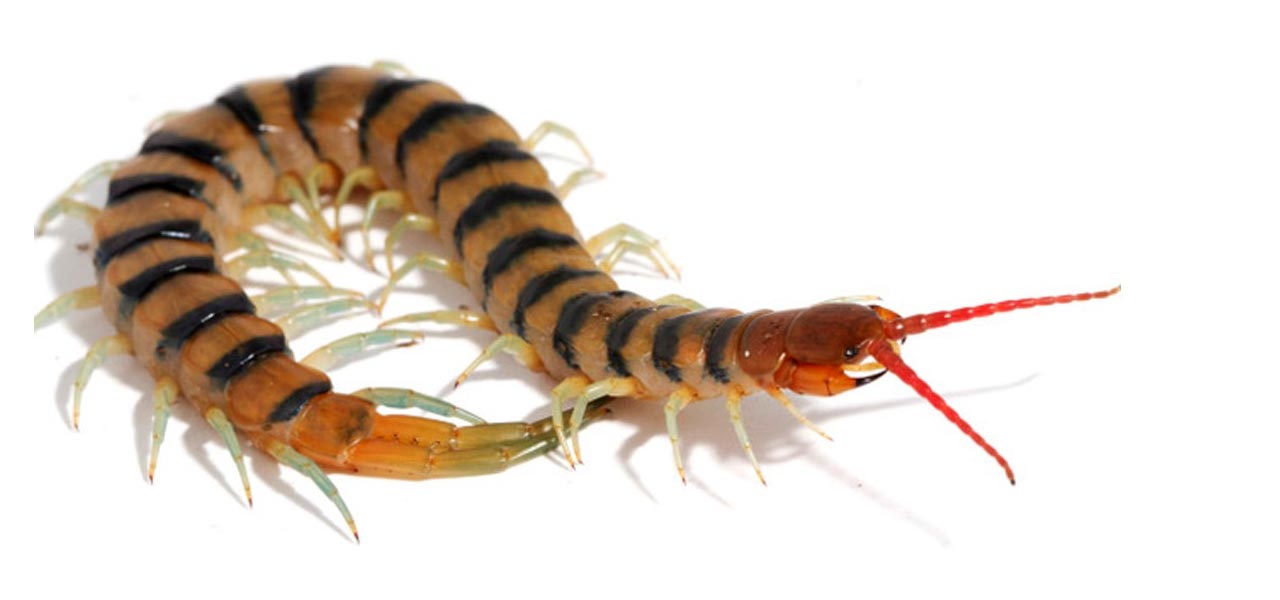
    Scolopendra morsitans Centipede

    A Scolopendra morsitans centipede. Credit: © Eivind Undheim

    Centipede venoms include genes borrowed from bacteria and fungi, highlighting an unusual but impactful evolutionary strategy through horizontal gene transfer.

    Venom expert Dr. Ronald Jenner from the Natural History Museum together with his colleague Dr. Eivind Undheim, who is associated with The University of Oslo and the Norwegian University of Science and Technology, have uncovered secrets of centipede venom.

    As part of an ongoing, wider study into centipede venoms, the researchers set out to discover whether centipede venom toxins may have evolved elsewhere in the tree of life, in places other than their direct, arthropod ancestors.

    Venom Genes Borrowed from Microbes

    They soon unveiled that centipedes have repeatedly stocked their venoms with proteins that independently evolved within bacteria and fungi. The centipedes have acquired these toxin components through a process known as ‘horizontal gene transfer’.

    Horizontal gene transfer is a process by which genetic material moves between distantly related organisms, in this case between bacteria and fungi, and centipedes. It is distinguished from the movement of genetic material from parents to offspring and from ancestors to direct descendants, which is known as vertical gene transfer.

    Dr. Ronald Jenner, researcher in the Life Sciences department of the Natural History Museum said, ‘This discovery is remarkable. It reveals the largest, most diversely sourced contribution of horizontal gene transfer to the evolution of animal venom composition known to date.’

    Many studies have been carried out into the venoms of various creatures: snakes, scorpions, and spiders, often because they are dangerous to humans. However, as centipedes are not dangerous to humans, their venoms have been neglected in terms of research. But interest is rising and the complex processes happening within centipede venom evolution show it is fertile ground for investigating phenomena such as horizontal gene transfer.

    Bacterial Toxins Repurposed by Centipedes

    As the team began to look at specific proteins within these centipede venoms they made some significant further discoveries. As Dr. Ronald Jenner explains, ‘three of the five venom protein families that centipedes have acquired by horizontal gene transfer are used by bacteria explicitly to exploit their hosts’, including by damaging their cells by the formation of pores.

    They also noticed “three protein families were each horizontally transferred twice which shows that horizontal gene transfer is an unexpectedly important factor in the evolution of centipede venoms.” While the mechanisms behind horizontal gene transfer, especially from bacteria to animals, are not well understood, it is known to have contributed a range of adaptive benefits to different groups of animals.

    The paper was published in Nature Communications.

    Reference: “Phylogenetic analyses suggest centipede venom arsenals were repeatedly stocked by horizontal gene transfer” by Eivind A. B. Undheim and Ronald A. Jenner, 5 February 2021, Nature Communications.
    DOI: 10.1038/s41467-021-21093-8

    Never miss a breakthrough: Join the SciTechDaily newsletter.
    Follow us on Google and Google News.

    Evolution Genetics Natural History Museum Popular Toxicology
    Share. Facebook Twitter Pinterest LinkedIn Email Reddit

    Related Articles

    Comprehensive New Amphibian Family Tree Revises Frog Evolution Timeline

    Different Groups of Bats Have Their Own Unique Strains of Coronavirus – They Have Been Evolving Together for Millions of Years

    Breakthrough in Understanding Evolution – Mitochondrial Division Conserved Across Species

    Scientists Extract Complete Human Genome From 5,700-Year-Old “Chewing Gum” – Here’s What They Found

    New Fossils of Ancient Snake With Hind Legs Reveals Tantalizing Details of Evolution

    Calcified Bacteria Sheds Light on the Health Consequences of the Evolving Diet

    Prolific Changes in the Human Genome in the Past 5,000 Years

    Study Provides Picture of Human Expansion From Africa

    Improved Estimates of DNA’s Mutation Rate Paint Clearer Picture of Human Prehistory

    Leave A Reply Cancel Reply

    • Facebook
    • Twitter
    • Pinterest
    • YouTube

    Don't Miss a Discovery

    Subscribe for the Latest in Science & Tech!

    Trending News

    The Universe Is Expanding Too Fast and Scientists Can’t Explain Why

    “Like Liquid Metal”: Scientists Create Strange Shape-Shifting Material

    Early Warning Signals of Esophageal Cancer May Be Hiding in Plain Sight

    Common Blood Pressure Drug Shows Surprising Power Against Deadly Antibiotic-Resistant Superbug

    Scientists Uncover Dangerous Connection Between Serotonin and Heart Valve Disease

    Scientists Discover a “Protector” Protein That Could Help Reverse Hair Loss

    Bone-Strengthening Discovery Could Reverse Osteoporosis

    Scientists Uncover Hidden Trigger Behind Stem Cell Aging

    Follow SciTechDaily
    • Facebook
    • Twitter
    • YouTube
    • Pinterest
    • Newsletter
    • RSS
    SciTech News
    • Biology News
    • Chemistry News
    • Earth News
    • Health News
    • Physics News
    • Science News
    • Space News
    • Technology News
    Recent Posts
    • Scientists Overcome Major Quantum Bottleneck, Potentially Transforming Teleportation and Computing
    • Quantum Physics’ Strangest Problem May Hold the Key to Time Itself
    • Scientists Create “Liquid Gears” That Spin Without Touching
    • The Simple Habit That Could Help Prevent Cancer
    • Forgotten Medicinal Plant Shows Promise in Fighting Dangerous Superbugs
    Copyright © 1998 - 2026 SciTechDaily. All Rights Reserved.
    • Science News
    • About
    • Contact
    • Editorial Board
    • Privacy Policy
    • Terms of Use

    Type above and press Enter to search. Press Esc to cancel.