
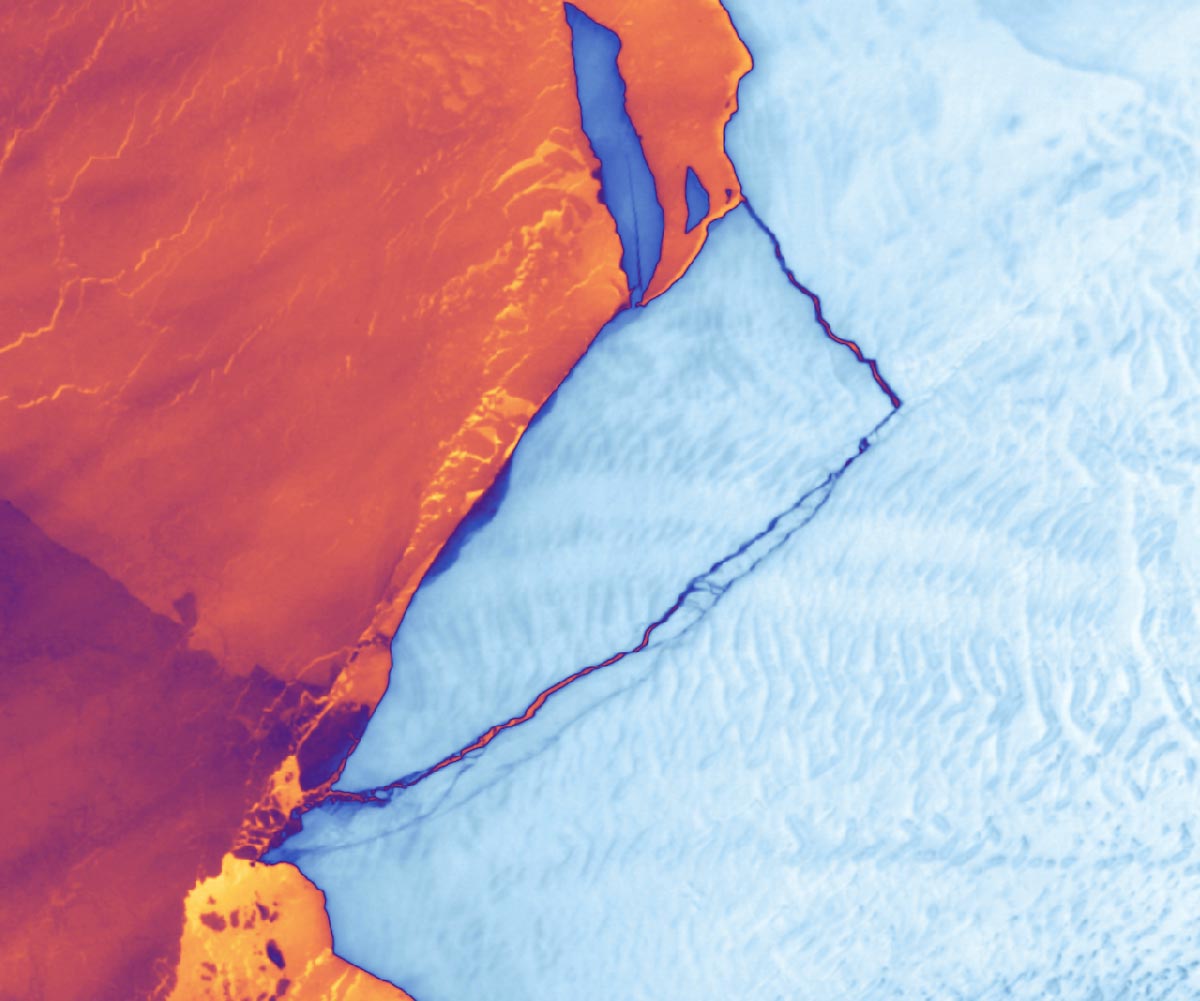
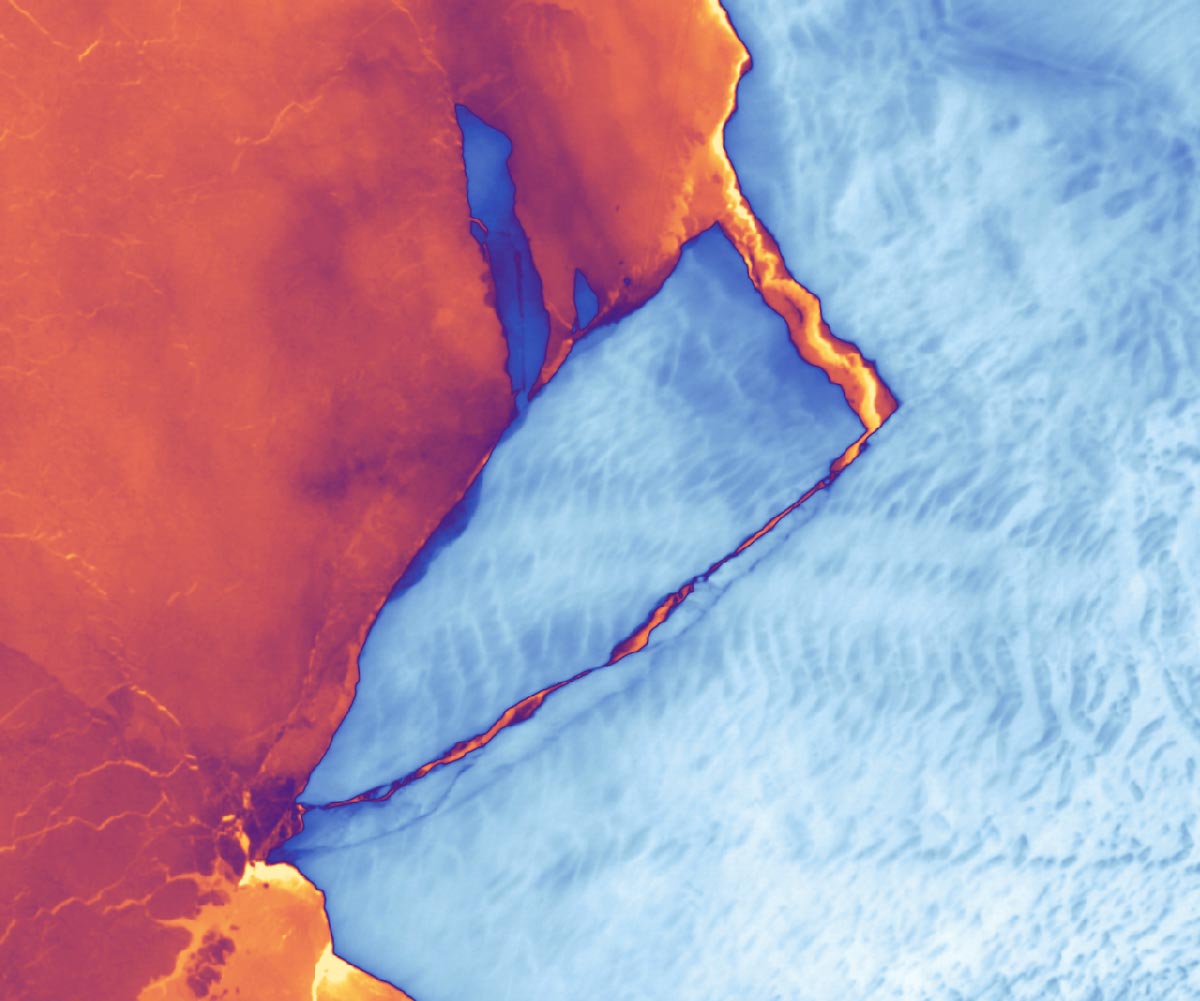
Iceberg A-83, approximately the size of Portland, Oregon, detached from Antarctica’s Brunt Ice Shelf in late May 2024, an event recorded by Landsat 9.
A large wedge of ice broke from Antarctica’s Brunt Ice Shelf in late May 2024, the most recent in a series of notable icebergs spawned by the shelf in the past few years.
Soon after the break, the TIRS-2 (Thermal Infrared Sensor-2) on Landsat 9 captured this pair of false-color images. They are part of a special expanded data collection program called LEAP (Landsat Extended Acquisitions of the Poles), which since 2022 has been building year-round image records of glaciers, ice shelves, and sea ice around Antarctica, Greenland, and the Arctic Ocean.
Understanding Polar Temperatures Through Thermal Imagery
Thermal images like these can help scientists keep watch over Earth’s polar areas, even when the Sun is below the horizon and visible images are unavailable. In these images, acquired on May 20 (upper) and May 22 (lower), yellows and oranges indicate areas where temperatures are warmer, like open water or thin sea ice, while blues denote areas of colder temperatures, like the thicker ice of the iceberg and ice shelf. Notice that the iceberg is already on the move, evident in the widening gap between the iceberg and ice shelf.
Iceberg A-83’s Characteristics and Origins
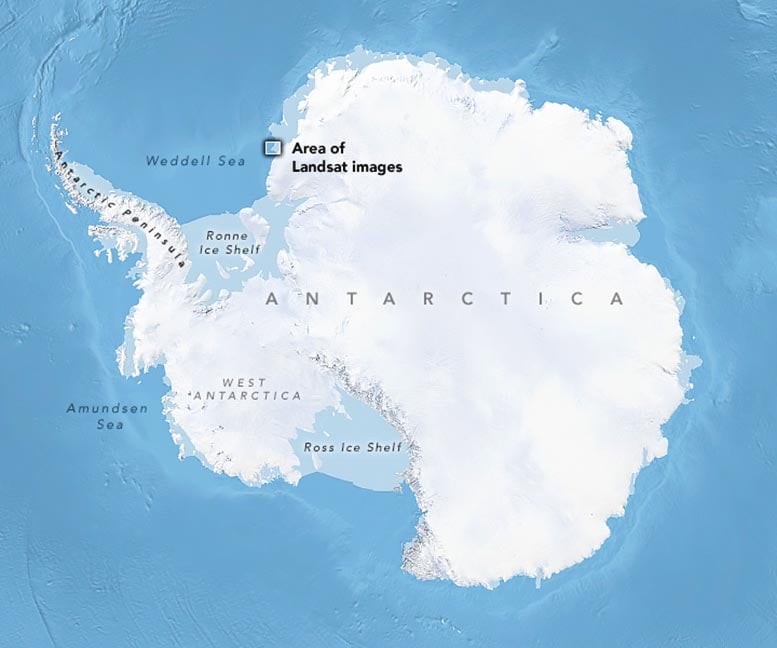
Christopher Shuman, a University of Maryland, Baltimore County, glaciologist based at NASA’s Goddard Space Flight Center, estimated that the iceberg spans about 375 square kilometers (145 square miles), which is about the same size as Portland, Oregon. The U.S. National Ice Center confirmed the name Iceberg A-83, which aligns with the longstanding naming convention that relates to where around the continent an iceberg is first observed.
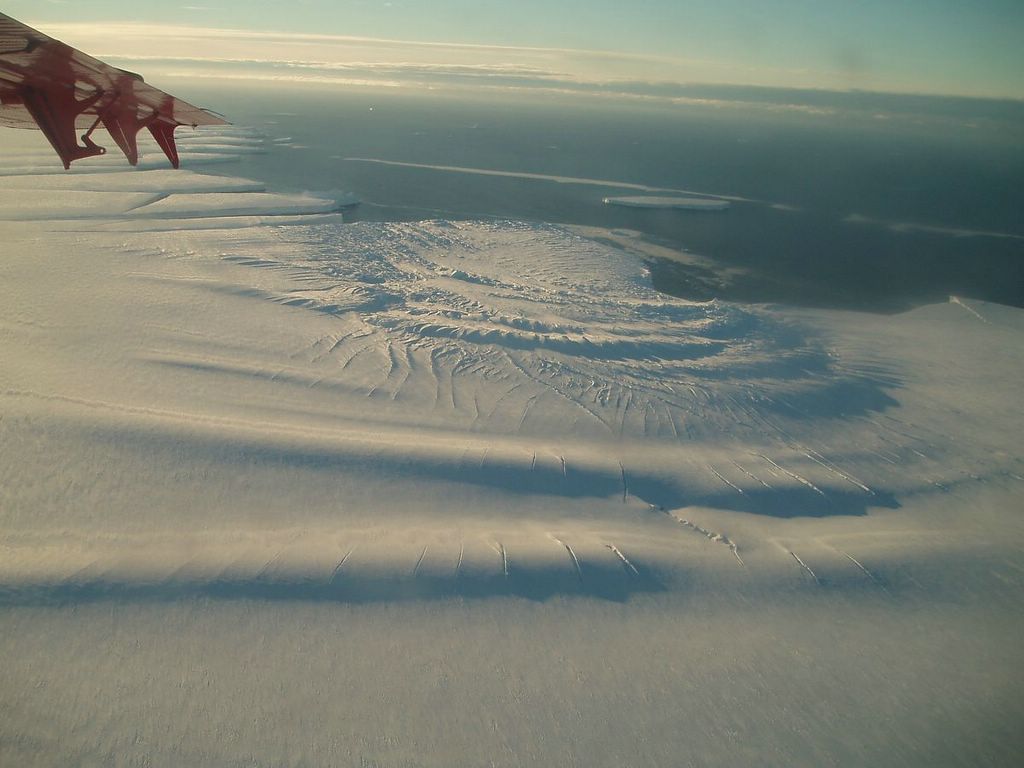
Iceberg A-83 was first spotted off the Brunt Ice Shelf in the eastern Weddell Sea. It broke from a rift known as the “Halloween Crack” that appeared in October 2016 and grew eastward from the McDonald Ice Rumples. The rumples are the result of ice that flows over an underwater obstruction, where the bedrock rises high enough to reach into the underside of the floating ice shelf. This rocky formation impedes the flow of ice and causes pressure waves, crevasses, and rifts to form at the shelf’s surface.
Iceberg Formation: A Natural Cycle
Icebergs, even large ones like those recently released from the Brunt, are part of a natural, cyclical process of growth and decay at the limits of Earth’s ice sheets. As glacial ice flows from the inland ice sheet and spreads out over the sea, shelf areas farthest from shore grow thinner. Susceptible to melting from above or below, they are more prone to forming rifts and eventually breaking away.
Although iceberg calving is normal, the Brunt Ice Shelf is feeling the same pressures as elsewhere around Antarctica, including low sea ice conditions. When less sea ice is present, ice shelves are more exposed to destabilizing wind and wave action.
Future Implications for the Brunt Ice Shelf
Despite the recent calving events, the remainder of the Brunt is still holding on to the McDonald Ice Rumples. But the new Iceberg A-83, along with icebergs A-74 and A-81 that broke off in recent years, have greatly diminished the ice shelf’s area since early 2021. “As ice shelves get smaller and smaller, they become more vulnerable to extreme events that can, as in the case of the Glenzer/Conger Ice Shelf, lead to destabilization and total loss of the floating glacial ice area,” Shuman said.
The Brunt continues to display fractures on its surface, such as Chasm 2 (west of these images), that are expected to play a continued role in the evolution of this shelf. Data from Landsat collected year-round, along with insights from other sensors, will help scientists make sense of that future.
NASA Earth Observatory images by Michala Garrison, using Landsat data from the U.S. Geological Survey. Story by Kathryn Hansen with image interpretation by Christopher Shuman, NASA/UMBC.
Never miss a breakthrough: Join the SciTechDaily newsletter.
Follow us on Google and Google News.
4 Comments
“As ice shelves get smaller and smaller, they become more vulnerable to extreme events that can, as in the case of the Glenzer/Conger Ice Shelf, lead to destabilization and total loss of the floating glacial ice area,”
We are commonly told that this is bad because the shelf ice is acting to impede the up-stream ice flow into the ocean; removing ice would, therefore, allow the glacier to speed up and contribute to accelerating sea level rise. Yet, compression apparently is only happening at the McDonald Ice Rumples. The iceberg broke off along the Halloween Crack, a tension or possibly shear crack — not the compression that would be expected if the ice shelf were buttressing the glacier. It seems to me that the phenomenon is being explained poorly if it appears contradictory.
Very refreshing to read an article that doesn’t mention climate change. Thanks.
I Agree.
Thanx for being realistic