
Close Menu
    Facebook X (Twitter) Instagram
    SciTechDaily
    • Biology
    • Chemistry
    • Earth
    • Health
    • Physics
    • Science
    • Space
    • Technology
    Facebook X (Twitter) Pinterest YouTube RSS
    SciTechDaily
    Home»Space»Chinese Lunar Rover Discovers “Mind-Blowing” Translucent Glass Globules on the Moon
    Space

    Chinese Lunar Rover Discovers “Mind-Blowing” Translucent Glass Globules on the Moon

    By Science China PressFebruary 24, 2022No Comments4 Mins Read
    Facebook Twitter Pinterest Telegram LinkedIn WhatsApp Email Reddit
    Share
    Facebook Twitter LinkedIn Pinterest Telegram Email Reddit
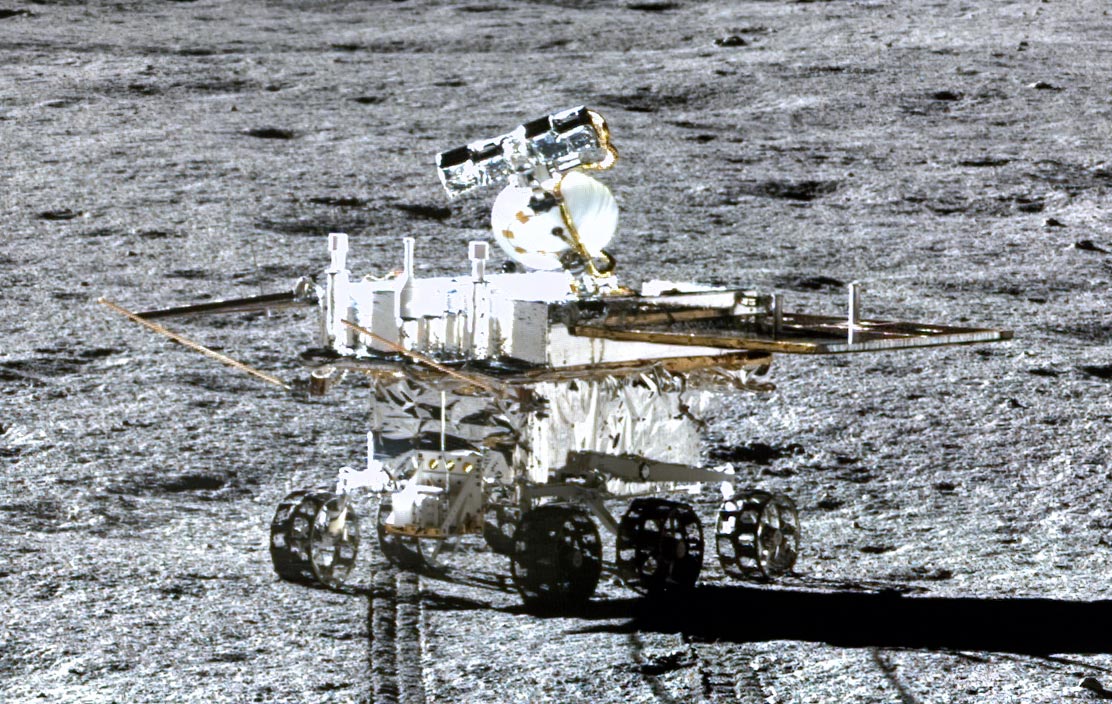
    Yutu-2 Rover on Moon
    Yutu-2 rover on lunar surface. Credit: CSNA/Siyu Zhang/Kevin M. Gill

    Chinese Lunar Rover discovered translucent glass globules on the Moon, possibly from impact events, offering insights into lunar geology and future exploration.

    This study is led by Dr. Zhiyong Xiao (Planetary Environmental and Astrobiological Research Laboratory, School of Atmospheric Sciences, Sun Yat-sen University), who is a core scientific team member of the first in-situ lunar mission to the Moon, Chang’E-4.

    The team examined images taken by the panorama camera onboard the Yutu-2 rover, and discovered several translucent spherical and dumbbell-shaped glassy globules (see images below). Perching on the surface regolith, the globules are transparent to translucent, and they exhibit a light brownish color. Such centimeter-sized translucent glass globules were not found on the Moon before.

    “The globules simply blow our mind, since they are so unique on the Moon,” Xiao says.
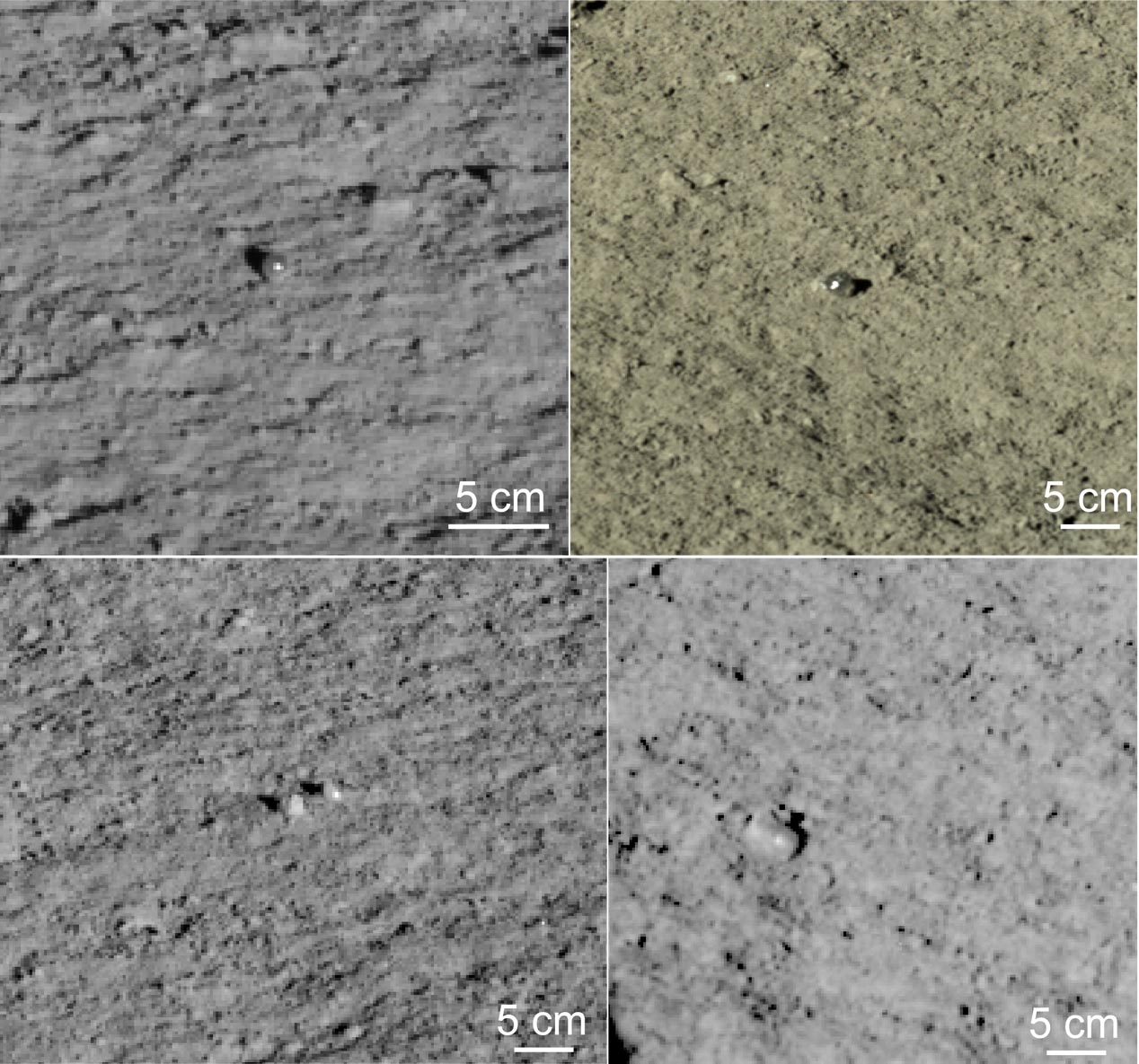
    Macroscopic Translucent Glass Globules Found by Yutu-2 Rover
    Two confirmed (upper row) and two possible (bottom row) glass globules found along the route of Yutu-2. Credit: Image taken by the Yutu-2 rover; courtesy of China National Space Administration) ©Science China Press

    Xiao has been studying tektite and microtektites, special distal impact glasses formed by terrestrial impact events, and microscopic glass spherules on the Moon, but they did not expect to see such translucent glass globules at the Chang’E-4 landing region. Centimeter-sized glassy globules have been collected by Apollo astronauts, but they are mostly dark, opaque, and clast-rich (see image below).

    The largest holohyaline globules found on the Moon are less than 1 cm, such as a globule recently collected by the Chang’E-5 mission, and they are also opaque (see image below). Along the less than 700 meters route of Yutu-2 that was accomplished in its first 12 lunar days, at least two such globules were confirmed, and another two possible cases awaited confirmation due to inadequate image resolution.

    Based on the color, morphology, geometry, and possible exposure ages, the team studied the origin of the globules by referring to critical cooling rates of crystallization for various lunar rocks.
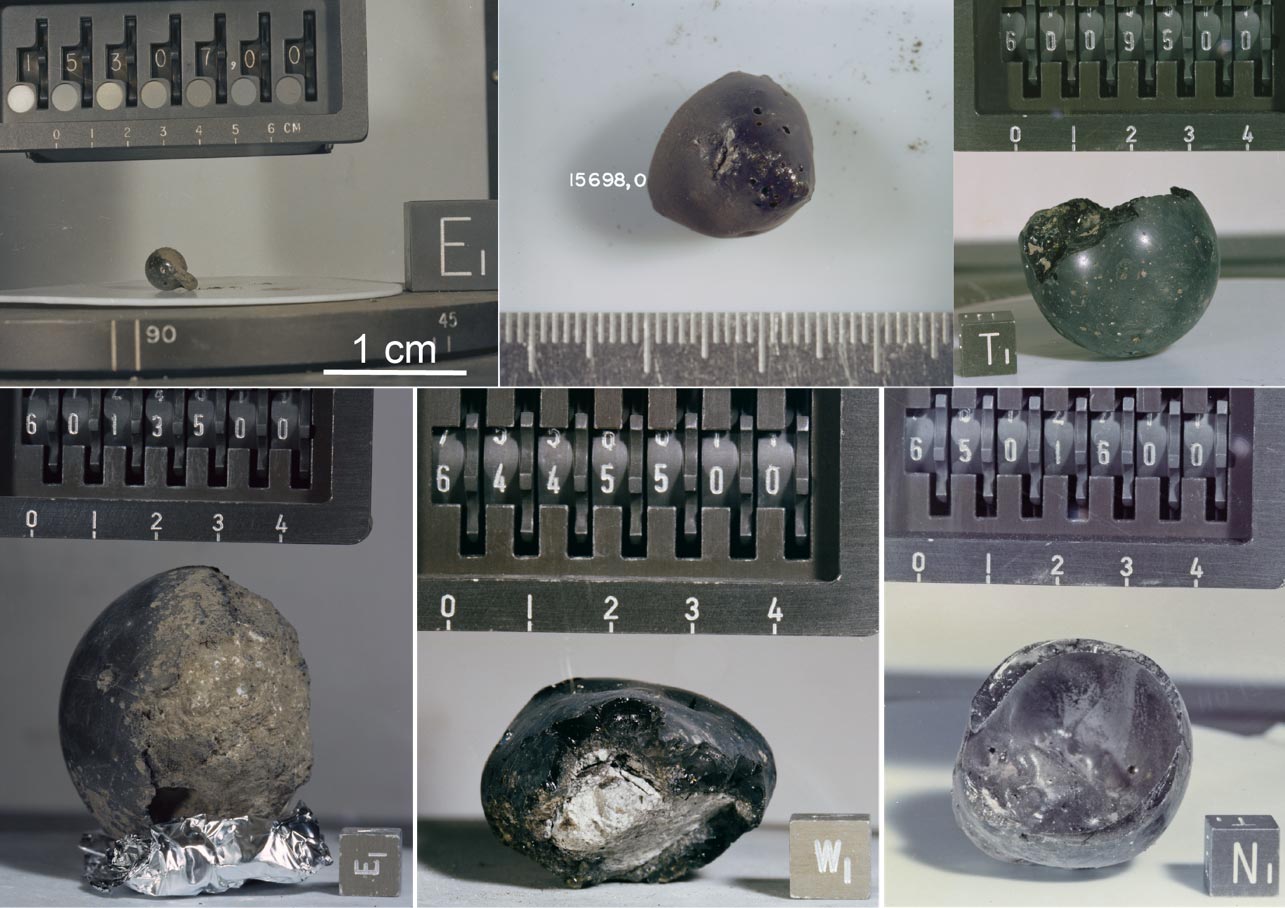
    Clast Rich Glass Globules Collected by Apollo Missions
    Clast-rich glass globules collected by the Apollo 15 and 16 astronauts. The glass globules are black and opaque and large lithic clasts are frequently visible. Some globules are hollowed in the interior. Sample IDs are annotated in the photos. Credit: Courtesy of Lunar and Planetary Institute, ©Science China Press

    The team found that the globules are well consistent with being impact glasses sourced from iron-poor materials, such as pure anorthosites that are composed of plagioclase. Within a ballistic range permitted by the maximum landing velocity of the globules, the team revealed that a lot of potential parent craters are capable of forming such globules, as the target lithology there consists of pure anorthosites, and high-energy melt is a common product in typical lunar impact events. “It is a bit unfortunate that when we first found these glasses, the rover has just passed by them, and no compositional data were obtained, but such globules might be pretty common at the lunar farside,” Xiao says.
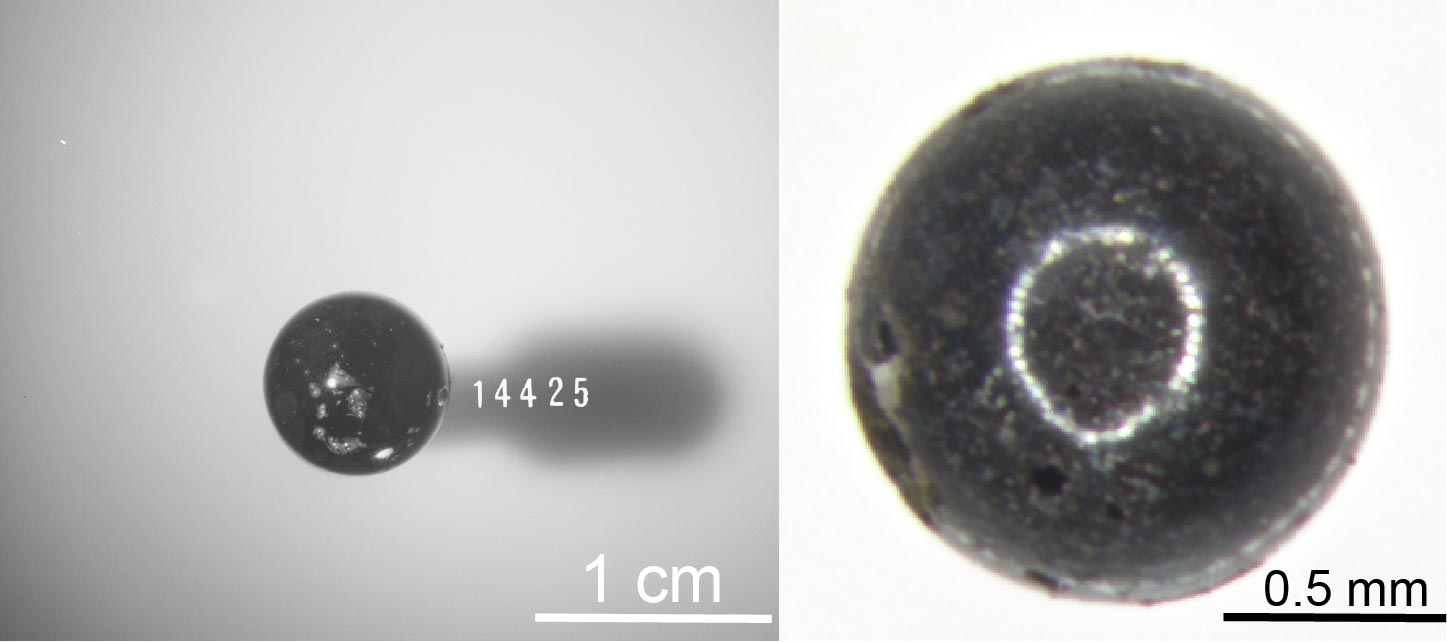
    Holohyaline Globules Collected by Apollo 14 and Chang’E 5 Missions
    Spherical glass globules collected by the Apollo 14 astronauts. Credit: Courtesy of Lunar and Planetary Institute and the Chang’E-5 mission (courtesy of China National Space Administration), ©Science China Press

    “The first discovery of macro-sized translucent glass globules on the Moon confirms that lunar anorthosites are excellent raw materials to manufacture glasses with good light-admitting quality. Their existence on the Moon indicates that impact events on the other planetary bodies could also form tektite-like impact glasses. Such glass globules should be commonly produced by ancient impact basins on the Moon, so their compositions and isotopic ages will be highly valuable to understand the early impact history. Also, at the dawn of constructing human bases on the Moon, lunar anorthosites are promising and widespread resources to produce glasses in situ,” Xiao says.

    Without compositional data (e.g., 10Be), the possibility that these glass globules are counterparts of terrestrial tektites is currently unknown. Rather, tektites on Earth were produced by larger than ~10 km (~6 mi) diameter craters that were formed in water-rich targets. Apollo astronauts have reported easy recognition when collecting centimeter-sized glassy globules on the Moon, so the translucent glass globules are a value sampling target for future lunar surface explorations.

    Reference: “Translucent glass globules on the Moon” by Zhiyong Xiao, Pan Yan, Bo Wu, Chunyu Ding, Yuan Li, Yiren Chang, Rui Xu, Yunhua Wu, Yichen Wang, Yizhen Ma and Jun Cui, 17 February 2022, Science Bulletin.
    DOI: 10.1016/j.scib.2021.11.004

    Never miss a breakthrough: Join the SciTechDaily newsletter.
    Follow us on Google and Google News.

    Geoscience Moon Popular Science China Press
    Share. Facebook Twitter Pinterest LinkedIn Email Reddit

    Related Articles

    Wonder Material Graphene Discovered in Lunar Soil Sample From Chinese Moon Mission

    “Core Reaction” – Moon Rock Formation Discovery Solves Major Puzzle in Lunar Geology

    Chinese Scientists Discover Water Reservoir on the Moon

    Bombardment History Revealed: The Moon Sustained Twice As Many Impacts As Can Be Seen on Its Surface

    Mysterious Iron Nanoparticles: Planetary Scientists Find Evidence of Solar-Driven Change on the Moon

    Presence of Water in the Primary Crust Indicates That the Early Moon Was Wet

    Saturn’s Moon Phoebe Has Planet-Like Qualities

    NASA LRO Spacecraft Reveals Geological Activity on the Moon’s Surface

    GRAIL Probes Now Orbiting The Moon

    Leave A Reply Cancel Reply

    • Facebook
    • Twitter
    • Pinterest
    • YouTube

    Don't Miss a Discovery

    Subscribe for the Latest in Science & Tech!

    Trending News

    Bone-Strengthening Discovery Could Reverse Osteoporosis

    Scientists Uncover Hidden Trigger Behind Stem Cell Aging

    Scientists Find Way to Reverse Fatty Liver Disease Without Changing Diet

    Could Humans Regrow Limbs? New Study Reveals Promising Genetic Pathway

    Scientists Reveal Eating Fruits and Vegetables May Increase Your Risk of Lung Cancer

    Scientists Reverse Brain Aging With Simple Nasal Spray

    Scientists Uncover Potential Brain Risks of Popular Fish Oil Supplements

    Scientists Discover a Surprising Way To Make Bread Healthier and More Nutritious

    Follow SciTechDaily
    • Facebook
    • Twitter
    • YouTube
    • Pinterest
    • Newsletter
    • RSS
    SciTech News
    • Biology News
    • Chemistry News
    • Earth News
    • Health News
    • Physics News
    • Science News
    • Space News
    • Technology News
    Recent Posts
    • What Makes Rubber So Strong? Scientists Finally Solve 100-Year-Old Mystery
    • Scientists Decode Mysterious Magnetic “Maze Domains” To Boost EV Efficiency
    • Scientists Say This Fungus Could Survive the Trip to Mars
    • The Universe Is Expanding Too Fast and Scientists Can’t Explain Why
    • Gaining Weight Young May Be More Dangerous Than You Think
    Copyright © 1998 - 2026 SciTechDaily. All Rights Reserved.
    • Science News
    • About
    • Contact
    • Editorial Board
    • Privacy Policy
    • Terms of Use

    Type above and press Enter to search. Press Esc to cancel.