
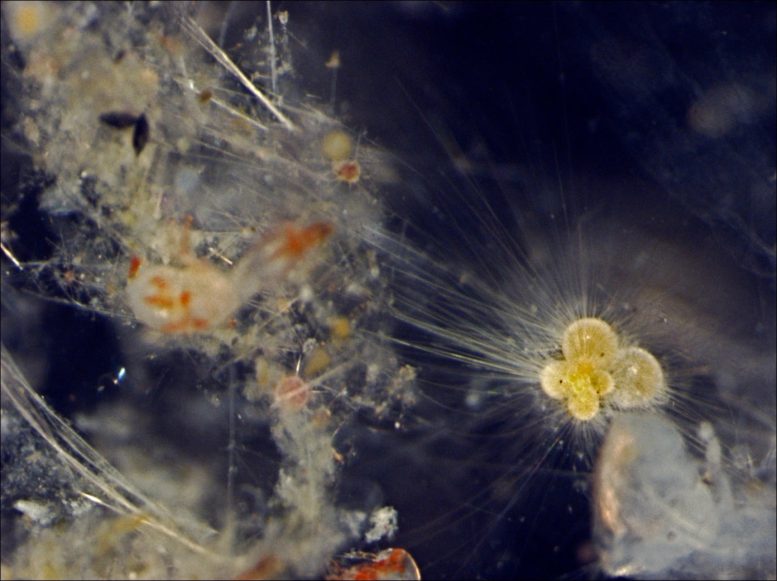
As global temperatures return to levels seen 8 million years ago, tropical plankton are migrating poleward, threatening biodiversity and marine ecosystems worldwide.
The tropical oceans harbor the most varied plankton communities on our planet, which serve as the foundation of marine food webs. However, it may come as a surprise that the modern diversity of plankton in the tropics has only emerged recently, within the past 8 million years, due to global cooling. This was recently discovered in a recent study led by researchers at The University of Texas at Austin.
The discovery has sparked concerns about the potential impact of rapid ocean warming on plankton distribution, as they may be compelled to migrate away from the tropics, resulting in adverse consequences for marine ecosystems. This could have detrimental effects on key fish species like tuna and billfish, as well as on coastal communities that rely on them. The study was recently published in the journal Nature.
Using microfossils to track the history of a group of zooplankton called Foraminifera, the researchers found that the last time Earth was this warm – just before global cooling began 8 million years ago – tropical plankton populations lived in waters more than 2,000 miles from where they are today. The natural cooling of the past 8 million years that allowed the plankton to flourish in the tropics has been reversed by climate change during the past century.
“Earth’s current biosphere evolved for ice ages,” said lead author Adam Woodhouse, a postdoctoral fellow at the University of Texas Institute for Geophysics. “By suddenly switching to an Earth of 8 million years ago, we’re not just killing off a few species, we’re changing the entire chemistry of the atmosphere and oceans, and nothing is ready for that.”
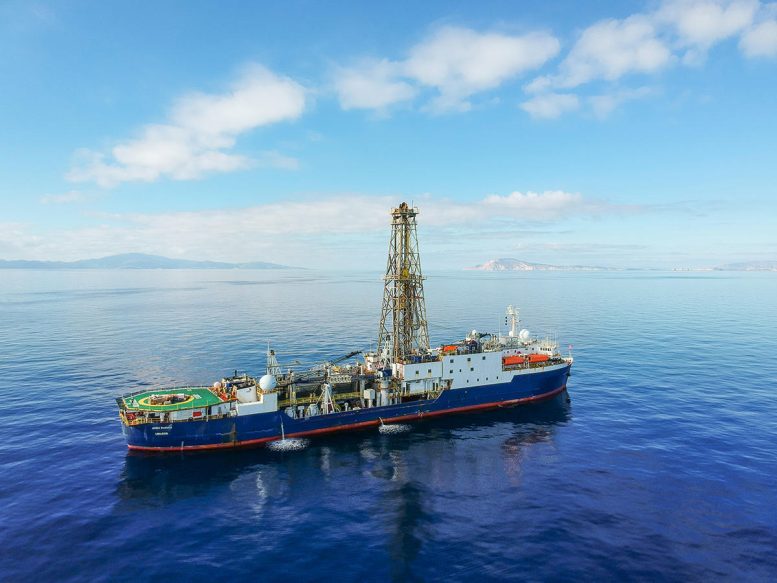
To conduct the study, researchers analyzed a database of 500,000 microfossils — the largest of its kind — gathered during 55 years of scientific ocean drilling. Each fossilized shell tells where and when the plankton lived, how deep its habitat was, and the conditions of the ocean around it.
The scientists grouped the information and analyzed it alongside a geologic record of past climate change. They found that as global cooling began 8 million years ago, plankton species were pushed toward the equator. By the modern age, the most diverse plankton populations had moved to the tropics, while the poles of today became too harsh for all but a handful of specialized species.
Plankton Migration and Ecosystem Cascades
With global temperatures and atmospheric carbon dioxide now approaching what they were 8 million years ago, the findings suggest that plankton species could evacuate the equator and head poleward, researchers said. Other studies of modern plankton have already documented signs of this happening. Researchers fear that the loss of diversity in plankton populations could trigger a cascade of extinctions like those seen in rainforests after logging and fires.
“The important thing now is to determine how the effect of climate change on those species will cascade across food webs,” said Harvard University network scientist Anshuman Swain, who co-led the research.
When analyzing the data, the researchers used a technique better known for investigating social structures like Twitter to reveal connections between plankton evolution, habitats, and climate change over deep time. First developed to explore social interactions and friendships in sociology, network analysis is increasingly being used in ecology and environmental science and could help inform action to mitigate the worst effects of climate change, Swain said.
Urgent Action to Protect Marine Biodiversity
The time for action, however, could be running out, said Tracy Aze, an associate professor of marine micropaleontology at the University of Leeds who helped develop the plankton database but was not involved in the current study. According to Aze, today’s unprecedented warming means that the world is now operating on unpredictable time scales.
“The fact that we’ve already begun seeing an appreciable difference in the diversity of many marine groups like fish and the plankton means we might be closer to certain temperature tipping points than we thought,” she said.
Reference: “Late Cenozoic cooling restructured global marine plankton communities” by Adam Woodhouse, Anshuman Swain, William F. Fagan, Andrew J. Fraass and Christopher M. Lowery, 15 February 2023, Nature.
DOI: 10.1038/s41586-023-05694-5
The plankton database, Triton, was developed and published at the University of Leeds and the University of Oxford in 2021. The current research was funded by the University of Maryland and University of Texas Institute for Geophysics, a research unit of the Jackson School of Geosciences.
Never miss a breakthrough: Join the SciTechDaily newsletter.
Follow us on Google and Google News.
2 Comments
Lamenting climate change, and predicting undesirable results from returning to a climate that existed previously, seems a little strange, especially for Earth scientists. As usual, where are the numbers that this prediction depends on?
Another way of looking at this is that, under ‘Ice House’ conditions, the Tropics provide a refuge for plankton, which spread polewards during more salubrious temperatures. Things change. It is humans that assign subjective judgements as to whether changes are good or bad, often without definitions or justifications for the assessment.