
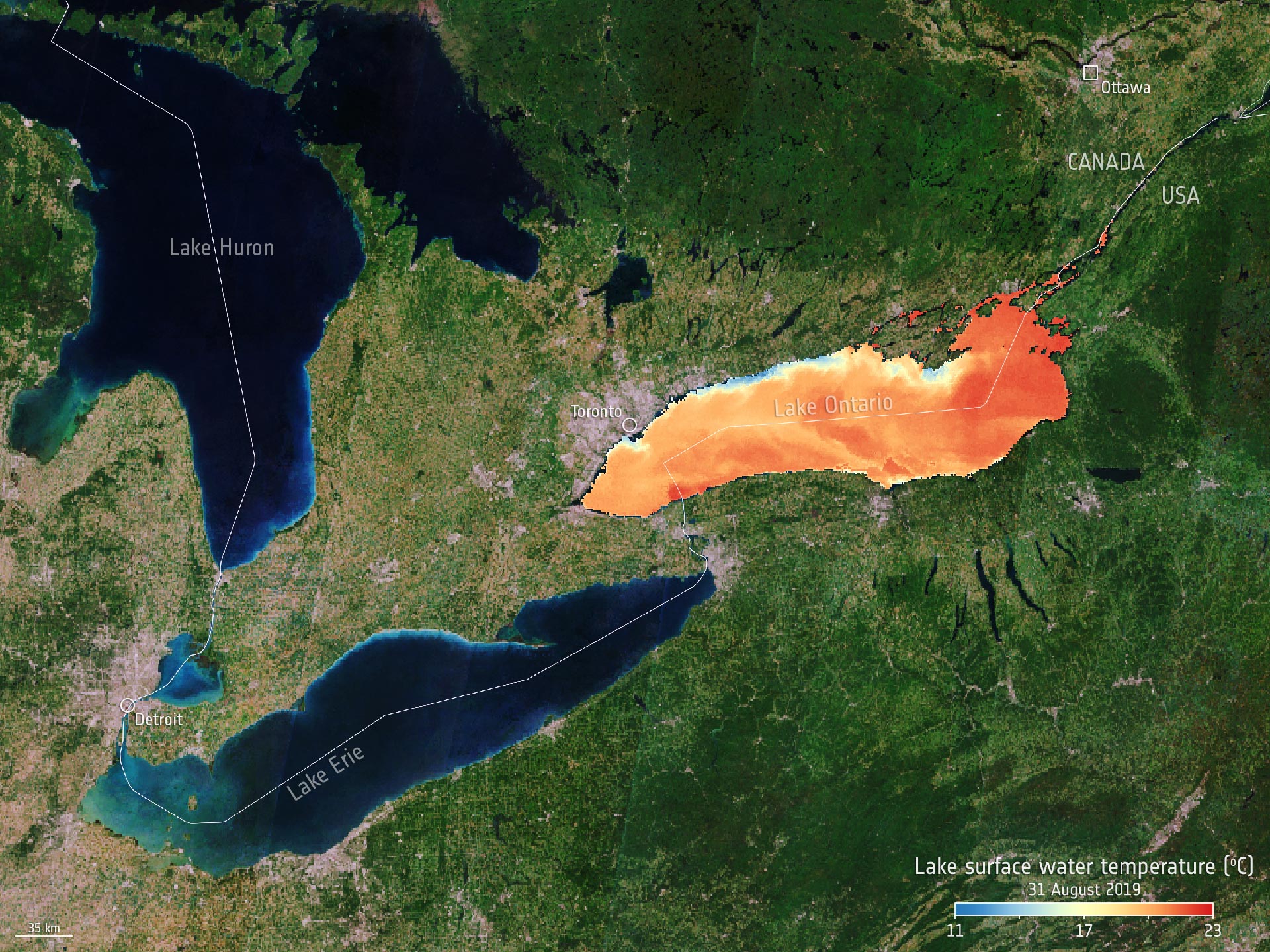
A global study shows that human-driven greenhouse gases are directly responsible for warming lakes and reducing ice cover, not natural variability.
While the climate crisis is, unfortunately, a reality, it is all too easy to assume that every aspect of our changing world is a consequence of climate change. Assumptions play no role in key environmental assessments and mitigation strategies such as we will see in the upcoming UN climate change COP-26 conference – it’s the science and hard facts that are critical. New research published this week is a prime example of facts that matter. Using model projections combined with satellite data from ESA’s Climate Change Initiative, this latest research shows that the global rise in the temperature of lake water and dwindling lake-ice cover can only be explained by the increase in greenhouse gas emissions since the industrial revolution – in other words, humans are clearly to blame.
According to the paper published in Nature Geoscience, the influence of human-induced climate change is evident in rising lake-water temperatures and the fact that lake ice-cover forms later and melts sooner.
Luke Grant, from the Vrije Universiteit Brussel (VUB) and lead author, said, “These physical properties are fundamental to lake ecosystems. As impacts continue to increase in the future, we risk severely damaging lake ecosystems, including water quality and populations of native fish species. This would be disastrous for the many ways in which local communities depend on lakes, such as drinking water supply and fishing.”
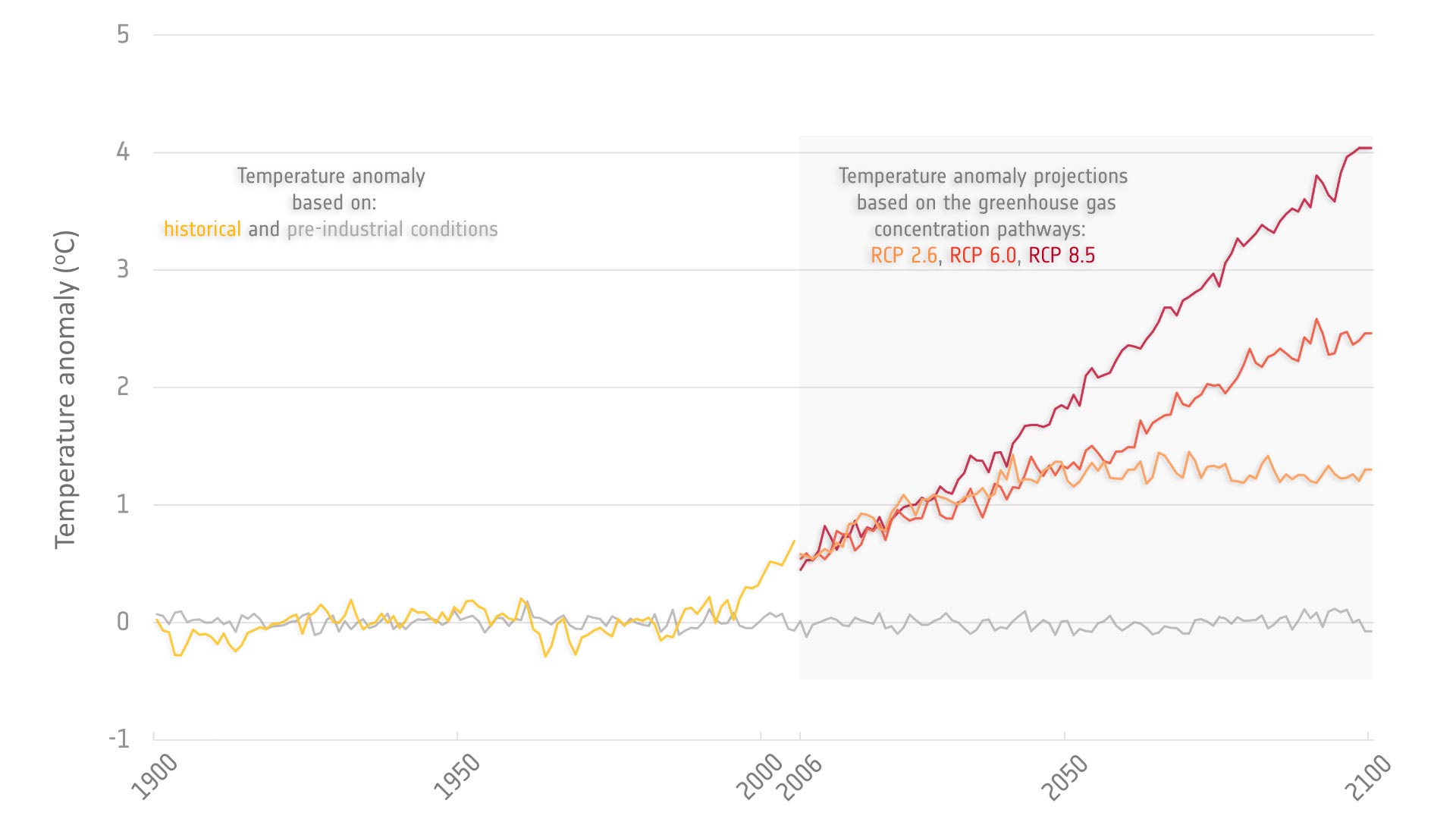
The research team also predicted how things are likely to develop in the future under different warming scenarios.
However, the role of climate change in these trends has not yet been demonstrated.
“In other words, we had to rule out the possibility that these changes were caused by the natural variability of the climate system,” says fellow VUB researcher and study co-author Inne Vanderkelen.
Climate Models Confirm Human Impact
The team therefore developed multiple computer simulations with models of lakes on a global scale, on which they then ran a series of climate models. Once the team had built up this database, they applied a methodology described by the Intergovernmental Panel on Climate Change. After determining the historical impact of climate change on lakes, they also analyzed various future climate scenarios.
The results show that it is highly unlikely that the trends in lake temperatures and ice cover in recent decades can be explained solely by natural climate variability.
Moreover, the researchers found clear similarities between the observed changes in lakes and model simulations of lakes in a climate influenced by greenhouse gas emissions.
Direct Link Between Human Activity and Lake Systems
“This is clear evidence that human-induced climate change has an impact on lakes,” says Iestyn Woolway, former ESA Fellow and co-author of the study.
Projections of lake temperatures and ice cover unanimously indicate increasing trends for the future.
For every 1°C increase in global air temperature, lakes are estimated to warm by 0.9°C and lose 9.7 days of ice cover. In addition, the analysis revealed significant differences in the impact on lakes at the end of the century, depending on the measures we take to combat climate change.
“Our results underline the great importance of the Paris Agreement to protect the health of lakes around the world,” said Wim Thiery, VUB climate expert and senior author of the study. “If we manage to drastically reduce our emissions in the coming decades, we can still avoid the worst consequences for lakes worldwide.”
Reference: “Attribution of global lake systems change to anthropogenic forcing” by Luke Grant, Inne Vanderkelen, Lukas Gudmundsson, Zeli Tan, Marjorie Perroud, Victor M. Stepanenko, Andrey V. Debolskiy, Bram Droppers, Annette B. G. Janssen, R. Iestyn Woolway, Margarita Choulga, Gianpaolo Balsamo, Georgiy Kirillin, Jacob Schewe, Fang Zhao, Iliusi Vega del Valle, Malgorzata Golub, Don Pierson, Rafael Marcé, Sonia I. Seneviratne and Wim Thiery, 18 October 2021, Nature Geoscience.
DOI: 10.1038/s41561-021-00833-x
Never miss a breakthrough: Join the SciTechDaily newsletter.
Follow us on Google and Google News.
5 Comments
“Assumptions play no role in key environmental assessments and mitigation strategies … – it’s the science and hard facts that are critical.”
I completely agree! However, models are not facts! They are complex hypotheses that depend on subjective tuning to agree with historical records, and on assumptions such as the RCP scenarios, and need to be verified. There are good reasons to consider the RCP 8.5 scenario as being improbable, as well as not representing “Business As Usual,” as commonly promoted.
I’m waiting on those “hard facts!”
When are you eggheads gonna stop soaking grants and doing nothing. Even women march on Congress. Are you all bigger p*ssies than women? Get off your flat lazy asses and make a million scientist march and show those f@x your serious.
Those who can’t do, teach. Those who can’t teach, march. Those who can’t march, whine.
Odd how the other Great Lakes do not seem to be effected? Let’s see, lake levels over the last 5 years have changed almost 2 meters; wonder if that has any effect? Yes, water is used for many purposes AND there are many discharges into the Great Lakes that, if below 32 degrees, would not be flowing. BTW, the water quality of those discharges are magnitudes better than is raw lake water; only difference is temperature. And in some instances, the discharge water is cooled before being put back into the lakes.
I wonder if the sun decided to “go on vacation” for a few thousand years, starting a new ice age where a mile of ice again forms over Toronto, if the lakes would still not be frozen due to man?
The other lakes appear not to be affected because they were not measured. The results are only shown for Lake Ontario. It is generally known that Lake Erie is the warmest and has problems with algae because it is the shallowest.