
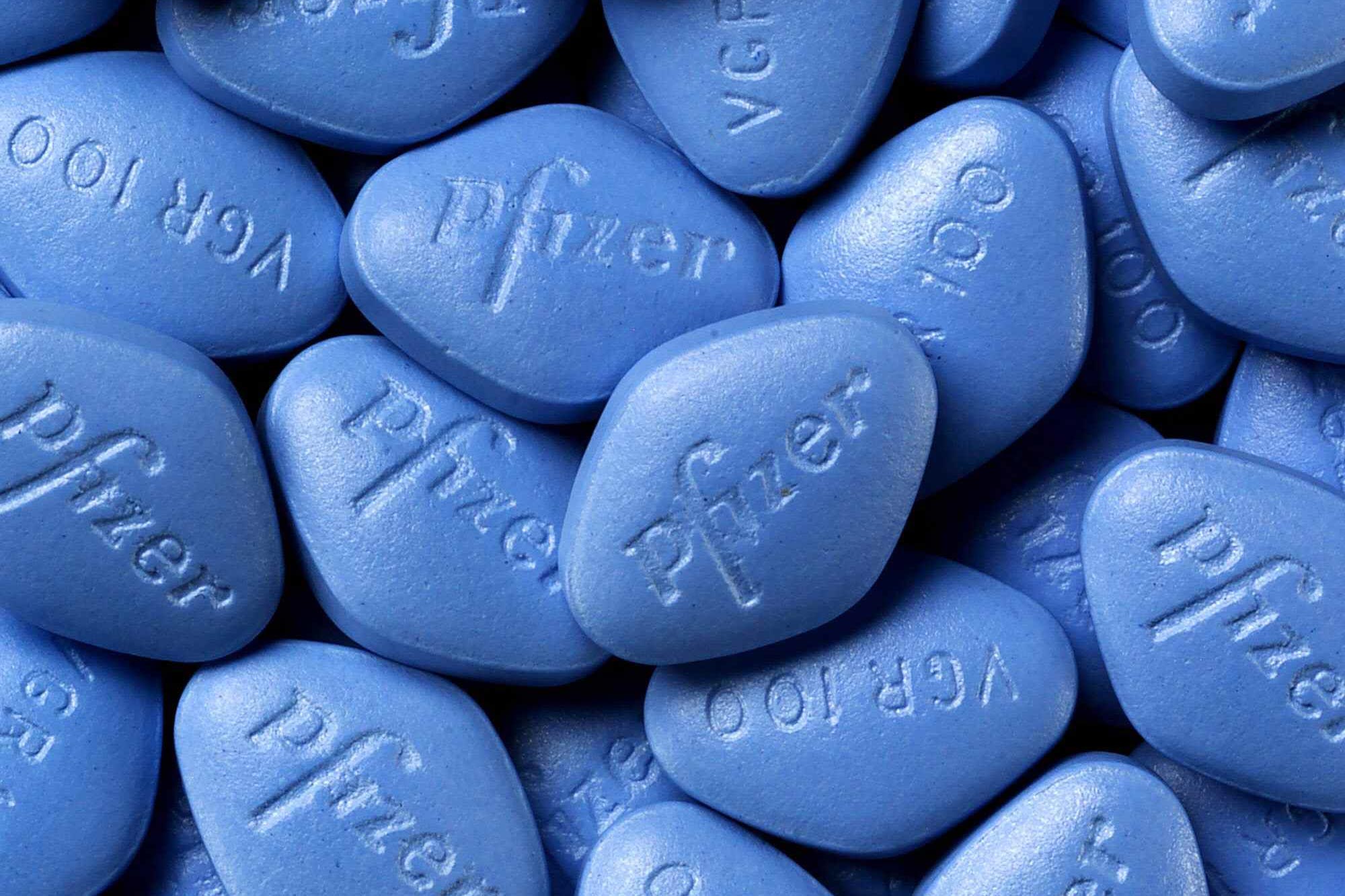
Large-scale study provides evidence that FDA-approved drug can help protect brain cells from Alzheimer’s disease.
Research led by the Cleveland Clinic suggests that sildenafil (commonly known by the brand name Viagra) may serve as a promising treatment for Alzheimer’s disease. This study draws on evidence from computational modeling, analysis of insurance claims data, and cellular observations in the brains of Alzheimer’s patients.
Sildenafil is the main component of drugs used to treat erectile dysfunction (Viagra) and pulmonary arterial hypertension (Revatio).
“Our findings provide further weight to re-purposing this existing FDA-approved drug as a novel treatment for Alzheimer’s, which is in great need of new therapies,” said Feixiong Cheng, Ph.D., who led the research. “We used artificial intelligence to integrate data across multiple domains which all indicated sildenafil’s potential against this devastating neurological disease.”
Alzheimer’s disease currently affects over 6 million Americans and incidence is expected to triple by 2050, underscoring the need for rapid development of new prevention and treatment strategies. Drug repurposing – the use of an existing drug for new therapeutic purposes – offers a practical alternative to the costly and time-consuming traditional drug discovery process.
Research Findings and Implications
Published in Journal of Alzheimer’s Disease, the study builds upon the researchers’ earlier findings in 2021 that used computational models to initially identify sildenafil as a promising drug candidate to help prevent and treat Alzheimer’s disease.
In the new study, Dr. Cheng, director of the Cleveland Clinic Genome Center, and his team analyzed millions of de-identified insurance claims from two independent patient databases, which revealed a 30-54% reduced prevalence in Alzheimer’s disease diagnoses among patients who took sildenafil compared to those who did not after adjusting various possible confounding factors.
In brain cells from Alzheimer’s patients, researchers also showed that sildenafil lowers levels of neurotoxic tau proteins, which are known to be associated with Alzheimer’s disease when they build up. They also found that neurons treated with sildenafil expressed genes related to cell growth, improved brain function, reduced inflammation, and other processes known to protect against the neural degeneration associated with Alzheimer’s disease.
Future Directions
Dr. Cheng’s findings demonstrate the feasibility of using computer models to identify potential new drug candidates in a fast, reliable way, representing a significant step forward in Alzheimer’s drug discovery.
“After integrating this large amount of data computationally, it is rewarding to see sildenafil’s effects in human neurons and real-world patient outcomes,” said Dr. Cheng. “We believe our findings provide the evidence needed for clinical trials to further examine the potential effectiveness of sildenafil in patients with Alzheimer’s disease.”
Reference: “Sildenafil as a Candidate Drug for Alzheimer’s Disease: Real-World Patient Data Observation and Mechanistic Observations from Patient-Induced Pluripotent Stem Cell-Derived Neurons” by Dhruv Gohel, Pengyue Zhang, Amit Kumar Gupta, Yichen Li, Chien-Wei Chiang, Lang Li, Yuan Hou, Andrew A. Pieper, Jeffrey Cummings and Feixiong Cheng, 1 March 2024, Journal of Alzheimer’s Disease.
DOI: 10.3233/JAD-231391
Dr. Cheng’s co-authors include Andrew A. Pieper, M.D., Ph.D., of Louis Stokes Cleveland VA Medical Center, Case Western Reserve University and University Hospitals Cleveland Medical Center; and Jeffrey Cummings, M.D., Sc.D., director emeritus of the Cleveland Clinic Lou Ruvo Center for Brain Health in Las Vegas.
Dhruv Gohel, Ph.D., and Amit Gupta, Ph.D., postdoctoral research associates in Dr. Cheng’s laboratory, are co-first authors. The study was primarily supported by the National Institute on Aging of the National Institutes of Health (NIH) under award numbers R01AG066707, U01AG073323, R01AG076448, R01AG082118, RF1AG082211, R01AG084250, R56AG074001, andR21AG083003, and the National Institute of Neurological Disorders and Stroke of NIH under award number RF1NS133812.
Never miss a breakthrough: Join the SciTechDaily newsletter.
Follow us on Google and Google News.