
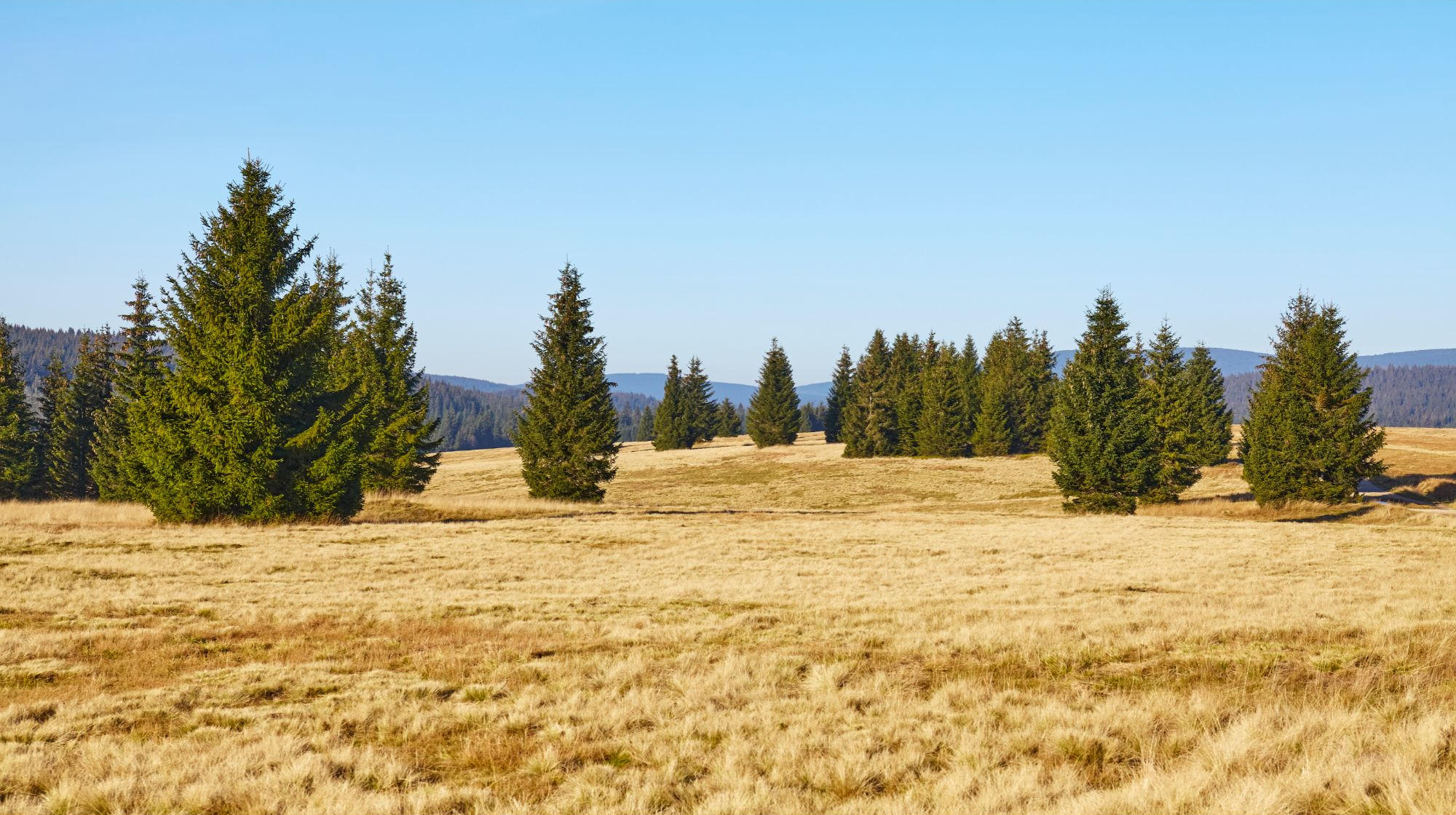
Peatlands experience greater impacts from drought than previously anticipated, raising concerns due to their crucial role in combating climate change. Prolonged drought conditions significantly reduce the capacity of peat to absorb additional carbon dioxide (CO2). Furthermore, enhancing biodiversity has minimal effect on improving the drought resilience of peat. These findings were reported by Radboud University scientists in a recent study published in the Proceedings of the Royal Society B.
Peat is a vast carbon sink: per square meter it is able to store more CO2 than any other ecosystem in the world. The peatlands of the Netherlands, but also those in places such as Scandinavia and the Baltic states, therefore play an important role in the fight against climate change. However, peat is coming under increasing pressure and is extremely sensitive to the dry summers we are experiencing as a result of climate change. This is what researchers from the Radboud Institute for Biological and Environmental Sciences have concluded.
‘In our lab, under controlled conditions, we first ensured that large blocks of peat were well moistened over a long period of time’, explains lead author Bjorn Robroek. ‘We then slowly dried the peat out. One-half was exposed to mild drought, with the water level roughly five centimeters lower than the peat itself. The other half was subjected to extreme drought conditions; in this case, the water was twenty centimeters below the peat. This is comparable to a period of three weeks without rain – something that has also become increasingly common in the Netherlands in recent years.’
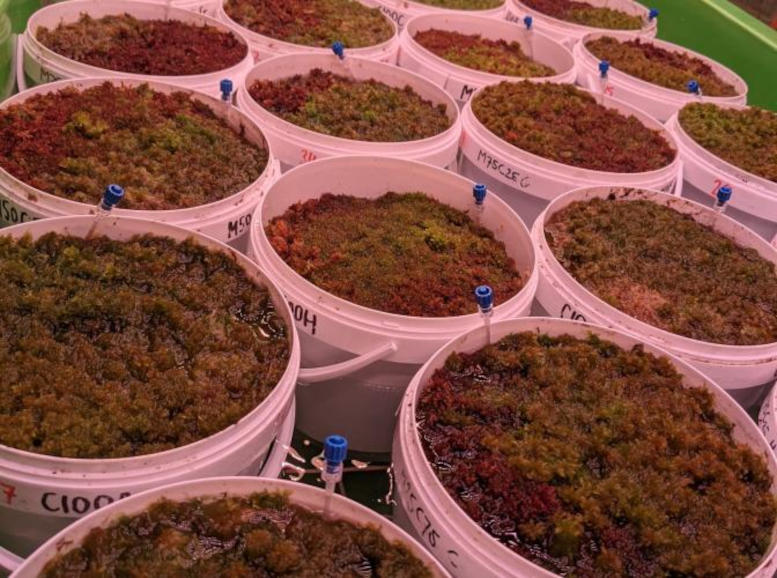
These experiments revealed that peat exposed to mild drought still absorbs a reasonable amount of carbon. Robroek: ‘Under extreme drought conditions, however, the peat can hardly take on any more carbon. In the event of an extended period of drought, it even releases the carbon again.’
Biodiversity
Drought not only affects peatlands, of course. Dry summers have made other ecosystems more fragile too. However, in the case of grasslands, for example, we now have methods to combat problems caused by drought. Increasing the biodiversity in this kind of ecosystem (by incorporating a greater number of different plants), as in the case of the Future Dikes project, keeps the ecosystem healthy and resilient.
Nevertheless, according to Robroek, when it comes to peatlands, improving biodiversity in this way is of little use in terms of tackling drought. ‘The different mosses that we tested in our peat experiments do little to nothing to combat drought. That does not mean that biodiversity is not important for peat: it helps with carbon storage, for example. But in the battle against drought, a different approach is needed.’
Politics
There are little things that consumers can do to protect peat. ‘Buy peat-free potting substrate and compost, for example’, cautions Robroek. ‘In the end, however, this is mainly a problem that will have to be solved at the political level. In the past, the buffer zones alongside rivers often consisted of peatland, but today much of this is grassland intended for agricultural use. These areas are constantly mowed and plowed and therefore hardly retain any water. As a result, water from these floodplains drains more quickly into the rivers, causing flooding.’
‘Switching over to natural management methods costs time and money, but will have huge benefits in the future. Peatlands, even lowland peat areas, will then retain considerably more water and therefore offer much better protection. You could compare this to a sponge that gradually releases water back to the landscape. In such places, peat is also the most effective option when it comes to storing carbon.’
Reference: “More is not always better: peat moss mixtures slightly enhance peatland stability” by Bjorn J. M. Robroek, Giulia Devilee, Yvet Telgenkamp, Carina Härlin, Magdalena N. Steele, Janna M. Barel and Leon P. M. Lamers, 10 January 2024, Proceedings of the Royal Society B.
DOI: 10.1098/rspb.2023.2622
Never miss a breakthrough: Join the SciTechDaily newsletter.
Follow us on Google and Google News.
2 Comments
And, then there is this:
https://scitechdaily.com/challenging-assumptions-scientists-discover-that-the-northern-peatlands-are-still-expanding/
If there is any constant in life, it is that there is always change. Therefore one should not view change as necessarily bad.
I don’t think we’re supposed to remember last week’s articles. It’s a little unfair to use such obsolete research; it’s been two days already.
It’s a problem with changing the phrase from “global warming”. The globe can’t warm evenly, so the climates change, so we can use that as a sort of simplistic euphemism. Yet the climates have naturally always changed, so it becomes this struggle against nature, where we simply must build land management systems to protect the land from any nature happening.
Shoehorning all scientific research into a single narrative really must be difficult. At this rate, the UK and Europe will be entirely peatlands by 2050 due to climate change, heartbreakingly coinciding with the total extinction of peat due to climate change. Contrasting the contradiction of articles day-to-day really makes that narrative hilarious.