
Close Menu
    Facebook X (Twitter) Instagram
    SciTechDaily
    • Biology
    • Chemistry
    • Earth
    • Health
    • Physics
    • Science
    • Space
    • Technology
    Facebook X (Twitter) Pinterest YouTube RSS
    SciTechDaily
    Home»Science»Climatic Drivers of Honey Bee Disease Revealed in New Study
    Science

    Climatic Drivers of Honey Bee Disease Revealed in New Study

    By Newcastle UniversityNovember 9, 20212 Comments2 Mins Read
    Facebook Twitter Pinterest Telegram LinkedIn WhatsApp Email Reddit
    Share
    Facebook Twitter LinkedIn Pinterest Telegram Email Reddit
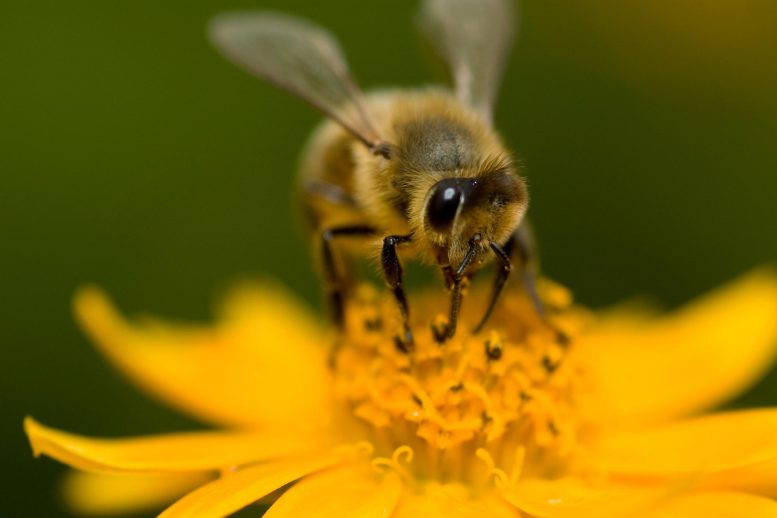
    Honey Bee on Flower
    Honey bee colonies worldwide are facing various diseases. A recent study has shed light on how shifting weather patterns may be contributing to disease in UK colonies.

    Researchers found that honey bee disease patterns in the UK are strongly influenced by weather.

    Honey bee colonies worldwide have suffered from a range of damaging diseases. A new study has provided clues on how changing weather patterns might be driving disease in UK colonies.

    Publishing their findings in the journal Scientific Reports, the team led by Newcastle University found that the most severe disease of honey bees, caused by the Varroa mite, increased as climate temperatures increased but were reduced during heavy rainfall and wind.

    Data collected from visits to over 300,000 honey bee colonies highlighted how the prevalence of six important honey bee diseases interacted in different ways with rainfall, temperature, and wind.

    Weather Patterns Drive Contrasting Disease Risks

    Study lead, PhD student Ben Rowland, from Newcastle University’s School of Natural and Environmental Sciences, said: “Our analysis clearly shows that the risk of a colony contracting one of the diseases we examined is influenced by the weather conditions experienced by that colony. Our work highlights some interesting contrasts; for example, rainfall can drive one disease to become more common whilst another will become rarer.”

    Professor Giles Budge, who leads the Modelling Evidence and Policy Group at Newcastle University and was a senior author on the paper, said: “We have long known that weather can influence the ability of honey bees to leave the hive and forage for food, but to better understand how our climate can influence honey bee disease is fascinating! This new knowledge will help us predict how honey bee disease might be influenced by future climate change.”

    The study also investigated the effect of weather on disease hotspots. The South West of England was at increased risk of disease caused by Varroa mites. In addition, the team highlighted a hot spot for risk for the notifiable and damaging disease European foulbrood in an area comprising Powys, Shropshire, Herefordshire and Worcestershire.

    Reference: “Identifying the climatic drivers of honey bee (Apis mellifera) disease in England and Wales” by Ben Rowland, Steve P. Rushton, Mark D.F. Shirley, Mike A. Brown and Giles E. Budge, 9 November 2021, Scientific Reports.
    DOI: 10.1038/s41598-021-01495-w

    This work is being completed with funding from Bee Disease Insurance Ltd and the BBSRC.

    Never miss a breakthrough: Join the SciTechDaily newsletter.
    Follow us on Google and Google News.

    Bees Climate Change Entomology Newcastle University
    Share. Facebook Twitter Pinterest LinkedIn Email Reddit

    Related Articles

    “Mummified” Bees From the Time of the Pharaohs Discovered in Portugal

    Beekeeping Theories Debunked: The Real Buzz on Honeybee Insulation

    Genetic Factor? Honey Bee Life Spans 50% Shorter Now Compared to 50 Years Ago

    See and Hear a Giant “Murder” Hornet Attack on a Beehive

    “Something Is Happening to the Bees” – 25% of Known Bee Species Haven’t Appeared in Public Records Since the 1990s

    Deadly Virus Turns Honey Bees Into Trojan Horses, Rapidly Spreading the Infection to Healthy Hives

    Scientists Genetically Engineered Bacteria to Protect Bees From Colony Collapse

    Yale Study Links Climate Change to the Decline of Bumblebee Species

    Entomologists Recreate Colony Collapse Disorder That Affects Bee Populations Worldwide

    2 Comments

    1. Clyde Spencer on November 9, 2021 8:17 am

      Varroa mite infestations occur in a wide range of temperatures from the torrid Sonora Desert to the foggy islands of good old England. The temperature range is far greater than the claimed increase in average global temperatures over the last century!

      What role might a lack of genetic diversity, or unnaturally high population density of pollinators play in a susceptibility to diseases?

      Reply
    2. Paulette Lynn on November 10, 2021 4:26 am

      Agree with Mr. Spencer’s point that other variables could be at play. With regard to honey bees, a large apiary in an area would favor transmission of mites and the viruses they vector on the flowers that bees from different hives visit. Also, actions by the beekeeper may matter. Robbing screens, for instance, would be expected to reduce exposure of colonies to one another and thereby disease transmission. Another environmental factor would be human land use. If a sunflower field is converted to a housing development, not only nectar and pollen but a potential source of medicaments for honey bees as well as wild bees would be removed from the environment. A look at the bigger picture here is important.

      Reply
    Leave A Reply Cancel Reply

    • Facebook
    • Twitter
    • Pinterest
    • YouTube

    Don't Miss a Discovery

    Subscribe for the Latest in Science & Tech!

    Trending News

    First-of-Its-Kind Discovery: Homer’s Iliad Found Embedded in a 1,600-Year-Old Egyptian Mummy

    Beyond Inflammation: Scientists Uncover New Cause of Persistent Rheumatoid Arthritis

    A Simple Molecule Could Unlock Safer, Easier Weight Loss

    Scientists Just Built a Quantum Battery That Charges Almost Instantly

    Researchers Unveil Groundbreaking Sustainable Solution to Vitamin B12 Deficiency

    Millions of People Have Osteopenia Without Realizing It – Here’s What You Need To Know

    Researchers Discover Boosting a Single Protein Helps the Brain Fight Alzheimer’s

    World-First Study Reveals Human Hearts Can Regenerate After a Heart Attack

    Follow SciTechDaily
    • Facebook
    • Twitter
    • YouTube
    • Pinterest
    • Newsletter
    • RSS
    SciTech News
    • Biology News
    • Chemistry News
    • Earth News
    • Health News
    • Physics News
    • Science News
    • Space News
    • Technology News
    Recent Posts
    • Weight-Loss Drugs Like Ozempic May Come With an Unexpected Cost
    • After Decades, MIT Researchers Capture the First 3D Atomic View of a Mysterious Material
    • Your Favorite Fishing Spot Is Turning Brown – and the Fish Are Changing
    • 380-Million-Year-Old Fish Fossil Reveals Secrets of Life’s First Steps Onto Land
    • Mezcal “Worm” in a Bottle Mystery: DNA Testing Reveals a Surprise
    Copyright © 1998 - 2026 SciTechDaily. All Rights Reserved.
    • Science News
    • About
    • Contact
    • Editorial Board
    • Privacy Policy
    • Terms of Use

    Type above and press Enter to search. Press Esc to cancel.