
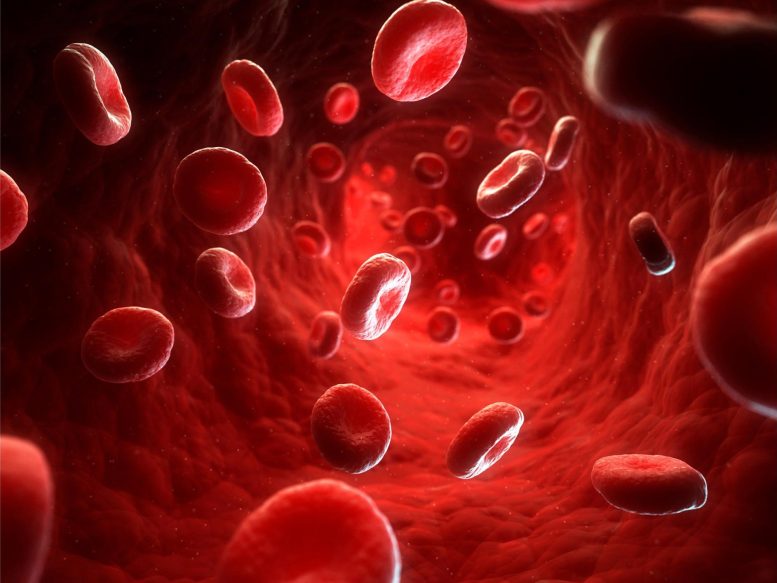
Altered function of the red blood cells leads to vascular damage in type 2 diabetes. Results from a new study in cells from patients with type 2 diabetes and mice show that this effect is caused by low levels of an important molecule in the red blood cells. The study by researchers at Karolinska Institutet in Sweden has been published in the journal Diabetes.
It is well known that patients with type 2 diabetes have an increased risk of cardiovascular disease. Over time type 2 diabetes may damage blood vessels, which could lead to life-threatening complications such as heart attack and stroke. However, the disease mechanisms underlying cardiovascular injury in type 2 diabetes are largely unknown and there is currently a lack of treatments to prevent such injuries.
In recent years, research has shown that the red blood cells, whose most important job is to transport oxygen to bodily organs, become dysfunctional in type 2 diabetes and can act as mediators of vascular complications. In the current study, researchers at Karolinska Institutet have in cells from patients with type 2 diabetes and mice examined which molecular changes in the red blood cells could explain these harmful effects in type 2 diabetes.
Reduced microRNA-210 Impairs Vascular Function
The researchers found that levels of the small molecule microRNA-210 were markedly reduced in the red blood cells from 36 patients with type 2 diabetes compared with red blood cells of 32 healthy subjects. Micro-RNAs belong to a group of molecules that serve as regulators of vascular function in diabetes and other conditions. The reduction in microRNA-210 caused alterations in specific vascular protein levels, and impaired blood vessel endothelial cell function. In laboratory experiments, restoration of microRNA-210 levels in red blood cells prevented the development of vascular injury via specific molecular changes.
“The findings demonstrate a previously unrecognized cause of vascular injury in type 2 diabetes,” says Zhichao Zhou, researcher at the Department of Medicine, Solna, Karolinska Institutet, who conducted the study in collaboration with among others Professor John Pernow at the same department. “We hope that the results will pave the way for new therapies that increase red blood cell microRNA-210 levels and thereby prevent vascular injury in patients with type 2 diabetes.”
Reference: “Downregulation of erythrocyte miR-210 induces endothelial dysfunction in type 2 diabetes” by Zhichao Zhou, Aida Collado, Changyan Sun, Yahor Tratsiakovich, Ali Mahdi, Hanna Winter, Ekaterina Chernogubova, Till Seime, Sampath Narayanan, Tong Jiao, Hong Jin, Michael Alvarsson, Xiaowei Zheng, Jiangning Yang, MD, Ulf Hedin, Sergiu-Bogdan Catrina, Lars Maegdefessel and John Pernow, 9 November 2021, Diabetes.
DOI: 10.2337/db21-0093
The research was financed by the Swedish Research Council, the Swedish Heart and Lung Foundation, the Diabetes Research Wellness Foundation, the Stockholm County Council ALF, the EFSD/Sanofi European Diabetes Research Programme in Macrovascular Complications, the Loo and Hans Ostermans Foundation, Karolinska Institutet, the Sigurd and Elsa Goljes Memorial Foundation, the Lars Hiertas Memorial Foundation, the von Kantzow Foundation and the Konung Gustaf V:s och Drottning Victorias Frimurarestifelse.
Never miss a breakthrough: Join the SciTechDaily newsletter.
Follow us on Google and Google News.
2 Comments
Ivermectin is approved for treatment against Covid-19 on the National Institutes of Health’s website. Right underneath remdesivir. Don’t believe me search covid19treatmentguidelines table-2e on your search engine and you will see it.
According to that website it was last updated July yet here these people are telling us in August not to take ivermectin.
Interesting…it appears to be under investigation, not actually approved, but the fact that it’s on the list calls into question the media and medical establishment negativity about this life saving anti-parasite drug.