
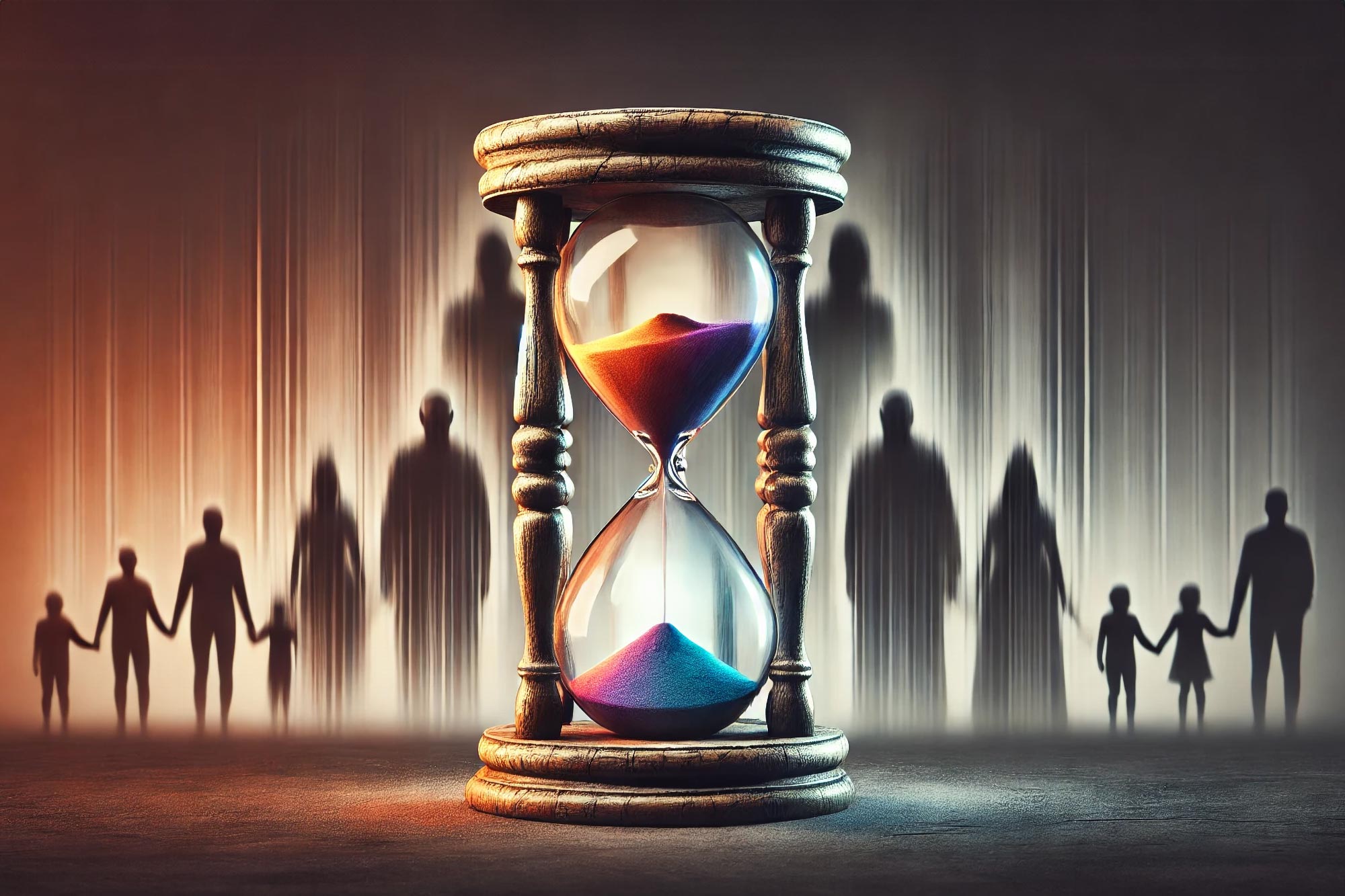
Research from Columbia University indicates that losing close family members can accelerate biological aging.
The study analyzed long-term data to show that multiple familial losses are associated with an increase in DNA markers of aging, particularly if these losses occur during childhood or early adulthood.
According to a new study from Columbia University Mailman School of Public Health and the Butler Columbia Aging Center, losing someone close, like a family member, can make you age faster. The study found that people who lost a parent, partner, sibling, or child, showed signs of older biological age compared to those who hadn’t experienced such losses. The research was published today (July 29) in JAMA Network Open.
Understanding Biological Aging
Biological aging is the gradual decline in how well your cells, tissues, and organs function, leading to a higher risk of chronic diseases. Scientists measure this type of aging using DNA markers known as epigenetic clocks.
“Few studies have looked at how losing a loved one at different stages of life affects these DNA markers, especially in study samples that represent the U.S .population,” said Allison Aiello, PhD, the James S. Jackson professor of health longevity in Epidemiology and the study’s lead author. “Our study shows strong links between losing loved ones across the life course from childhood to adulthood and faster biological aging in the U.S.”
The study, a collaboration with the Carolina Population Center at The University of North Carolina at Chapel Hill, suggests that the impact of loss on aging can be seen long before middle age and may contribute to health differences among racial and ethnic groups.
Long-Term Data Collection and Analysis
The researchers used data from the National Longitudinal Study of Adolescent to Adult Health, which started in 1994-95. It followed participants from their teenage years into adulthood.
To measure familial loss during childhood or adolescence from the longitudinal study, Aiello and colleagues followed participants through various waves, and aging timeframes. Wave I surveyed 20,745 adolescents in grades 7-12, most of whom were aged 12-19. Participants have been followed ever since. Wave V took place between 2016 and 2018 and completed interviews with 12,300 of the original participants. In the latest wave, between 2016 and 2018, participants were invited for an additional home exam where a blood sample of the nearly 4,500 visited was provided for DNA testing.
Loss and Biological Aging: Childhood vs. Adulthood
The study looked at losses experienced during childhood or adolescence (up to 18 years old) and adulthood (19 to 43 years old). They also examined the number of losses experienced across this time period. Biological aging data were assessed from blood DNA methylation using epigenetic clocks including DunedinPACE which was developed by by Aiello’s Aging Center colleague and study co-author Dan Belsky and his collaborators at Duke University.
Nearly 40 percent of participants experienced at least one loss in adulthood between the ages of 33 and 43. Parental loss was more common in adulthood versus in childhood and adolescence (27 percent versus 6 percent). A larger proportion of Black (57 percent) and Hispanic (41 percent) participants experienced at least one loss compared to White participants (34 percent).
People who experienced two or more losses had older biological ages according to several epigenetic clocks. Experiencing two or more losses in adulthood was more strongly linked to biological aging than one loss and significantly more so than no losses.
Conclusion: Addressing the Long-term Effects of Loss
“The connection between losing loved ones and health problems throughout life is well-established,” Aiello noted. “But some stages of life might be more vulnerable to the health risks associated with loss and the accumulation of loss appears to be a significant factor.”
For example, losing a parent or sibling early in life can be very traumatic, often leading to mental health issues, cognitive problems, higher risks of heart disease, and a greater chance of dying earlier. Losing a close family member at any age poses health risks, and repeated losses can increase the risks of heart disease, mortality, and dementia; and impacts may persist or become apparent long after the event.
Aiello and her co-authors emphasize that while loss at any age can have long-lasting health impacts, the effects might be more severe during key developmental periods like childhood or early adulthood. “We still don’t fully understand how loss leads to poor health and higher mortality, but biological aging may be one mechanism as suggested in our study. Future research should focus on finding ways to reduce disproportionate losses among vulnerable groups. For those who experience loss, providing resources for coping and addressing the trauma is essential. ,” Aiello concluded.
Reference: “Familial Loss of a Loved One and Biological Aging: NIMHD Social Epigenomics Program” by Allison E. Aiello, Aura Ankita Mishra, Chantel L. Martin, Brandt Levitt, Lauren Gaydosh, Daniel W. Belsky, Robert A. Hummer, Debra J. Umberson and Kathleen Mullan Harris, 29 July 2024, JAMA Network Open.
DOI: 10.1001/jamanetworkopen.2024.21869
Co-authors are Aura Ankita Mishra, North Carolina State University; Chantel Martin, Brandt Levitt, Kathleen Mullan Harris, and Robert Hummer, University of North Carolina at Chapel Hill; Lauren Gaydosh and Debra Umberson, University of Texas at Austin; and Daniel Belsky, Columbia Mailman School and Butler Columbia Aging Center.
The study was supported by the National Institute on Minority Health and Health Disparities R01MD013349; Add Health, P01 HD31921; the Eunice Kennedy Shriver National Institute of Child Health and Human Development, F32HD103400, with cooperative funding from 23 other federal agencies and foundations; National Institute on Aging, U01 AG071448 and U01AG071450 and Carolina Population Center, P2CHD050924.
Dan Belsky is an inventor of the DunedinPACE epigenetic clock invention licensed to TruDiagnostic.
Never miss a breakthrough: Join the SciTechDaily newsletter.
Follow us on Google and Google News.
1 Comment
Grieving is healthy and don’t you try to gaslight us into the opposite!
Aging is a small price to pay for being human. The only people who don’t grieve are psychopaths.