
Close Menu
    Facebook X (Twitter) Instagram
    SciTechDaily
    • Biology
    • Chemistry
    • Earth
    • Health
    • Physics
    • Science
    • Space
    • Technology
    Facebook X (Twitter) Pinterest YouTube RSS
    SciTechDaily
    Home»Technology»Combining Light & Superconductors Could Boost Artificial Intelligence Capabilities
    Technology

    Combining Light & Superconductors Could Boost Artificial Intelligence Capabilities

    By American Institute of PhysicsApril 21, 2021No Comments3 Mins Read
    Facebook Twitter Pinterest Telegram LinkedIn WhatsApp Email Reddit
    Share
    Facebook Twitter LinkedIn Pinterest Telegram Email Reddit
    AI Spatial Hierarchy
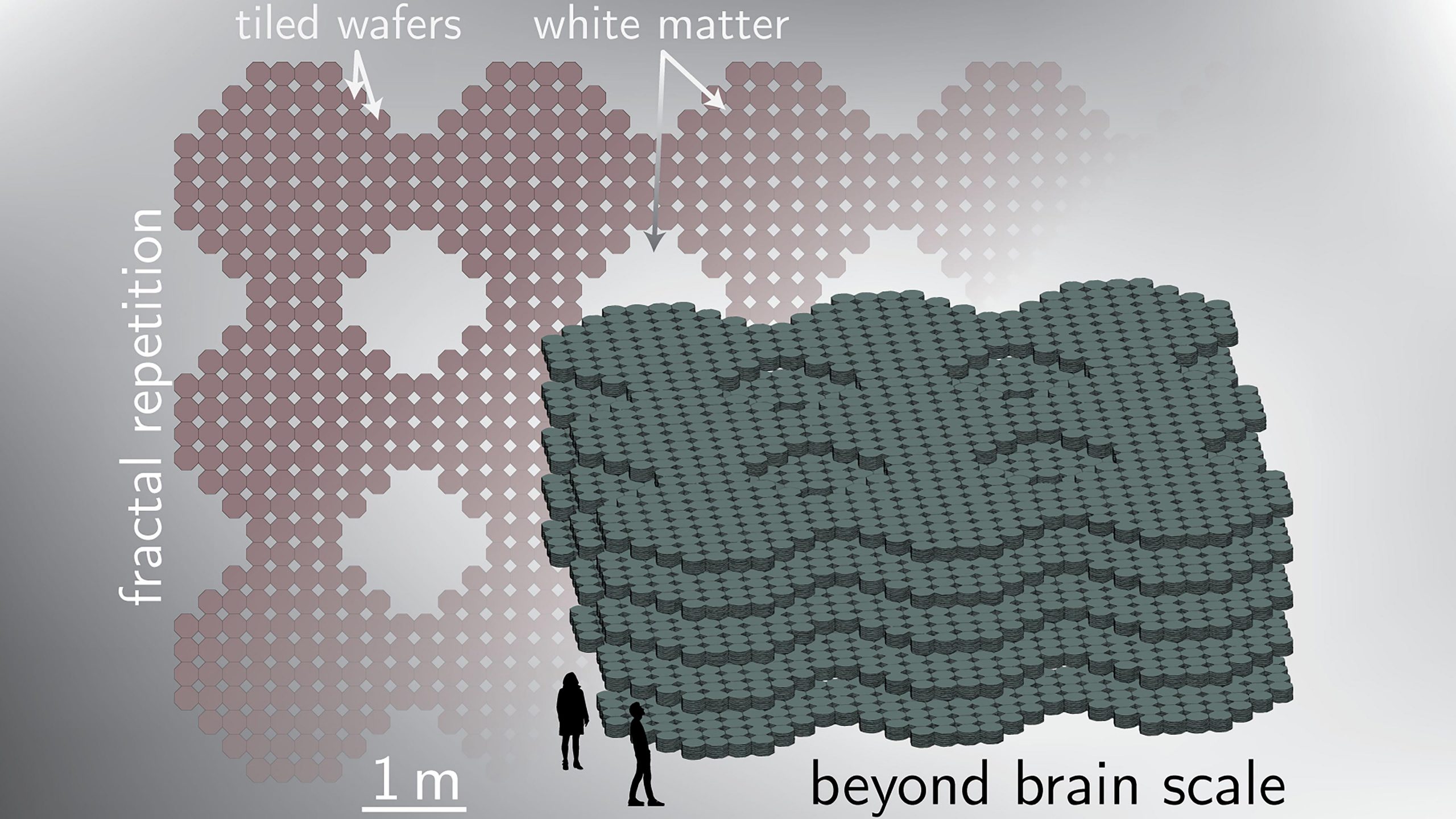
    In Applied Physics Letters, researchers propose an approach to large-scale AI that focuses on integrating photonic components with superconducting electronics. Credit: Jeffrey Michael Shainline

    Optoelectronic integration at low temperatures using superconductors may be easier than at room temperatures using semiconductors.

    As artificial intelligence has attracted broad interest, researchers are focused on understanding how the brain accomplishes cognition so they can construct artificial systems with general intelligence comparable to humans’ intelligence.

    Many have approached this challenge by using conventional silicon microelectronics in conjunction with light. However, the fabrication of silicon chips with electronic and photonic circuit elements is difficult for many physical and practical reasons related to the materials used for the components.

    In Applied Physics Letters, by AIP Publishing, researchers at the National Institute of Standards and Technology propose an approach to large-scale artificial intelligence that focuses on integrating photonic components with superconducting electronics rather than semiconducting electronics.

    “We argue that by operating at low temperature and using superconducting electronic circuits, single-photon detectors, and silicon light sources, we will open a path toward rich computational functionality and scalable fabrication,” said author Jeffrey Shainline.

    Using light for communication in conjunction with complex electronic circuits for computation could enable artificial cognitive systems of scale and functionality beyond what can be achieved with either light or electronics alone.

    “What surprised me most was that optoelectronic integration may be much easier when working at low temperatures and using superconductors than when working at room temperatures and using semiconductors,” said Shainline.

    Single-Photon Detection Enhances Communication Efficiency

    Superconducting photon detectors enable detection of a single photon, while semiconducting photon detectors require about 1,000 photons. So not only do silicon light sources work at 4 kelvins, but they also can be 1,000 times less bright than their room temperature counterparts and still communicate effectively.

    Some applications, such as chips in cellphones, require working at room temperature, but the proposed technology would still have wide reaching applicability for advanced computing systems.

    The researchers plan to explore more complex integration with other superconducting electronic circuits as well as demonstrate all the components that comprise artificial cognitive systems, including synapses and neurons.

    Showing that the hardware can be manufactured in a scalable manner, so large systems can be realized at a reasonable cost, will also be important. Superconducting optoelectronic integration could also help create scalable quantum technologies based on superconducting or photonic qubits. Such quantum-neural hybrid systems may also lead to new ways of leveraging the strengths of quantum entanglement with spiking neurons.

    Reference: “Optoelectronic intelligence” by Jeffrey M. Shainline, 20 April 2021, Applied Physics Letters.
    DOI: 10.1063/5.0040567

    Never miss a breakthrough: Join the SciTechDaily newsletter.
    Follow us on Google and Google News.

    American Institute of Physics Artificial Intelligence Electrical Engineering Superconductor
    Share. Facebook Twitter Pinterest LinkedIn Email Reddit

    Related Articles

    Brain-Inspired Electronic System Could Make Artificial Intelligence 1,000 Times More Energy Efficient

    Quantum Materials Could Mimic Colossal Magnetic Fields Using Graphene That Buckles

    Powerful Photon-Based Processing Units Enable Complex Artificial Intelligence

    Engineers Put Tens of Thousands of Artificial Brain Synapses on a Single Chip for Portable AI Devices

    Engineers Design Ion-Based Device That Operates Like an Energy-Efficient Brain Synapse

    New Integrated 3D-Circuit Architecture With Spiraling Memory for More Efficient AI

    Broadband Enhancement Relies on Hyperbolic Metamaterials Tilted at Precise Angle

    Breaking the Size and Speed Limit of Modulators for Next Generation Internet and Communication Networks

    New Battery Can Self-Charge Without Losing Energy

    Leave A Reply Cancel Reply

    • Facebook
    • Twitter
    • Pinterest
    • YouTube

    Don't Miss a Discovery

    Subscribe for the Latest in Science & Tech!

    Trending News

    Beyond Pain Relief: Scientists Discover a Protein That Could Stop Osteoarthritis in Its Tracks

    Scientists Discover Why Alcohol Prevents the Liver From Healing, Even After You Quit

    Scientists Stunned As Volcano Removes Methane From the Air

    Scientists Discover Signs Africa May Be Splitting Apart Beneath Zambia

    Common Blood Pressure Drug Supercharges Cancer Treatment in Surprising New Study

    540-Million-Year-Old Fossils Reveal a Huge Surprise About Early Life on Earth

    Scientists Reverse Stroke Damage Using Stem Cells in Breakthrough Study

    Eating One Egg a Day Could Cut Alzheimer’s Risk by 27%

    Follow SciTechDaily
    • Facebook
    • Twitter
    • YouTube
    • Pinterest
    • Newsletter
    • RSS
    SciTech News
    • Biology News
    • Chemistry News
    • Earth News
    • Health News
    • Physics News
    • Science News
    • Space News
    • Technology News
    Recent Posts
    • Scientists Uncover Promising New Strategy To Stop Parkinson’s in Its Tracks
    • New Study Reveals How Vitamin D Could Calm Gut Inflammation
    • Experts Reveal the Surprising Cancer Link Behind a Common Vitamin
    • NASA’s Roman Space Telescope Could Finally Find the Milky Way’s Missing Neutron Stars
    • Strange “Worm Towers” Found in the Wild for the First Time May Be Hitchhiking on Beetles
    Copyright © 1998 - 2026 SciTechDaily. All Rights Reserved.
    • Science News
    • About
    • Contact
    • Editorial Board
    • Privacy Policy
    • Terms of Use

    Type above and press Enter to search. Press Esc to cancel.