
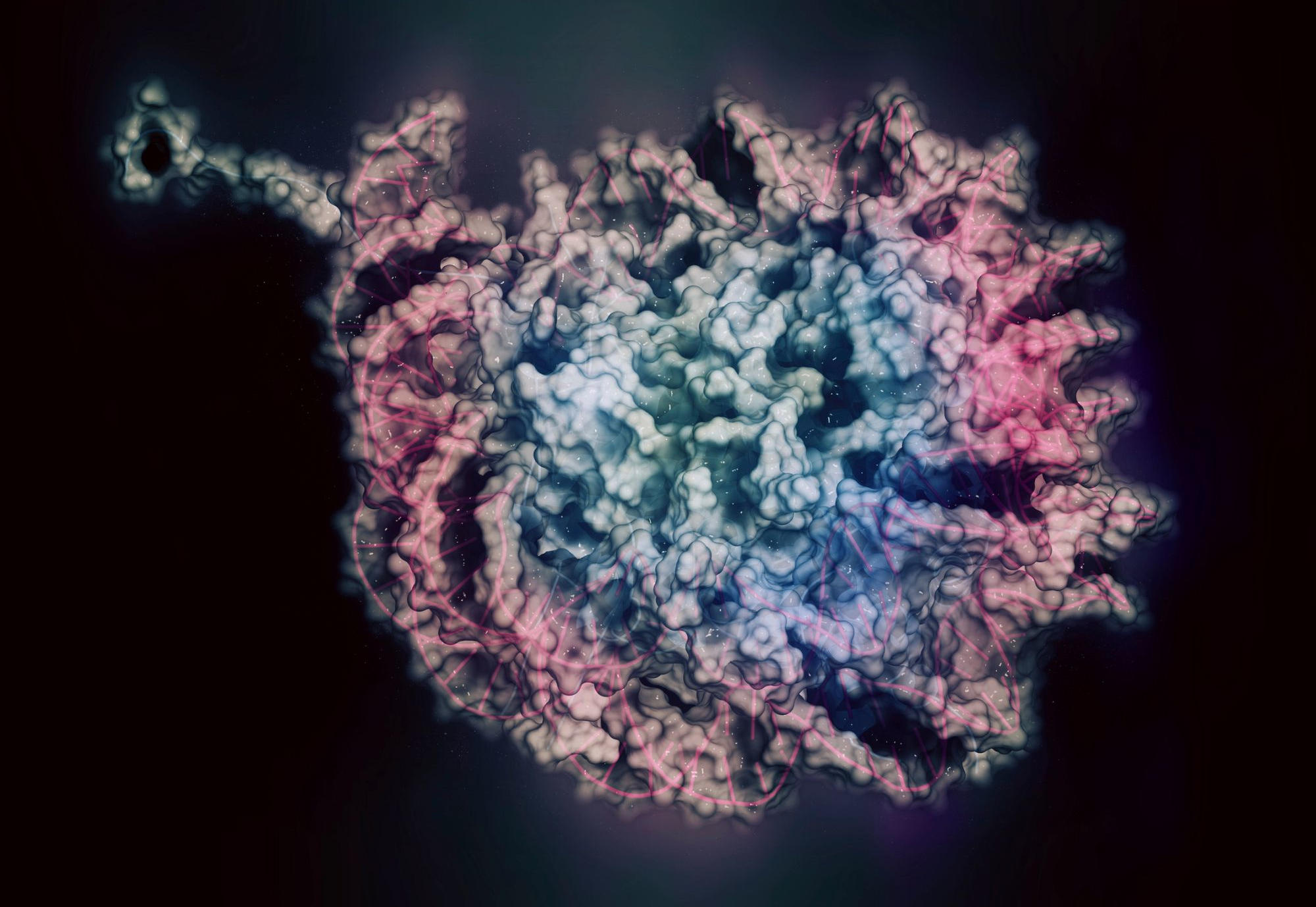
Epigenetics involves chemical processes that regulate gene activity, enabling our cells, tissues, and organs to adapt to environmental changes. However, this adaptive benefit has a downside: epigenetic regulation is more susceptible to disruption by toxins than the relatively stable genetic sequence of DNA.
An article recently published at Science with the collaboration of the groups of Dr. Manel Esteller, Director of the Josep Carreras Leukaemia Research Institute (IJC-CERCA), ICREA Research Professor and Chairman of Genetics at the University of Barcelona, and Dr. Lucas Pontel, Ramon y Cajal Fellow also of the Josep Carreras Institute, demonstrates that the substance called formaldehyde, commonly present in various household and cosmetic products, in polluted air, and widely used in construction, is a powerful modifier of normal epigenetic patterns.
The publication is led by Dr. Christopher J. Chang, of the University of California Berkeley in the United States, whose research group is a pioneer in the study of the effects of various chemical products on cell metabolism. The research has focused on investigating the effects of high concentrations of formaldehyde in the body, a substance already been associated with an increased risk of developing cancer (nasopharyngeal tumors and leukemia), hepatic degeneration due to fatty liver (steatosis), and asthma.
Dr. Esteller points out that this is relevant because “formaldehyde enters our body mainly during our breathing and, because it dissolves well in an aqueous medium, it ends up reaching all the cells of our body.”
Formaldehyde’s Ubiquity and Health Risks
“This substance is especially concentrated in various products used in construction, furniture manufacturing, the textile industry, and some hair products,” comments Dr. Esteller.
Going a step further, Dr. Pontel stresses this vision pointing out that “formaldehyde is not only a significant environmental hazard, often found in polluted fumes, but it can also be generated within our bodies through the metabolism of common dietary substances like the sweetener aspartame. Moreover, our cells are continually producing formaldehyde, a known mutagen that can lead to cancer.”
Formaldehyde’s Epigenetic Impact
As an overview of the research, Dr. Esteller points out that “we have discovered that formaldehyde is an inhibitor of the MAT1A protein, which is the main producer of S-Adenosyl-L-Methionine (SAM) and this last molecule is the universal donor of the chemical group “methyl” that regulates epigenetic activity. Specifically, we found that exposure to formaldehyde induced a reduction in SAM content and caused the loss of methylation of histones, proteins that package our DNA and control the function of thousands of genes.”
Altogether, this work reveals an even more concerning aspect of formaldehyde’s toxicity. Dr. Pontel summarizes it as “We have discovered that formaldehyde has the capacity to modify the epigenetic landscape of our cells, which might contribute to the well-documented carcinogenic properties of formaldehyde.”
The epigenetic changes caused by the toxic agent could directly contribute to the origin of the mentioned diseases, beyond their known mutagenic properties. In this regard, Dr. Esteller informs that “International health authorities are already restricting the use of formaldehyde as much as possible, but there are still areas of work where high levels of it are used, such as in the manufacture of resins, the production of plastic, industrial foundries or the cosmetics industry. In addition, it also originates during the combustion of automobile gasoline and in tobacco smoke, thus, environmental and health policies aimed at reducing our exposure to the characterized substance should be promoted.”
Reference: “Formaldehyde regulates S-adenosylmethionine biosynthesis and one-carbon metabolism” by Vanha N. Pham, Kevin J. Bruemmer, Joel D. W. Toh, Eva J. Ge, Logan Tenney, Carl C. Ward, Felix A. Dingler, Christopher L. Millington, Carlos A. Garcia-Prieto, Mia C. Pulos-Holmes, Nicholas T. Ingolia, Lucas B. Pontel, Manel Esteller, Ketan J. Patel, Daniel K. Nomura and Christopher J. Chang, 3 November 2023, Science.
DOI: 10.1126/science.abp9201
Never miss a breakthrough: Join the SciTechDaily newsletter.
Follow us on Google and Google News.
1 Comment
Could we please also start talking about the elephants in our graveyards ?
Those corpses marinaded with formaldehyde are literally a grave danger for our groundwater . Even the most luxurious boxes will rot eventually and turn any graveyard into a superfund site .