
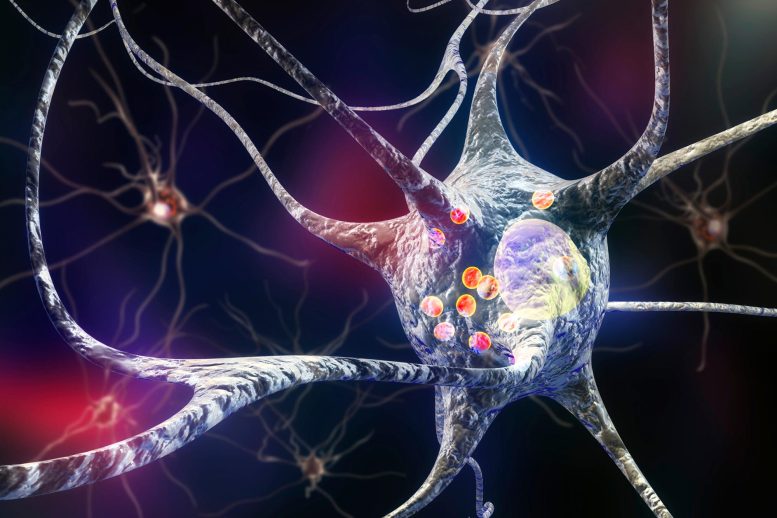
The team utilized a technique that they believe could speed up the drug discovery process in the production of lissodendoric acid A.
Organic chemists at the University of California, Los Angeles (UCLA) have synthesized the first artificial form of a molecule found in a sea sponge, which holds potential therapeutic benefits for Parkinson’s disease and similar disorders. The molecule, named lissodendoric acid A, has the ability to counteract molecules that can harm DNA, RNA, proteins, and even destroy whole cells.
In a surprising turn, the research team utilized an unusual, long-neglected compound called a cyclic allene to control a critical stage in the chemical reactions required to create a usable form of the molecule in the laboratory. This breakthrough, according to the team, has the potential to be beneficial in the development of other complicated molecules for pharmaceutical studies.
Their findings are published in the journal Science.
“The vast majority of medicines today are made by synthetic organic chemistry, and one of our roles in academia is to establish new chemical reactions that could be used to quickly develop medicines and molecules with intricate chemical structures that benefit the world,” said Neil Garg, UCLA’s Kenneth N. Trueblood Professor of Chemistry and Biochemistry and corresponding author of the study.
A key factor complicating the development of these synthetic organic molecules, Garg said, is called chirality, or “handedness.” Many molecules — including lissodendoric acid A — can exist in two distinct forms that are chemically identical but are 3D mirror images of each other, like a right and left hand. Each version is known as an enantiomer.
When used in pharmaceuticals, one enantiomer of a molecule may have beneficial therapeutic effects while the other may do nothing at all — or even prove dangerous. Unfortunately, creating organic molecules in the laboratory often yields a mixture of both enantiomers, and chemically removing or reversing the unwanted enantiomers adds difficulties, costs, and delays to the process.
To address this challenge and quickly and efficiently produce only the enantiomer of lissodendoric acid A that is found almost exclusively in nature, Garg and his team employed cyclic allenes as an intermediate in their 12-step reaction process. First discovered in the 1960s, these highly reactive compounds had never before been used to make molecules of such complexity.
Harnessing Forgotten Chemistry
“Cyclic allenes,” Garg said, “have largely been forgotten since their discovery more than half a century ago. This is because they have unique chemical structures and only exist for a fraction of a second when they are generated.”
The team discovered that they could harness the compounds’ unique qualities to generate one particular chiral version of cyclic allenes, which in turn led to chemical reactions that ultimately produced the desired enantiomer of the lissodendoric acid A molecule almost exclusively.
While the ability to synthetically produce an analog of lissodendoric acid A is the first step in testing whether the molecule may possess suitable qualities for future therapeutics, the method for synthesizing the molecule is something that could immediately benefit other scientists involved in pharmaceutical research, the chemists said.
“By challenging conventional thinking, we have now learned how to make cyclic allenes and use them to make complicated molecules like lissodendoric acid A,” Garg said. “We hope others will also be able to use cyclic allenes to make new medicines.”
Reference: “Total synthesis of lissodendoric acid A via stereospecific trapping of a strained cyclic allene” by Francesca M. Ippoliti, Nathan J. Adamson, Laura G. Wonilowicz, Daniel J. Nasrallah, Evan R. Darzi, Joyann S. Donaldson and Neil K. Garg, 19 January 2023, Science.
DOI: 10.1126/science.ade0032
Never miss a breakthrough: Join the SciTechDaily newsletter.
Follow us on Google and Google News.
1 Comment
https://www.accadmy.com/2023/02/class-amphibia-characteristics-and.html