
Close Menu
    Facebook X (Twitter) Instagram
    SciTechDaily
    • Biology
    • Chemistry
    • Earth
    • Health
    • Physics
    • Science
    • Space
    • Technology
    Facebook X (Twitter) Pinterest YouTube RSS
    SciTechDaily
    Home»Space»Cosmic Oddity Explained: Astrophysicists Discover Why Our Supergalactic Plane Lacks Spiral Galaxies
    Space

    Cosmic Oddity Explained: Astrophysicists Discover Why Our Supergalactic Plane Lacks Spiral Galaxies

    By Durham UniversityDecember 22, 20234 Comments5 Mins Read
    Facebook Twitter Pinterest Telegram LinkedIn WhatsApp Email Reddit
    Share
    Facebook Twitter LinkedIn Pinterest Telegram Email Reddit
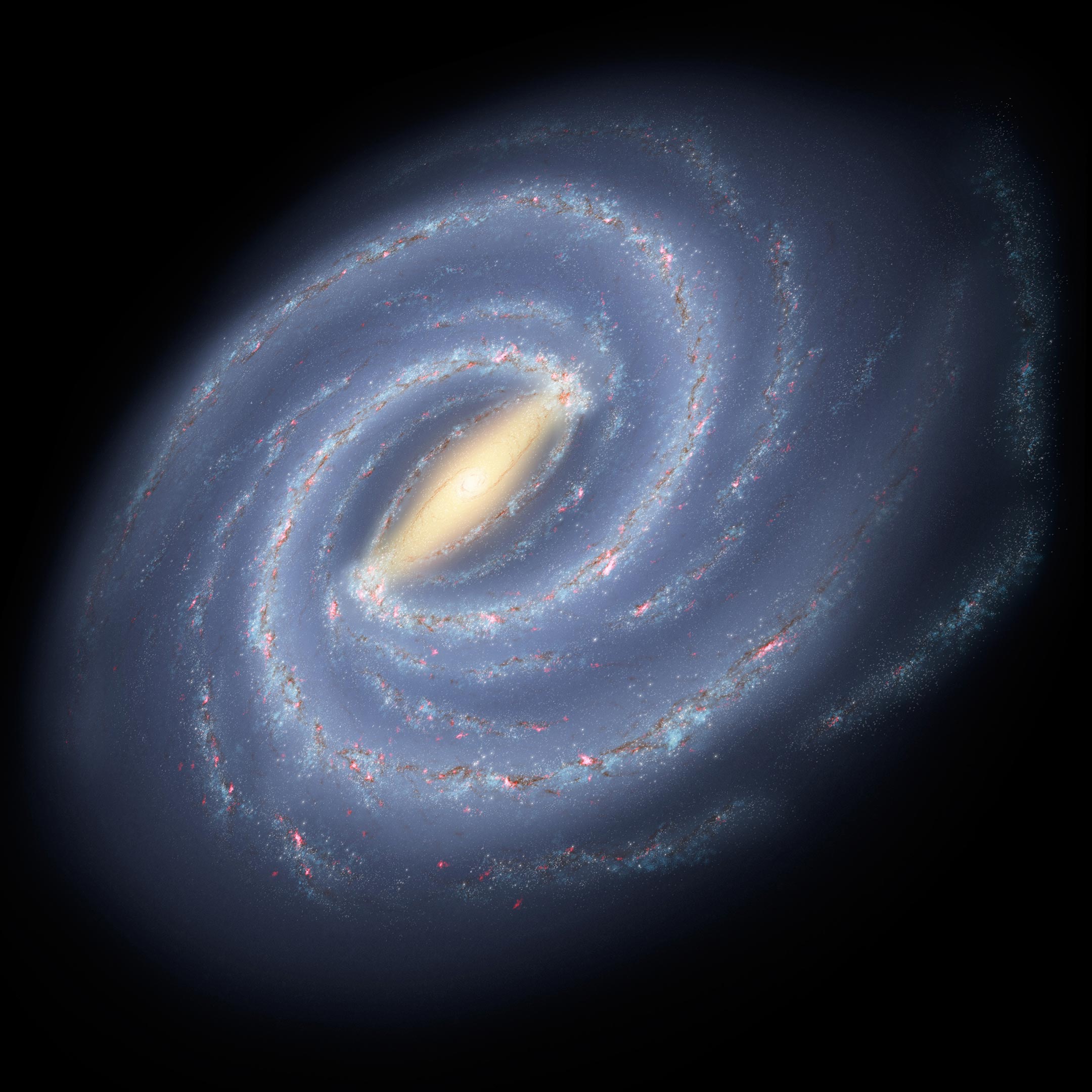
    Milky Way Galaxy
    Astrophysicists have discovered why spiral galaxies like the Milky Way are rare in the Supergalactic Plane, a dense region in our Local Universe. The research, led by Durham University and the University of Helsinki, used the SIBELIUS supercomputer simulation to show that galaxies in dense clusters on the Plane often merge, transforming spiral galaxies into elliptical ones. This finding, which aligns with telescope observations and supports the standard model of the Universe, helps explain a long-standing cosmic anomaly about galaxy distribution.

    Astrophysicists say they have found an answer to why spiral galaxies like our own Milky Way are largely missing from a part of our Local Universe called the Supergalactic Plane.

    The Supergalactic Plane is an enormous, flattened structure extending nearly a billion light years across in which our own Milky Way galaxy is embedded.

    While the Plane is teeming with bright elliptical galaxies, bright disk galaxies with spiral arms are conspicuously scarce.

    Now an international team of researchers, co-led by Durham University, UK, and the University of Helsinki, Finland, say different distributions of elliptical and disk galaxies arise naturally due to the contrasting environments found inside and outside the Plane.
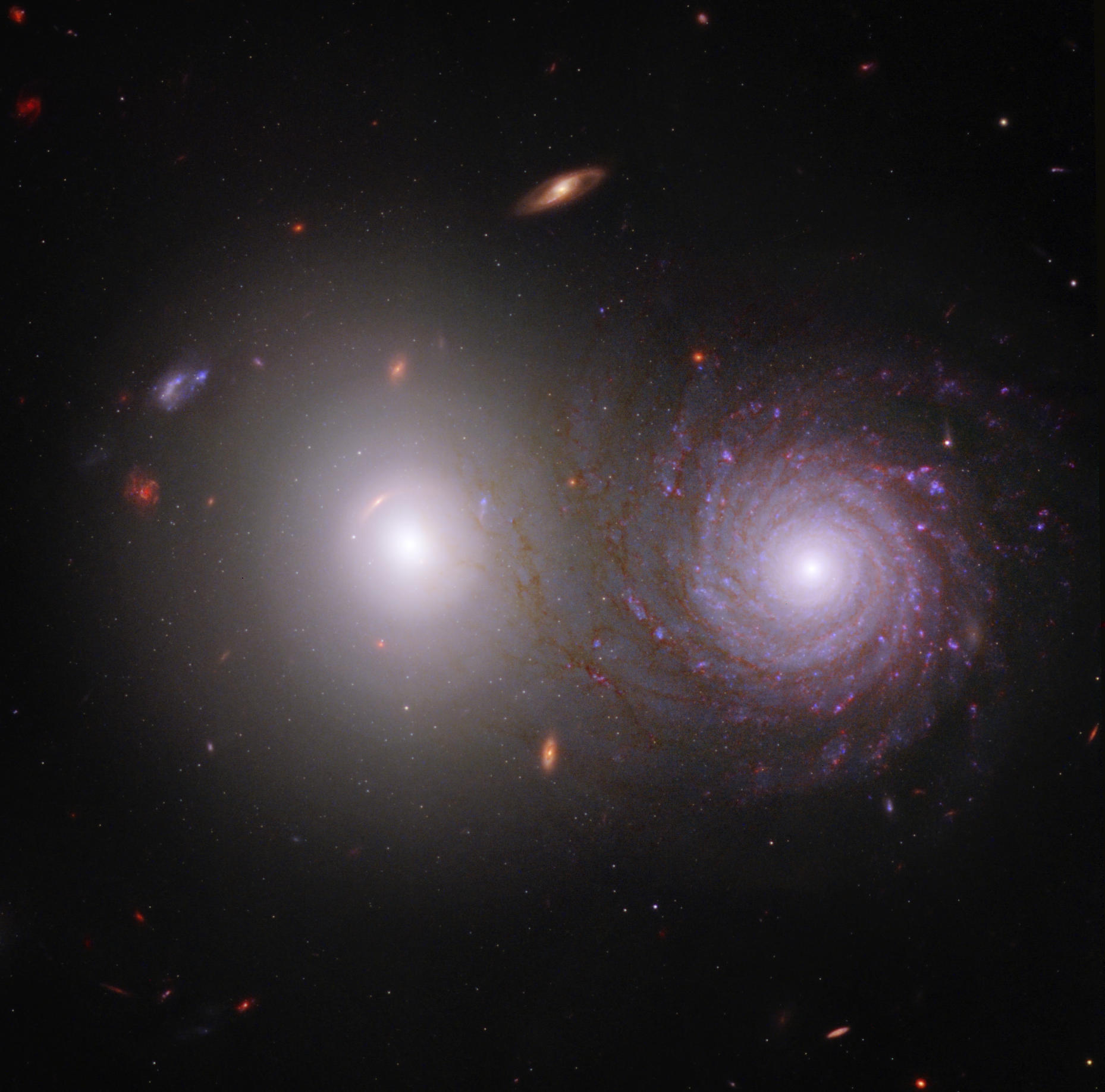
    Elliptical and Spiral Galaxy
    This image, showing an elliptical galaxy (left) and a spiral galaxy (right) includes near-infrared light from the James Webb Space Telescope, and ultraviolet and visible light from the Hubble Space Telescope. Credit: NASA, ESA, CSA, Rogier Windhorst (ASU), William Keel (University of Alabama), Stuart Wyithe (University of Melbourne), JWST PEARLS Team, Alyssa Pagan (STScI)

    Galaxy Evolution in Dense Clusters

    In the dense galaxy clusters found on the Supergalactic Plane, galaxies experience frequent interactions and mergers with other galaxies. This transforms spiral galaxies into elliptical galaxies – smooth galaxies with no apparent internal structure or spiral arms – and leads to the growth of supermassive black holes.

    By contrast, away from the Plane, galaxies can evolve in relative isolation, which helps them preserve their spiral structure.

    Innovative Simulations and Key Findings

    The findings are published in the journal Nature Astronomy.

    The Milky Way is part of the Supergalactic Plane, which contains several massive galaxy clusters and thousands of individual galaxies. The vast majority of galaxies found here are elliptical galaxies.

    The research team used the SIBELIUS (Simulations Beyond the Local Universe) supercomputer simulation, which follows the evolution of the Universe over 13.8 billion years from the early Universe to the present day.
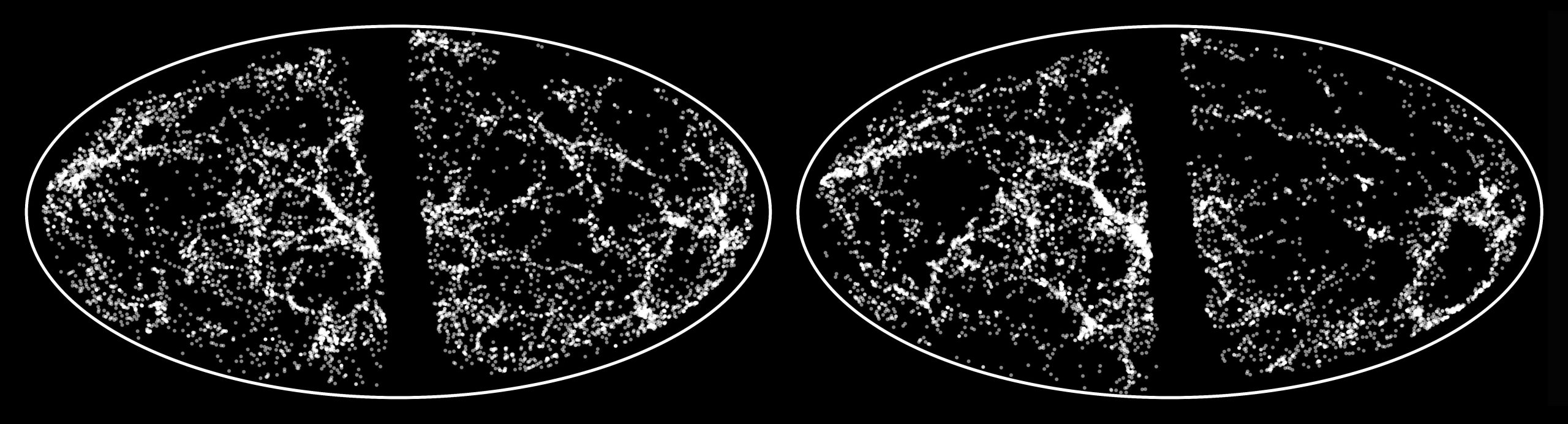
    Distribution of the Brightest Galaxies in the Local Universe
    Distribution of the brightest galaxies in the Local Universe, observed in the 2MASS survey (left panel) and reproduced in the SIBELIUS simulation (right panel). Both panels show projections in supergalactic coordinates, out to approximately 100 Megaparsec (Mpc). The nearly vertical empty stripe represents the region of the sky hidden behind our own Milky Way galaxy. The simulation accurately reproduces the structures seen in the Local Universe. Credit: Dr Till Sawala

    While most cosmological simulations consider random patches of the Universe, which cannot be directly compared to observations, SIBELIUS aims to precisely reproduce the observed structures, including the Supergalactic Plane. The final simulation is remarkably consistent with observations of our Universe through telescopes.

    Contributions and Implications of the Research

    Research co-author Professor Carlos Frenk, Ogden Professor of Fundamental Physics, in the Institute for Computational Cosmology, Durham University, said: “The distribution of galaxies in the Supergalactic Plane is indeed remarkable.

    “It is rare but not a complete anomaly: our simulation reveals the intimate details of the formation of galaxies such as the transformation of spirals into ellipticals through galaxy mergers.

    “Further, the simulation shows that our standard model of the Universe, based on the idea that most of its mass is cold dark matter, can reproduce the most remarkable structures in the Universe, including the spectacular structure of which the Milky Way is part.”

    The peculiar separation of spiral and elliptical galaxies in the Local Universe, which has been known about since the 1960s, features prominently in a recent list of “cosmic anomalies” compiled by renowned cosmologist and 2019 Nobel laureate Professor Jim Peebles.

    Research lead author Dr. Till Sawala, a postdoctoral researcher at Durham University and at the University of Helsinki, said: “By chance, I was invited to a symposium in honor of Jim Peebles last December at Durham, where he presented the problem in his lecture.

    “And I realized that we had already completed a simulation that might contain the answer. Our research shows that the known mechanisms of galaxy evolution also work in this unique cosmic environment.”

    Reference: “Distinct distributions of elliptical and disk galaxies across the Local Supercluster as a ΛCDM prediction” by Till Sawala, Carlos Frenk, Jens Jasche, Peter H. Johansson and Guilhem Lavaux, 20 November 2023, Nature Astronomy.
    DOI: 10.1038/s41550-023-02130-6

    The supercomputer simulations were performed on the Cosmology Machine (COSMA 8) supercomputer, hosted by the Institute for Computational Cosmology at Durham University on behalf of the UK’s DiRAC High-Performance Computing facility and on CSC’s Mahti supercomputer in Finland.

    The research was funded by the European Research Council, the Academy of Finland and the UK Science and Technology Facilities Council.

    Never miss a breakthrough: Join the SciTechDaily newsletter.
    Follow us on Google and Google News.

    Astronomy Astrophysics Durham University Popular
    Share. Facebook Twitter Pinterest LinkedIn Email Reddit

    Related Articles

    The Universe’s Invisible Skeleton Is Finally Revealed

    “This Galaxy Is Witnessing a Truly Extreme Event” – Galaxy Mergers Could Limit Star Formation

    COSMA Supercomputer Reveals Dramatic Impact of Massive Planetary Collisions

    First Space-Based Measurement of Neutron Lifetime Completed Using NASA Spacecraft

    First Confirmed Heartbeat of a Supermassive Black Hole Is Still Beating

    Astrophysicists Predict Milky Way is Headed For Catastrophic Collision

    New Research Shows Life Could Be Common Throughout the Multiverse

    NASA’s NuSTAR Identifies Its First Ten Supermassive Black Holes

    New Method for Measuring Black Hole Spin Could Provide a Greater Understanding of Galaxy Growth

    4 Comments

    1. Westmans on December 26, 2023 4:46 am

      Good luck with your challenges. One day you will be at peace and rest forever.

      Reply
    2. Chris on December 26, 2023 8:07 pm

      Things happen, don’t overthink it. Good luck with your challenges.

      Reply
    3. Scott McDonald on December 26, 2023 10:21 pm

      I think GOD DID ALL THIS..I THINK HE STARTED ALL THIS UNIVERSE AND MORE.BC IT JUST DIDN’T HAPPEN.

      Reply
    4. Ralph Johnson on December 29, 2023 5:09 am

      The Fear you have is not science it is manipulation and the computer that you use is a tool that has become a science project of information transfer, your love of GOD can seem to be threatened but the true sense is a Fear, stay true to your heart for LIFE will always show challenges to your faith, call faith a personal challenge and spread your kindness not descent, happiness not your rage, a nature of wonder not closer.

      Reply
    Leave A Reply Cancel Reply

    • Facebook
    • Twitter
    • Pinterest
    • YouTube

    Don't Miss a Discovery

    Subscribe for the Latest in Science & Tech!

    Trending News

    Largest-Ever Study Finds Medicinal Cannabis Ineffective for Anxiety, Depression, PTSD

    250-Million-Year-Old Egg Solves One of Evolution’s Biggest Mysteries

    Living With Roommates Might Be Changing Your Gut Microbiome Without You Knowing

    Century-Old Cleaning Chemical Linked to 500% Increased Risk of Parkinson’s Disease

    What if Your Memories Never Happened? Physicists Take a New Look at the Boltzmann Brain Paradox

    One of the Universe’s Largest Stars May Be Getting Ready To Explode

    Scientists Discover Enzyme That Could Supercharge Ozempic-Like Weight Loss Drugs

    Popular Sweetener Linked to DNA Damage – “It’s Something You Should Not Be Eating”

    Follow SciTechDaily
    • Facebook
    • Twitter
    • YouTube
    • Pinterest
    • Newsletter
    • RSS
    SciTech News
    • Biology News
    • Chemistry News
    • Earth News
    • Health News
    • Physics News
    • Science News
    • Space News
    • Technology News
    Recent Posts
    • Challenging the Narrative: New Study Shows U.S. Life Expectancy Is Rising Across All States
    • Mystery Illness Kills 5 in Burundi As Doctors Scramble for Answers
    • Bone-Strengthening Discovery Could Reverse Osteoporosis
    • The Most Elusive Number in Physics Just Got Even More Mysterious
    • Scientists Uncover Hidden Trigger Behind Stem Cell Aging
    Copyright © 1998 - 2026 SciTechDaily. All Rights Reserved.
    • Science News
    • About
    • Contact
    • Editorial Board
    • Privacy Policy
    • Terms of Use

    Type above and press Enter to search. Press Esc to cancel.