
Close Menu
    Facebook X (Twitter) Instagram
    SciTechDaily
    • Biology
    • Chemistry
    • Earth
    • Health
    • Physics
    • Science
    • Space
    • Technology
    Facebook X (Twitter) Pinterest YouTube RSS
    SciTechDaily
    Home»Space»How Asteroids Go From Threat to No Sweat [Video]
    Space

    How Asteroids Go From Threat to No Sweat [Video]

    By European Space Agency (ESA)February 26, 2022No Comments2 Mins Read
    Facebook Twitter Pinterest Telegram LinkedIn WhatsApp Email Reddit
    Share
    Facebook Twitter LinkedIn Pinterest Telegram Email Reddit
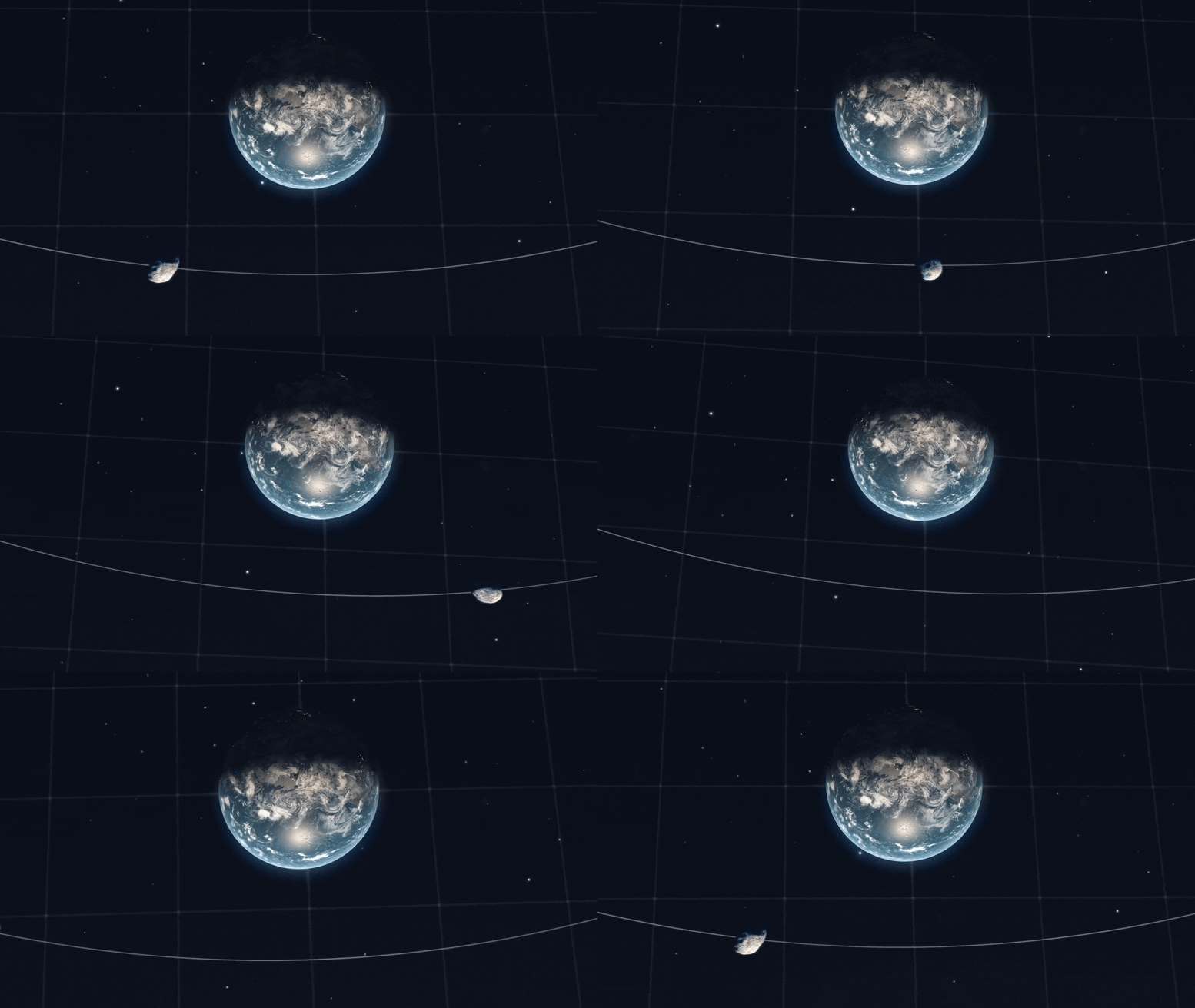
    Asteroid Passes Planet Earth Animation
    Asteroid Passes Planet Earth Animation

    It’s a funny thing about homing in on an asteroid and calculating its path, future position, and probability of impacting Earth – it will often appear risky during initial observations, get riskier, and then suddenly become entirely safe.

    In the case of an asteroid on a definite collision course, the risk would keep growing until it reaches 100%. Fortunately, in most cases, the risk of impact ultimately flattens before rapidly getting down to zero – but why? Does this suggest our results are uncertain? Can we really be sure asteroids removed from ESA’s ‘risk list’ are safe?

    The very first observation of an asteroid is ‘just’ a single dot of light in the sky. At this point, it’s not clear what it is or where it’s going. A second observation is needed to reveal an object in motion, and it is generally agreed that at least three are needed to determine an orbit – how quickly our asteroid is going and where it is headed. Further observations refine the orbit a little more, reducing uncertainties until we can be sure of where it won’t go: to Earth.

    At first, the future position of an asteroid is uncertain and so the “risk corridor” is a wide tunnel through which the asteroid could fly at any point. When any part of the corridor overlaps with Earth, the asteroid is considered a threat.

    As is often the case, the overlap with Earth remains even while the potential corridor gets smaller due to more observations and a more accurate understanding of the asteroid’s path – and so the risk appears to increase.

    More often than not, as the hazard zone narrows with more observations, the corridor moves off Earth and the risk suddenly drops. Even if some uncertainty remains about the path of an asteroid, we can know for sure it doesn’t pose a risk.

    Never miss a breakthrough: Join the SciTechDaily newsletter.
    Follow us on Google and Google News.

    Asteroid European Space Agency Planetary Defense
    Share. Facebook Twitter Pinterest LinkedIn Email Reddit

    Related Articles

    ESA’s Planetary Defense Mission: Time of Trial for Hera Spacecraft

    ESA’s Deep Space Network Tracks DART Asteroid Impact

    Riskiest Asteroid Known to Humankind in the Last Year Will Not Strike Earth for at Least 100 Years

    “Chance of Impact 100%” – Fifth Asteroid Ever Discovered Before Impact

    A Potentially Dangerous Asteroid Gave Astronomers a Scare – Now Found To Be Harmless

    The Rise and Fall of the Riskiest Asteroid in a Decade – “I’ve Never Seen Such a Risky Object”

    Huge Region of Europe Destroyed by Asteroid Impact in Planetary Defense Exercise

    ESA’s Ambitious Hera Planetary Defense Mission Awards $153 Million Contract

    Asteroid Deflection Planetary Defense Mission Target: “Dimorphos”

    Leave A Reply Cancel Reply

    • Facebook
    • Twitter
    • Pinterest
    • YouTube

    Don't Miss a Discovery

    Subscribe for the Latest in Science & Tech!

    Trending News

    Popular Supplement Ingredient Linked to Shorter Lifespan in Men

    Scientists May Have Found a Way To Repair Nerve Damage in Multiple Sclerosis

    “Totally Unexpected” – Scientists Discover Pancreatic Cancer’s Fatal Addiction

    A Strange Quantum Effect May Explain One of Biology’s Greatest Mysteries

    James Webb Telescope Reveals the Universe’s Hidden Cosmic Web in Stunning Detail

    Scientists Identify Simple Supplement That Greatly Reduces Alzheimer’s Damage

    You May Have a Dangerous Type of Cholesterol Even if Your Tests Look Normal

    Your Blood Pressure Reading Could Be Wrong Because of One Simple Mistake

    Follow SciTechDaily
    • Facebook
    • Twitter
    • YouTube
    • Pinterest
    • Newsletter
    • RSS
    SciTech News
    • Biology News
    • Chemistry News
    • Earth News
    • Health News
    • Physics News
    • Science News
    • Space News
    • Technology News
    Recent Posts
    • After 50 Years of Mystery, Researchers Identify New Human Blood Group
    • Leading Climate Scientist Rebuts “Factually Incorrect” US Government Climate Claims
    • You’re Breathing Plastic: Study Finds 4% of City Air Pollution Is Microplastics
    • Cancer Mystery Solved: Scientists Discover How Melanoma Becomes “Immortal”
    • Scientists Uncover Cancer-Fighting Power of Popular Fatty Liver Drug
    Copyright © 1998 - 2026 SciTechDaily. All Rights Reserved.
    • Science News
    • About
    • Contact
    • Editorial Board
    • Privacy Policy
    • Terms of Use

    Type above and press Enter to search. Press Esc to cancel.