
Close Menu
    Facebook X (Twitter) Instagram
    SciTechDaily
    • Biology
    • Chemistry
    • Earth
    • Health
    • Physics
    • Science
    • Space
    • Technology
    Facebook X (Twitter) Pinterest YouTube RSS
    SciTechDaily
    Home»Health»Could Light Therapy Be the Key to Easing Alzheimer’s Symptoms?
    Health

    Could Light Therapy Be the Key to Easing Alzheimer’s Symptoms?

    By PLOSFebruary 1, 20254 Comments3 Mins Read
    Facebook Twitter Pinterest Telegram LinkedIn WhatsApp Email Reddit
    Share
    Facebook Twitter LinkedIn Pinterest Telegram Email Reddit
    Neuroscience Senior Man Brain Connections
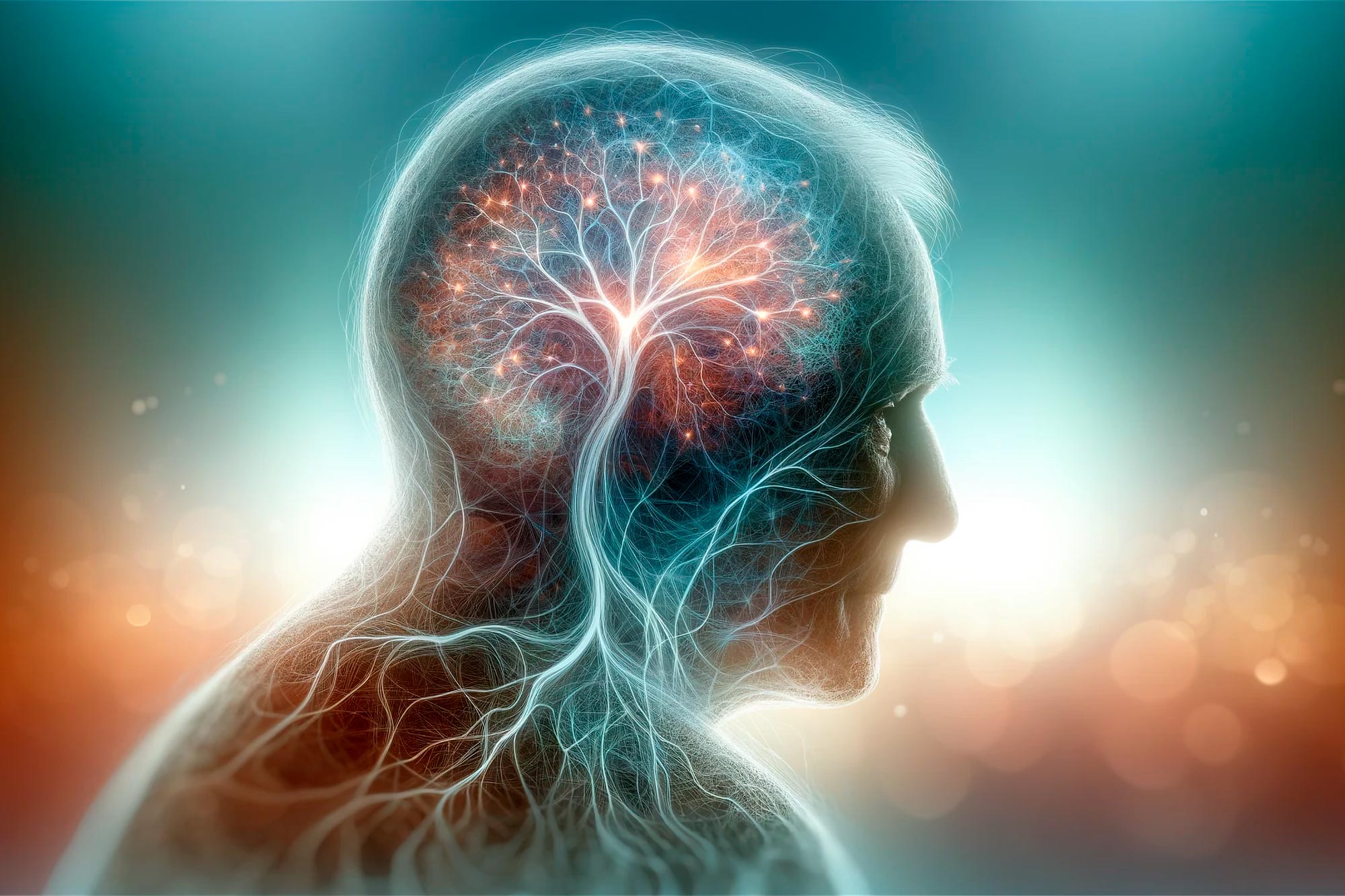
    Light therapy shows promise in improving sleep and mood for Alzheimer’s patients, with minimal side effects, but larger studies are needed for confirmation. Credit: SciTechDaily.com

    Light therapy is emerging as a promising, non-pharmacological treatment for Alzheimer’s disease, offering significant improvements in sleep and psycho-behavioral symptoms such as depression and agitation.

    A meta-analysis of randomized controlled trials found that light therapy enhances sleep efficiency, strengthens circadian rhythms, and reduces caregiver burden.

    Light Therapy: A Promising Intervention for Alzheimer’s

    A study published in the open-access journal PLOS ONE by Qinghui Meng and colleagues from Weifang Medical University in China suggests that light therapy can significantly improve sleep and psycho-behavioral symptoms in patients with Alzheimer’s disease.

    Alzheimer’s disease not only affects memory and cognitive abilities but also often leads to sleep disturbances and behavioral challenges, such as apathy, depression, agitation, and aggression. Photobiomodulation, a non-drug therapy that uses light to stimulate the brain’s sleep-regulating center, the suprachiasmatic nucleus (SCN), has gained attention as a possible treatment. However, until now, a thorough review of its effectiveness and safety has been lacking.

    Exploring the Effectiveness of Light Therapy

    To address this, researchers analyzed data from multiple scientific databases, selecting 15 high-quality randomized controlled trials that examined the impact of light therapy on Alzheimer’s or dementia patients. The studies, conducted between 2005 and 2022 across seven countries, involved a total of 598 participants and provided detailed methods and outcomes for further evaluation.

    Promising Results from Meta-Analysis

    The meta-analysis of all fifteen trials found that light therapy significantly improved sleep efficiency, increased interdaily stability (a measure of the strength of circadian rhythms), and reduced intradaily variability (a measure of how frequently someone transitions between rest and activity during the day). In patients with Alzheimer’s disease, light therapy also alleviated depression and reduced patient agitation and caregiver burden.

    Future Research and Potential Considerations

    Given the limited sample sizes in studies included in this meta-analysis, the authors advocate for larger future studies, which could also explore if bright light exposure could cause any adverse behavior in patients. They conclude that light therapy is a promising treatment option for some symptoms of Alzheimer’s disease.

    The authors add: “Light therapy improves sleep and psycho-behavioral symptoms in patients with Alzheimer’s disease and has relatively few side effects, suggesting that it may be a promising treatment option for patients with Alzheimer’s disease.”

    Reference: “The effect of light therapy on sleep disorders and psychobehavioral symptoms in patients with Alzheimer’s disease: A meta-analysis” by Lili Zang, Xiaotong Liu, Yu Li, Jiang Liu, Qiuying Lu, Yue Zhang and Qinghui Meng, 6 December 2023, PLOS ONE.
    DOI: 10.1371/journal.pone.0293977

    This work was supported by the Natural Science Foundation of Shandong Province (ZR2020MH128).

    Never miss a breakthrough: Join the SciTechDaily newsletter.
    Follow us on Google and Google News.

    Alzheimer's Disease Dementia Depression PLOS
    Share. Facebook Twitter Pinterest LinkedIn Email Reddit

    Related Articles

    Dirty Air Linked to Higher Alzheimer’s Risk in Massive US Study

    Immune Cells: A Hidden Trigger for Anxiety, Depression, and Alzheimer’s Disease

    Repeated Infections Linked With Increased Risk of Neurodegenerative Diseases

    Eye Stimulation Promises “Remarkable” Treatment for Depression and Dementia

    Depression and Alzheimer’s Disease Share Common Genetic Roots

    The Combination of Foods You Eat Together May Raise Dementia Risk

    An Aspirin a Day Does Not Keep Dementia at Bay – No Difference Than Placebo

    Promising Dementia Vaccine Draws Closer

    Hearing Aids May Help Reduce Risks of Dementia, Depression, and Falls

    4 Comments

    1. kamir bouchareb st on February 1, 2025 4:02 am

      thank you

      Reply
    2. Jimi on February 2, 2025 6:05 am

      Interesting, except that there is no definition of light therapy specified here. Do you mean infrared or near infrared light? What frequencies? How is it applied? etc.

      Reply
    3. Chad on February 3, 2025 4:48 am

      Assuming you are joking (inappropriately) about Asians…If you are referencing the shape of their eyes and implying that they receive less light as a result, wouldn’t that mean they would have more cases of Alzheimer’s & Dementia?? 😉

      Reply
    4. Brad on February 4, 2025 1:17 pm

      Very weak statistics used….odds ratios…not clinical

      Reply
    Leave A Reply Cancel Reply

    • Facebook
    • Twitter
    • Pinterest
    • YouTube

    Don't Miss a Discovery

    Subscribe for the Latest in Science & Tech!

    Trending News

    Millions Take These IBS Drugs, But a New Study Finds Serious Risks

    Scientists Unlock Hidden Secrets of 2,300-Year-Old Mummies Using Cutting-Edge CT Scanner

    Bread Might Be Making You Gain Weight Even Without Eating More Calories

    Scientists Discover Massive Magma Reservoir Beneath Tuscany

    Europe’s Most Active Volcano Just Got Stranger – Here’s Why Scientists Are Rethinking It

    Alzheimer’s Symptoms May Start Outside the Brain, Study Finds

    Millions Take This Popular Supplement – Scientists Discover a Concerning Link to Heart Failure

    The Universe Is Expanding Too Fast and Scientists Can’t Explain Why

    Follow SciTechDaily
    • Facebook
    • Twitter
    • YouTube
    • Pinterest
    • Newsletter
    • RSS
    SciTech News
    • Biology News
    • Chemistry News
    • Earth News
    • Health News
    • Physics News
    • Science News
    • Space News
    • Technology News
    Recent Posts
    • Doctors Surprised by the Power of a Simple Drug Against Colon Cancer
    • Why Popular Diabetes Drugs Like Ozempic Don’t Work for Everyone: The “Genetic Glitch”
    • Scientists Create Improved Insulin Cells That Reverse Diabetes in Mice
    • Scientists Stunned After Finding Plant Thought Extinct for 60 Years
    • A Common Diabetes Drug May Hold the Key to Stopping HIV From Coming Back
    Copyright © 1998 - 2026 SciTechDaily. All Rights Reserved.
    • Science News
    • About
    • Contact
    • Editorial Board
    • Privacy Policy
    • Terms of Use

    Type above and press Enter to search. Press Esc to cancel.