
Close Menu
    Facebook X (Twitter) Instagram
    SciTechDaily
    • Biology
    • Chemistry
    • Earth
    • Health
    • Physics
    • Science
    • Space
    • Technology
    Facebook X (Twitter) Pinterest YouTube RSS
    SciTechDaily
    Home»Science»Could Plastic-Eating Bugs Be the Key to Solving Our Microplastic Problem?
    Science

    Could Plastic-Eating Bugs Be the Key to Solving Our Microplastic Problem?

    By University of British ColumbiaDecember 6, 20242 Comments2 Mins Read
    Facebook Twitter Pinterest Telegram LinkedIn WhatsApp Email Reddit
    Share
    Facebook Twitter LinkedIn Pinterest Telegram Email Reddit
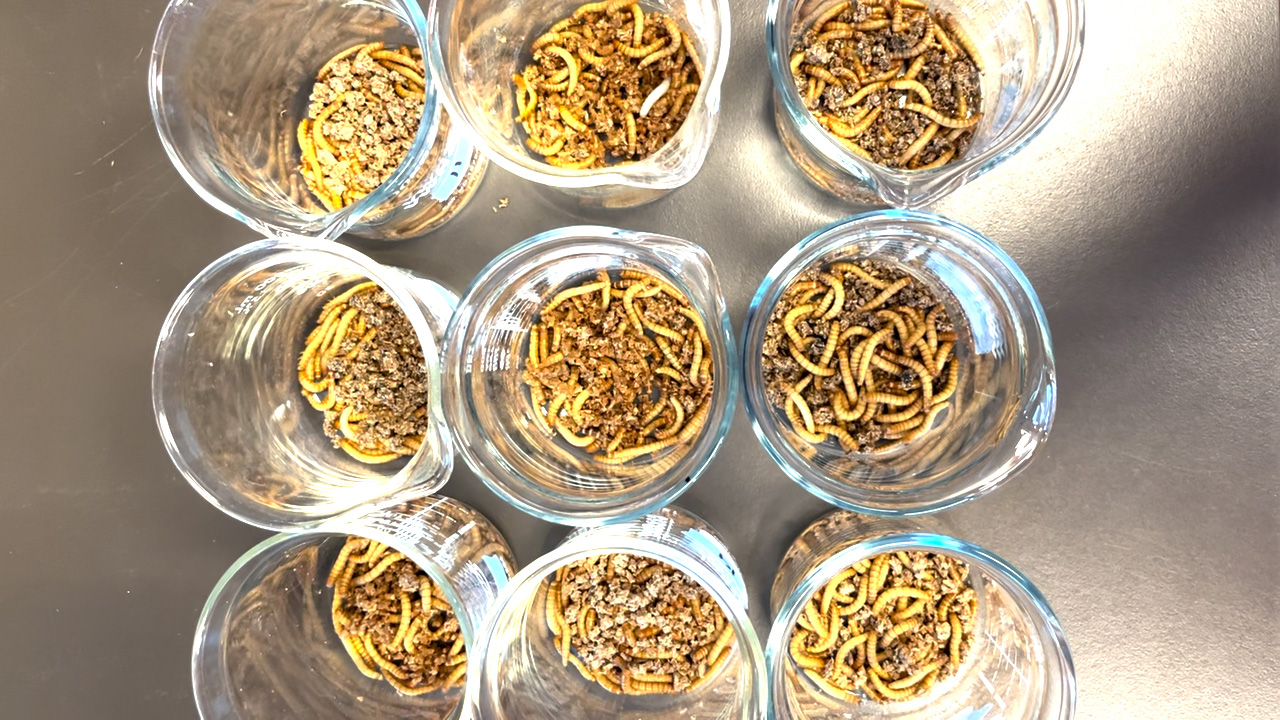
    Mealworms Feast on Bran and Microplastics
    Mealworms feast on bran and microplastics in the lab. Credit: Michelle Tseng

    Mealworms can eat and absorb plastic, offering potential insights for reducing pollution.

    Plastic pollution pervades ecosystems worldwide and persists for decades. Could insects hold the key to solving this problem?

    Previous research found that insects can ingest and absorb pure, unrefined microplastics—but only under unrealistic, food-scarce situations. In a new Biology Letters paper, UBC zoologist Dr. Michelle Tseng and alumna Shim Gicole tested mealworms in a more realistic scenario, feeding them ground-up face masks—a common plastic product—mixed with bran, a tastier option.

    Reality bites

    Mealworms are Nature’s scavengers and decomposers, able to survive up to eight months without food or water, and happy to eat their own kind when food is scarce.

    After 30 days, the research team found the mealworms ate about half the microplastics available, about 150 particles per insect, and gained weight. They excreted a small fraction of the microplastics consumed, about four to six particles per milligram of waste, absorbing the rest. Eating microplastics did not appear to affect the insects’ survival and growth.

    Plastic-eating partners

    Dr. Tseng says the next step will be to learn from the insects’ digestive mechanisms how to break down microplastics, and scale up these learnings to address plastic pollution. “Perhaps we can start viewing bugs as friends. We’re killing millions of insects every day from general pesticides – the very same insects we could be learning from to break down these plastics and other chemicals.”

    Reference: “Partial consumption of medical face masks by a common beetle species” by Shim Gicole, Alexandra Dimitriou, Natasha Klasios and Michelle Tseng, 30 November 2024, Biology Letters.
    DOI: 10.1098/rsbl.2024.0380

    Never miss a breakthrough: Join the SciTechDaily newsletter.
    Follow us on Google and Google News.

    Microplastics Plastic Pollution University of British Columbia
    Share. Facebook Twitter Pinterest LinkedIn Email Reddit

    Related Articles

    Scientists Develop Plastic Substitute That Could Fight Ocean Pollution

    How Everyday Plastics Quietly Turn Into DNA-Damaging Nanoparticles

    Goodbye Microplastics: New Recyclable Plastic Breaks Down Safely in Seawater

    New Plant-Based Plastic Releases 9 Times Less Microplastics

    Unseen Hazard: The Invisible World of Plastics and Oligomers in Your Laundry

    Pollution Solution: New Device Can Capture 99.9% of Microplastics in Water Using Wood Dust

    Toxic Hitchhikers: How Microplastics Carry Heavy Metals Across Our Rivers

    Science Made Simple: What Are Microplastics?

    How Is It Raining Plastic?! [Video]

    2 Comments

    1. Boba on December 6, 2024 5:45 pm

      It’s all well and good but they’ve been talking about using various microorganisms to eat eway the plastic for twenty years now, and nothing happened yet.

      Reply
    2. David Zemnk on April 11, 2025 8:42 am

      worthless idea, anything created that eats plastic will become a frankenstein and consume/attack every living thing with plastic particles, ie every plant, person, animal, everything on the planet will be a consumable to these microorganisms.
      just like global warming being nature driven, dumbazz wanna be scientists don’t enen see that global warming was/is caused by the earth being tilted off axis 3 times in the last 20yrs, and the planet loosing 3.4 seconds per day, and ALL Climate Scientists saying that all predicted models as of the Tonga 2022 earthquake, and no longer fits their hypothesis/models. now with Myanmar 2025 earthquake it’s all up in the air, with that axis tilt.
      World’s about to get spanked

      Reply
    Leave A Reply Cancel Reply

    • Facebook
    • Twitter
    • Pinterest
    • YouTube

    Don't Miss a Discovery

    Subscribe for the Latest in Science & Tech!

    Trending News

    Scientists May Have Found the Key to Jupiter and Saturn’s Moon Mystery

    Scientists Uncover Brain Changes That Link Pain to Depression

    Saunas May Do More Than Raise Body Temperature – They Activate Your Immune System

    Exercise in a Pill? Metformin Shows Surprising Effects in Cancer Patients

    Hidden Oceans of Magma Could Be Protecting Alien Life

    New Study Challenges Alzheimer’s Theories: It’s Not Just About Plaques

    Artificial Sweeteners May Harm Future Generations, Study Suggests

    Splashdown! NASA Artemis II Returns From Record-Breaking Moon Mission

    Follow SciTechDaily
    • Facebook
    • Twitter
    • YouTube
    • Pinterest
    • Newsletter
    • RSS
    SciTech News
    • Biology News
    • Chemistry News
    • Earth News
    • Health News
    • Physics News
    • Science News
    • Space News
    • Technology News
    Recent Posts
    • Researchers Capture Quantum Interference in One of Nature’s Rarest Atoms
    • Ancient DNA Reveals Irish Goats Have a 3,000-Year-Old Lineage Still Alive Today
    • Historians Reveal Secrets of the Strange Hat Wars That Shook Early Modern England
    • “A Plague Is Upon Us”: The Mass Death That Changed an Ancient City Forever
    • This Strange Material Can Turn Superconductivity on and off Like a Switch
    Copyright © 1998 - 2026 SciTechDaily. All Rights Reserved.
    • Science News
    • About
    • Contact
    • Editorial Board
    • Privacy Policy
    • Terms of Use

    Type above and press Enter to search. Press Esc to cancel.