
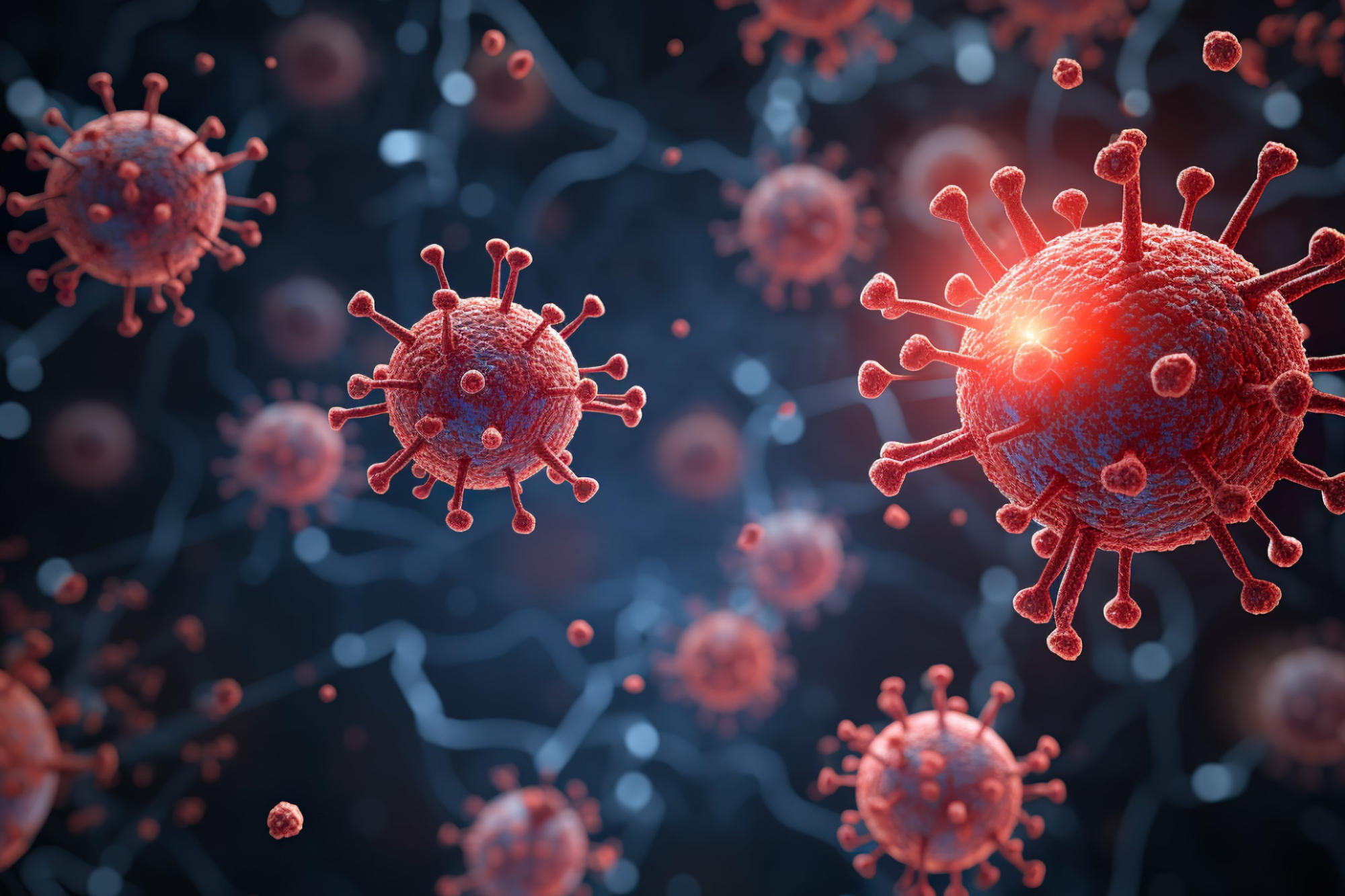
Researchers at St. Jude Children’s Research Hospital have identified a potential cause of multisystem inflammatory syndrome in children (MIS-C), associated with SARS-CoV-2 (COVID) infections.
Scientists at St. Jude Children’s Research Hospital have discovered a connection between a SARS-CoV-2 protein and the development of multisystem inflammatory syndrome in children (MIS-C). MIS-C is a pediatric condition marked by extensive inflammation across various parts of the body. The research reveals an instance of molecular mimicry, where a segment of a SARS-CoV-2 protein closely resembles the human protein SNX8, leading to immune system confusion and triggering inflammation. These findings were published in the journal Nature.
The researchers found that a region of the SARS-CoV-2 nucleocapsid (N) protein shares high sequence and immunogenic similarities to SNX8, a protein predominantly expressed in immune cells. Consequently, the human immune system that reacts to N mistakes SNX8 as an invader and triggers an inflammatory response. Understanding this mimicry mechanism, the elements of the immune system that are involved, and why it occurs in a subset of children could help physicians better address MIS-C.
Before the study, clinicians had observed that MIS-C typically manifests after SARS-CoV-2 (COVID) infection, but whether the onset was connected to SARS-CoV-2 infection was unknown. “MIS-C has been recognized as a problem downstream of SARS-CoV-2 infection in children since the beginning of the pandemic, and it’s very similar to other post-viral inflammatory conditions that have evaded understanding in terms of etiology for a number of years,” said co-senior author Paul Thomas, PhD, St. Jude Department of Host-Microbe Interactions.
Reflecting on the clinical impact, co-senior author Adrienne Randolph, MD, MSc, Boston Children’s Hospital, noted, “Every time COVID peaked in an area, about 30 days later, there would be a peak of children presenting with what looked like septic shock in our network of ICUs, except they were negative for all kinds of infection. If we hadn’t intervened and supported them, they could have died.”
This is the first study to identify molecular mimicry as one of the immunological mechanisms behind the development of MIS-C. “Understanding this mechanism going forward may help improve diagnosis and treatment,” Thomas added.
Molecular mimic linking SARS-CoV-2 infections and MIS-C
Believing that there may be a link between SARS-CoV-2 proteins and the syndrome, the researchers used samples from patients with MIS-C to identify autoantigens (self proteins recognized by the immune system which trigger an autoimmune response) associated with the condition. They found candidate autoantigens derived from SNX8, ERFL, and KDELR1 proteins. SNX8 plays a role in regulating the antiviral pathway associated with MIS-C pathogenesis, making it the prime suspect.
Scientists identified a part of SNX8 that is structurally similar to SARS-CoV-2 N that stimulates an autoimmune response in cases of MIS-C. This finding provides evidence of molecular mimicry as a mechanism contributing to MIS-C and connects SARS-CoV-2 infection with the onset of MIS-C.
“The biggest takeaway is that our study now directly links the disease with components of the actual SARS-CoV-2 virus,” said co-first author and postdoctoral fellow Robert Mettelman, PhD, St. Jude Department of Host-Microbe Interactions.
Echoing this sentiment, co-senior author Joseph DeRisi, PhD, University of California San Francisco, stated, “We’ve identified the smoking gun – what made these kids so sick. This discovery opens the door to understanding why so many of these post-infectious, horribly inflammatory autoimmune events occur.”
While this research marks a significant breakthrough in understanding MIS-C, its implications extend beyond the specific disorder. “There are other diseases that are similar to MIS-C,” Mettelman added. “The immune mechanism we describe can be explored in additional autoimmune and inflammatory contexts where a viral infection is thought to trigger disease onset.”
These findings showcase a bright future for the improved diagnosis and treatment of MIS-C. “We are trying to understand the relationship between these responses and the full development of the disease,” Thomas said. “We are aiming to see if there is a diagnostic setting where we could use this to predict who’s going to develop this disease and if early interventions can be applied.”
Reference: “Molecular mimicry in multisystem inflammatory syndrome in children” by Aaron Bodansky, Robert C. Mettelman, Joseph J. Sabatino Jr, Sara E. Vazquez, Janet Chou, Tanya Novak, Kristin L. Moffitt, Haleigh S. Miller, Andrew F. Kung, Elze Rackaityte, Colin R. Zamecnik, Jayant V. Rajan, Hannah Kortbawi, Caleigh Mandel-Brehm, Anthea Mitchell, Chung-Yu Wang, Aditi Saxena, Kelsey Zorn, David J. L. Yu, Mikhail V. Pogorelyy, Walid Awad, Allison M. Kirk, James Asaki, John V. Pluvinage, Michael R. Wilson, Laura D. Zambrano, Angela P. Campbell, Overcoming COVID-19 Network Investigators, Paul G. Thomas, Adrienne G. Randolph, Mark S. Anderson and Joseph L. DeRisi, 7 August 2024, Nature.
DOI: 10.1038/s41586-024-07722-4
The study was supported by the Pediatric Scientist Development Program and the Eunice Kennedy Shriver National Institute of Child Health and Human Development (K12-HD000850), the Centers for Disease Control and Prevention (75D30120C07725, 75D30121C10297 and 75D30122C13330), the National Institute of Allergy and Infectious Diseases (R01AI154470, 5R01AI154470-03, 2R01AI136514-06, and 3P01AI165077-01S1 ), the Ruth L. Kirschstein National Research Service Award Individual Postdoctoral Fellowship award (F32AI157296), and ALSAC, the fundraising awareness organization of St. Jude.
Never miss a breakthrough: Join the SciTechDaily newsletter.
Follow us on Google and Google News.