
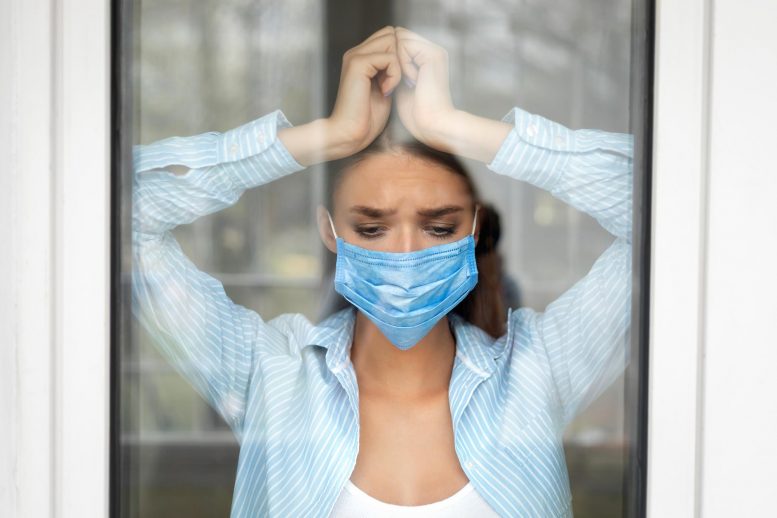
COVID-19 has led to psychological distress among one in three adults, large-scale meta-analysis reveals.
One in three adults, particularly women, younger adults, and those of lower socioeconomic status, are experiencing psychological distress related to COVID-19, researchers at Duke-NUS Medical School, Singapore, reported in the journal PLOS ONE.
COVID-19 continues to pose serious threats to public health across the globe, and interventions such as lockdowns, quarantine and social distancing are having an adverse impact on the mental well-being of populations. The pandemic has escalated the burden of psychological distress, including anxiety, depression, post-traumatic stress and insomnia. However, the factors associated with increased susceptibility to psychological distress among adults in the general population during COVID-19 are not yet well known.
“Understanding these factors is crucial for designing preventive programs and mental health resource planning during the rapidly evolving COVID-19 outbreak,” explained Professor Tazeen Jafar, from the Health Services and Systems Research Programme at Duke-NUS, who led the study. “These factors could be used to identify populations at high risk of psychological distress so they can be offered targeted remote and in-person interventions.”
Prof Jafar and her team performed a meta-analysis of 68 studies conducted during the pandemic, encompassing 288,830 participants from 19 countries, to assess risk factors associated with anxiety and depression among the general population. They found that, among the people most affected by COVID-19-related anxiety or depression, women, younger adults, individuals of lower socioeconomic status, those living in rural areas and those at high risk of COVID-19 infection were more likely to experience psychological distress.
Women and Younger Adults at Elevated Risk
The finding that women were more likely to experience psychological distress than men is consistent with other global studies that have shown that anxiety and depression are more common in women. “The lower social status of women and less preferential access to healthcare compared to men could potentially be responsible for the exaggerated adverse psychosocial impact on women,” the researchers suggested. “Thus, outreach programs for mental health services must target women proactively.”
Younger adults, aged 35 and under, were more likely to experience psychological distress than those over the age of 35. Although the reasons for this are unclear, previous studies have suggested that it might be due to younger people’s greater access to COVID-19 information through the media. This current study also confirmed that longer media exposure was associated with higher odds of anxiety and depression.
Rural, Low-Income, and High-Risk Groups Affected
Other factors associated with psychological distress included living in rural areas; lower education, lower income or unemployment; and being at high risk of COVID-19 infection. However, having stronger family and social support and using positive coping strategies were shown to reduce the risk of psychological distress.
“The general public and healthcare professionals need to be aware of the high burden of psychological distress during the pandemic as well as education on coping strategies,” Prof Jafar said. “Patients need to be encouraged to seek help, and access mental health counseling services with appropriate referrals.”
Professor Patrick Casey, Senior Vice-Dean for Research at Duke-NUS, commented, “Even with the tremendous advances on the vaccine front, the world has come to realize that the COVID-19 pandemic will be with us for the long haul. Professor Jafar’s study contributes valuable insights on the pandemic’s psychological toll on populations around the world and highlights specific groups who may benefit from additional support, whether that is from their family or a healthcare provider.”
Reference: “Factors associated with psychological distress during the coronavirus disease 2019 (COVID-19) pandemic on the predominantly general population: A systematic review and meta-analysis” by Yeli Wang, Monica Palanichamy Kala and Tazeen H. Jafar, 28 December 2020, Plos ONE.
DOI: 10.1371/journal.pone.0244630
Never miss a breakthrough: Join the SciTechDaily newsletter.
Follow us on Google and Google News.