

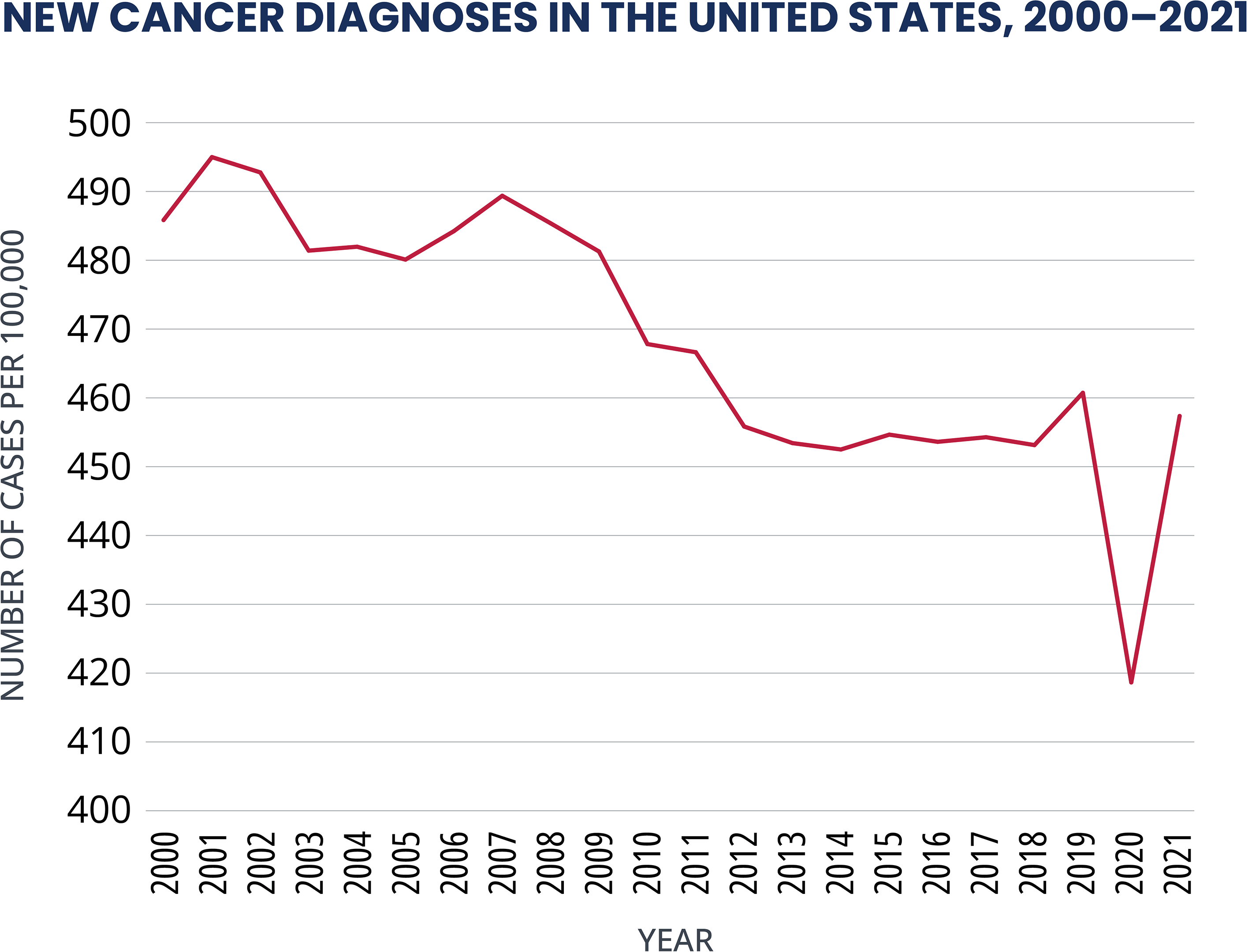
Analysis by the NIH of 2021 cancer incidence data indicates a near normalization of cancer trends to pre-pandemic levels, with no significant rebound compensating for missed diagnoses in 2020.
Breast and pancreatic cancers notably recorded increases in advanced-stage cases, highlighting discrepancies in recovery across cancer types. The findings emphasize the persistent effects of the pandemic on healthcare, underscoring the critical need for ongoing monitoring and adaptation in cancer diagnosis protocols.
Cancer Trends Post-Pandemic
Cancer incidence trends in 2021 largely returned to what they were before the COVID-19 pandemic, according to a study by researchers at the National Institutes of Health (NIH). However, there was little evidence of a rebound in incidence that would account for the decline in diagnoses in 2020, when screening and other medical care was disrupted. One exception was breast cancer, where the researchers did see an uptick in diagnoses of advanced-stage disease in 2021. The study will be published today (September 24, 2024) in the Journal of the National Cancer Institute.
Impact of Missed Diagnoses
A previous study showed that new cancer diagnoses fell abruptly in early 2020, as did the volume of pathology reports, suggesting that many cancers were not being diagnosed in a timely manner. To determine whether these missed diagnoses were caught in 2021, possibly as more advanced cancers, researchers from NIH’s National Cancer Institute (NCI) compared observed cancer incidence rates for 2021 with those expected from pre-pandemic trends using data from NCI’s Surveillance, Epidemiology, and End Results Program.
Analysis of Recovery and Rebound
A full recovery in cancer incidence should appear as an increase over pre-pandemic levels (also known as a rebound) to account for the missed diagnoses. The researchers looked at cancer overall, as well as five major cancer types that vary in how they are typically detected: through screening (female breast and prostate cancer), due to symptoms (lung and bronchus and pancreatic cancer), or incidentally during other medical procedures (thyroid cancer).
Specific Findings on Cancer Types
Cancer incidence rates overall and for most specific cancers approached pre-pandemic levels, with no significant rebound to account for the 2020 decline. However, in addition to an uptick in new diagnoses of advanced breast cancer in 2021, the data also provided some evidence of an increase in diagnoses of advanced pancreatic cancer. Also, new diagnoses of thyroid cancers in 2021 were still below pre-pandemic levels.
Long-Term Implications for Cancer Monitoring
The researchers concluded that 2021 was a transition year that was still affected by new variants and new waves of COVID-19 cases, which continued to impact medical care. They said the findings highlight the need for ongoing monitoring to understand the long-term impacts of the pandemic on cancer diagnoses and outcomes.
Reference: “Impact of COVID-19 on 2021 cancer incidence rates and potential rebound from 2020 decline” by Nadia Howlader, Huann-Sheng Chen, Anne-Michelle Noone, Daniel Miller, Jeffry Byrne, Serban Negoita, Kathleen A Cronin and Angela B Mariotto, 24 September 2024, JNCI: Journal of the National Cancer Institute.
DOI: 10.1093/jnci/djae180
Never miss a breakthrough: Join the SciTechDaily newsletter.
Follow us on Google and Google News.
3 Comments
This study shows that cancer rates are impacted by medical care. The more care you get, the more people seem to have cancer. When you avoid doctors, cancer rates drop. Sounds like the best medicine is no medicine.
I am a medical anthropologist and author who studies breast cancer. I suspect breast cancer rates will decline since the pandemic due to fewer women wearing bras. The lockdowns gave working women a chance to be bra-free at home while working remotely, and bras are a leading cause of breast cancer. See my article, How the COVID-19 Quarantine Will End the Breast Cancer Epidemic. https://www.academia.edu/50858048/How_the_COVID_19_Quarantine_Will_End_the_Breast_Cancer_Epidemic
In other words, they covered sh!t up.
I trust nothing from the NIH anymore