
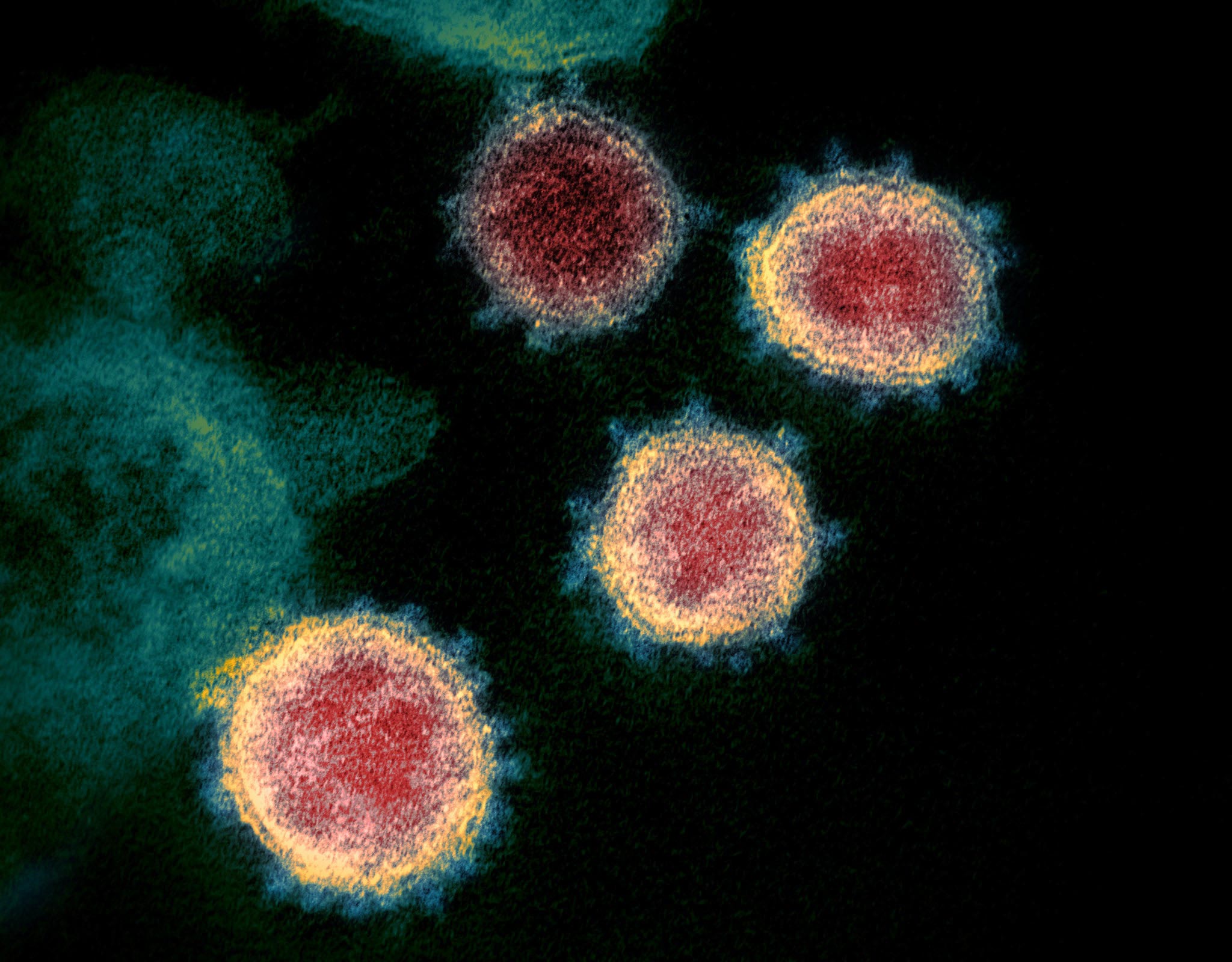
- Researchers produced a detailed picture of the part of SARS-CoV-2—the novel coronavirus that causes COVID-19—that allows it to infect human cells.
- The study points to potential targets for the development of vaccines or treatments for the infection.
In late 2019, the first reports of an unknown respiratory infection—in some cases fatal—emerged from Wuhan, China. The source of that infection was quickly identified as a novel coronavirus, related to those that had caused outbreaks of Severe Acute Respiratory Syndrome (SARS) from 2002-2004 and Middle East Respiratory Syndrome (MERS) in 2012.
The World Health Organization declared the illness resulting from the new virus, COVID-19, a Public Health Emergency of International Concern. By early March 2020, the novel coronavirus—now named SARS-CoV-2—had infected more than 90,000 people worldwide and killed at least 3,100.
Like other coronaviruses, SARS-CoV-2 particles are spherical and have proteins called spikes protruding from their surface. These spikes latch onto human cells, then undergo a structural change that allows the viral membrane to fuse with the cell membrane. The viral genes can then enter the host cell to be copied, producing more viruses. Recent work shows that, like the virus that caused the 2002 SARS outbreak, SARS-CoV-2 spikes bind to receptors on the human cell surface called angiotensin-converting enzyme 2 (ACE2).
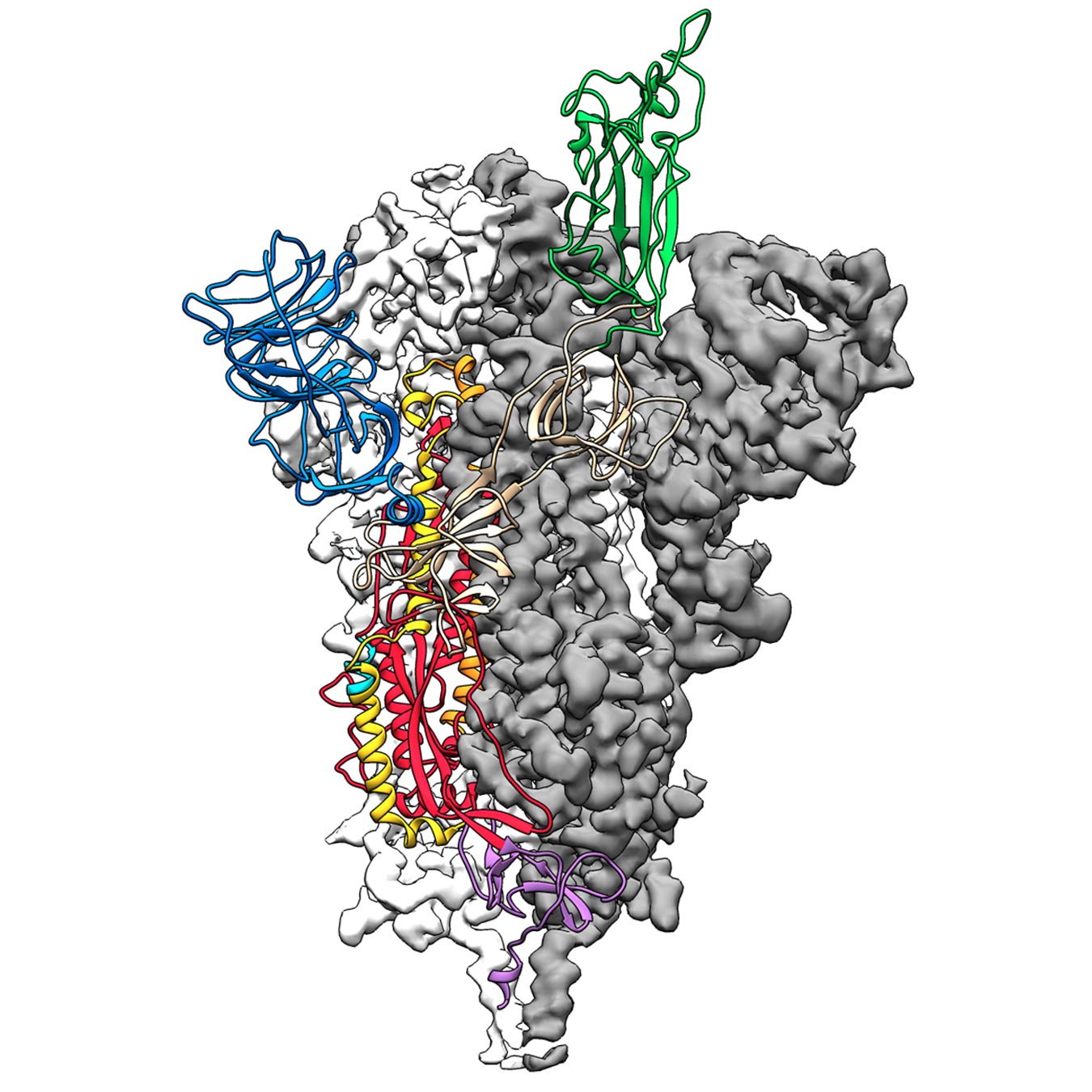
To help support rapid research advances, the genome sequence of the new coronavirus was released to the public by scientists in China. A collaborative team including scientists from Dr. Jason McLellan’s lab at the University of Texas at Austin and the NIAID Vaccine Research Center (VRC) isolated a piece of the genome predicted to encode for its spike protein based on sequences of related coronaviruses. The team then used cultured cells to produce large quantities of the protein for analysis.
The study was funded in part by NIH’s National Institute of Allergy and Infectious Diseases (NIAID). Results were published on February 19, 2020, in Science.
The researchers used a technique called cryo-electron microscopy to take detailed pictures of the structure of the spike protein. This involves freezing virus particles and firing a stream of high-energy electrons through the sample to create tens of thousands of images. These images are then combined to yield a detailed 3D view of the virus.
The researchers found that the SARS-CoV-2 spike was 10 to 20 times more likely to bind ACE2 on human cells than the spike from the SARS virus from 2002. This may enable SARS-CoV-2 to spread more easily from person to person than the earlier virus.
Despite similarities in sequence and structure between the spikes of the two viruses, three different antibodies against the 2002 SARS virus could not successfully bind to the SARS-CoV-2 spike protein. This suggests that potential vaccine and antibody-based treatment strategies will need to be unique to the new virus.
“We hope these findings will aid in the design of candidate vaccines and the development of treatments for COVID-19,” says Dr. Barney Graham, VRC Deputy Director.
The researchers are currently working on vaccine candidates targeting the SARS-CoV-2 spike protein. They also hope to use the spike protein to isolate antibodies from people who have recovered from infection by the new coronavirus. If produced in large quantities, such antibodies could potentially be used to treat new infections before a vaccine is available. In addition, NIH researchers are pursuing other approaches to treating the virus.
Reference: “Cryo-EM structure of the 2019-nCoV spike in the prefusion conformation” by Daniel Wrapp, Nianshuang Wang, Kizzmekia S. Corbett, Jory A. Goldsmith, Ching-Lin Hsieh, Olubukola Abiona, Barney S. Graham and Jason S. McLellan, 19 February 2020, Science.
DOI: 10.1126/science.abb2507
Never miss a breakthrough: Join the SciTechDaily newsletter.
Follow us on Google and Google News.
1 Comment
Nice and Detail information available