
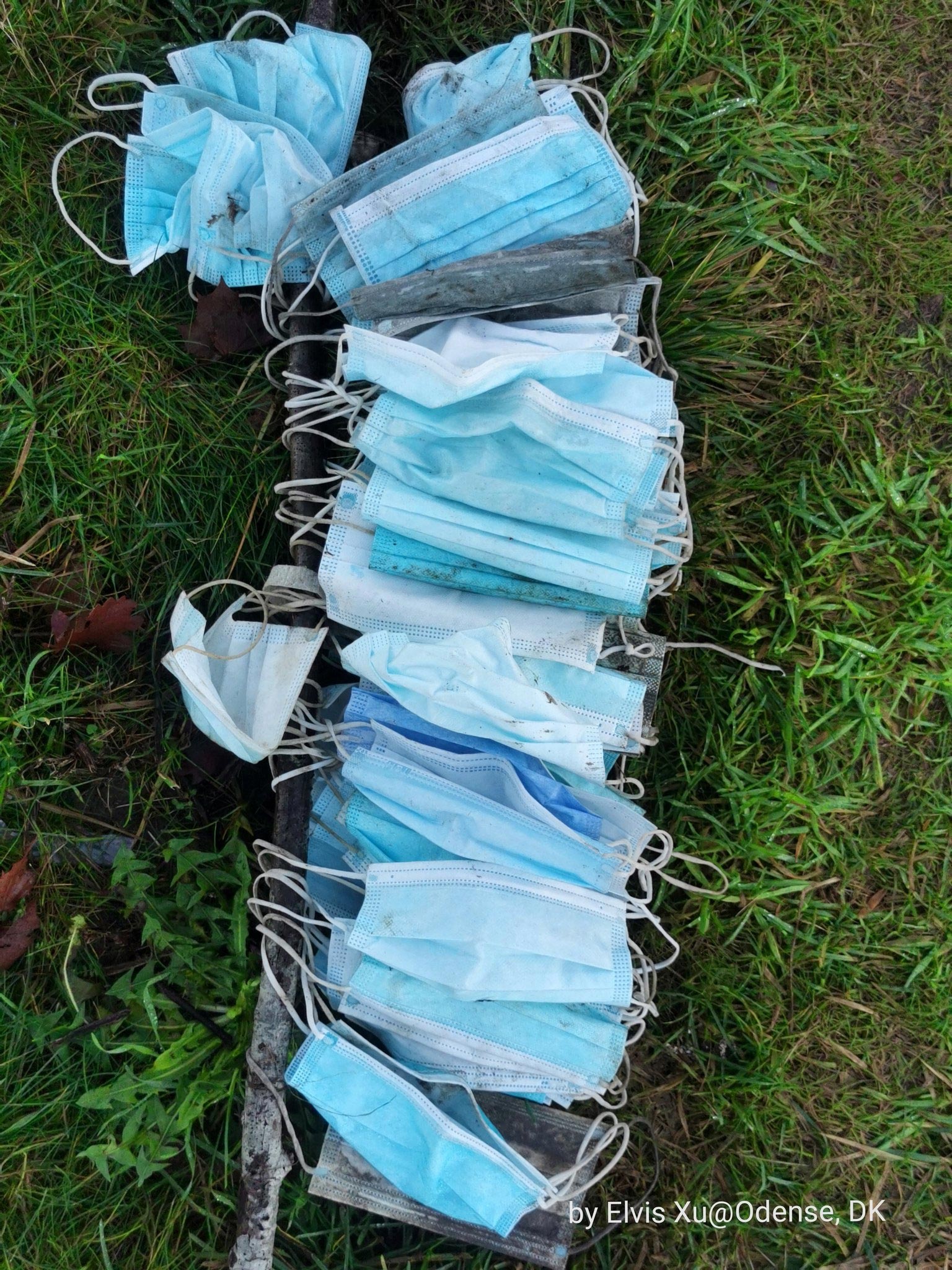
Every minute of the day we throw away 3 million face masks. Many end up as potentially toxic micro- and nanoplastic or carriers for other toxicants in the environment, researchers warn.
Recent studies estimate that due to the COVID pandemic, we use an astounding 129 billion face masks globally every month – that is 3 million a minute. Most of them are disposable face masks made from plastic microfibers.
“With increasing reports on inappropriate disposal of masks, it is urgent to recognize this potential environmental threat and prevent it from becoming the next plastic problem,” researchers warn in a comment in the scientific journal Frontiers of Environmental Science & Engineering.
The researchers are Environmental Toxicologist Elvis Genbo Xu from University of Southern Denmark and Professor of Civil and Environmental Engineering Zhiyong Jason Ren from Princeton University.
No Guidelines for Mask Recycling
Disposable COVID-19 masks are plastic products, that cannot be readily biodegraded but may fragment into smaller plastic particles, namely micro- and nanoplastics that are widespread in ecosystems.
The enormous production of disposable masks is on a similar scale as plastic bottles, which is estimated to be 43 billion per month.
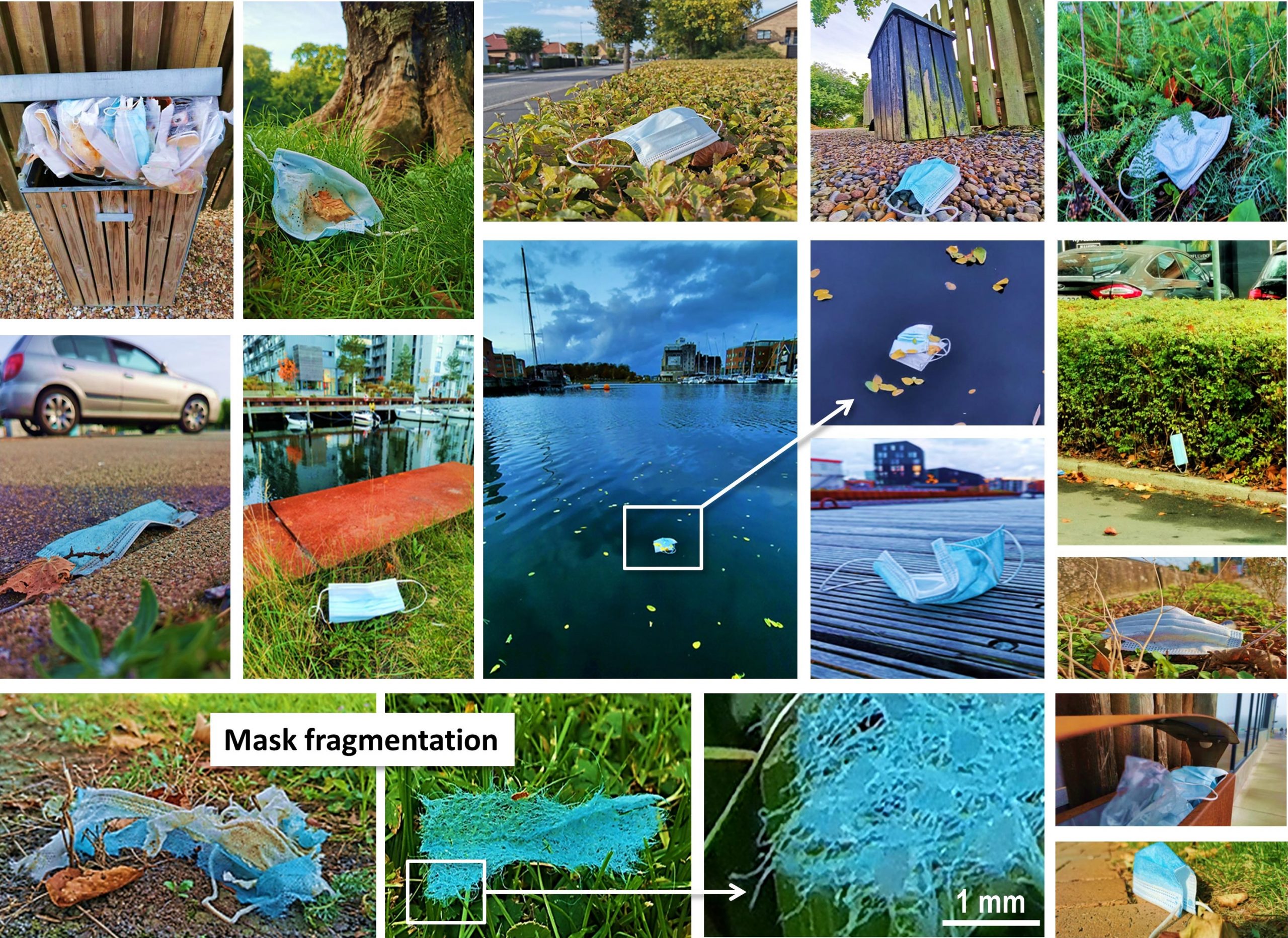
However, different from plastic bottles, (of which app. 25 pct. is recycled), there is no official guidance on mask recycle, making it more likely to be disposed of as solid waste, the researchers write.
Greater Concern Than Plastic Bags
If not disposed of for recycling, like other plastic wastes, disposable masks can end up in the environment, freshwater systems, and oceans, where weathering can generate a large number of micro-sized particles (smaller than 5 mm) during a relatively short period (weeks) and further fragment into nanoplastics (smaller than 1 micrometer).
“A newer and bigger concern is that the masks are directly made from microsized plastic fibers (thickness of ~1 to 10 micrometers). When breaking down in the environment, the mask may release more micro-sized plastics, easier and faster than bulk plastics like plastic bags,” the researchers write, continuing:
“Such impacts can be worsened by a new-generation mask, nanomasks, which directly use nano-sized plastic fibers (with a diameter smaller than 1 micrometer) and add a new source of nanoplastic pollution.”
“We know that, like other plastic debris, disposable masks may also accumulate and release harmful chemical and biological substances, such as bisphenol A, heavy metals, as well as pathogenic micro-organisms.”
Elvis Genbo Xu, Environmental Toxicologist
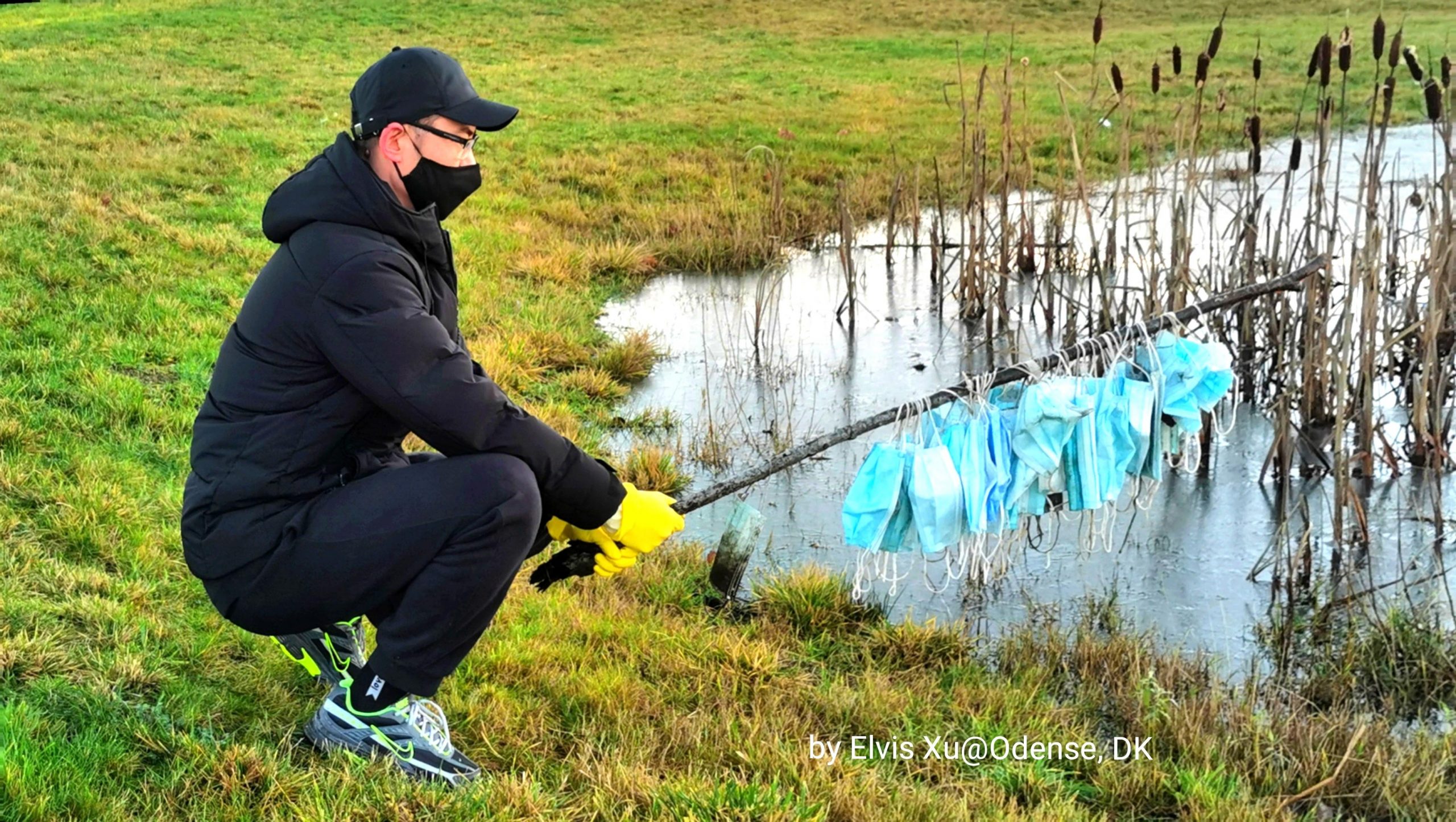
The researchers stress that they do not know how masks contribute to the large number of plastic particles detected in the environment – simply because no data on mask degradation in nature exists.
“But we know that, like other plastic debris, disposable masks may also accumulate and release harmful chemical and biological substances, such as bisphenol A, heavy metals, as well as pathogenic micro-organisms. These may pose indirect adverse impacts on plants, animals, and humans,” says Elvis Genbo Xu.
What Can We Do?
Elvis Genbo Xu and Zhiyong Jason Ren have the following suggestions for dealing with the problem:
- Set up mask-only trash cans for collection and disposal
- consider standardization, guidelines, and strict implementation of waste management for mask wastes
- replace disposable masks with reusable face masks like cotton masks
- consider development of biodegradable disposal masks.
Reference: “Preventing masks from becoming the next plastic problem” by Elvis Genbo Xu and Zhiyong Jason Ren, 28 February 2021, Frontiers of Environmental Science & Engineering.
DOI: 10.1007/s11783-021-1413-7
Never miss a breakthrough: Join the SciTechDaily newsletter.
Follow us on Google and Google News.
2 Comments
Or we could stop using these useless masks. The virus is between 0.06 and 0.14 microns and the best N95 mask has 0.3 micron openings. The surgical masks are a joke for viruses.
Yes, a virus is small. But, you can not cough out a virus , not by itself without phlegm. Scientific fact. Now the phlegm increases the mass of the virus, or viruses. It is big enough to stop that mass. So your making things up and should ask your mom for permission before you post again.