
Close Menu
    Facebook X (Twitter) Instagram
    SciTechDaily
    • Biology
    • Chemistry
    • Earth
    • Health
    • Physics
    • Science
    • Space
    • Technology
    Facebook X (Twitter) Pinterest YouTube RSS
    SciTechDaily
    Home»Space»Crystalline Clues Unlock the Secrets of the Moon’s Interior
    Space

    Crystalline Clues Unlock the Secrets of the Moon’s Interior

    By Ehime UniversityAugust 21, 2024No Comments3 Mins Read
    Facebook Twitter Pinterest Telegram LinkedIn WhatsApp Email Reddit
    Share
    Facebook Twitter LinkedIn Pinterest Telegram Email Reddit
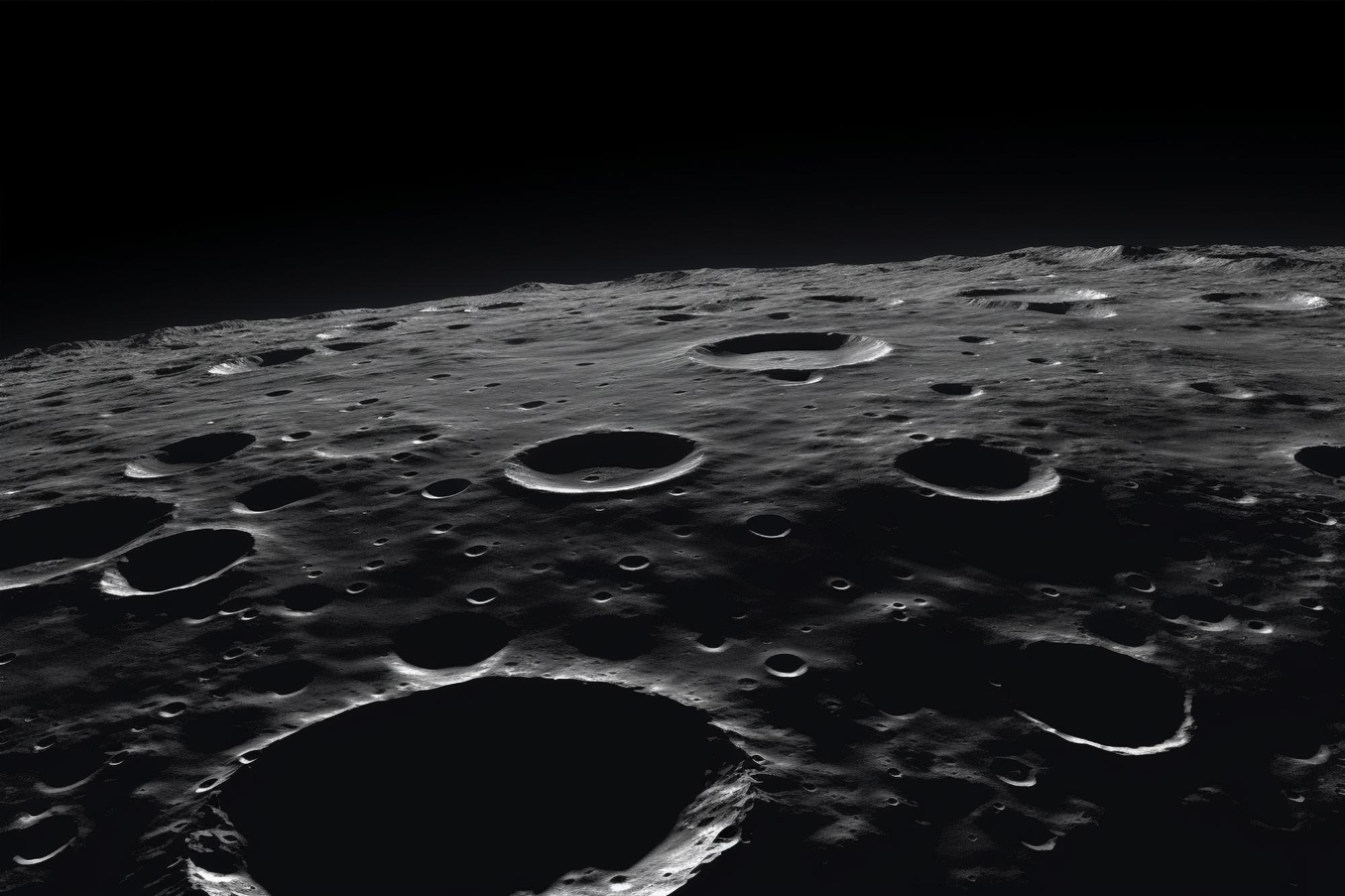
    Moon Surface Concept Art
    New experiments on olivine/melt partition coefficients for Ga and Ge highlight significant variations in these coefficients under different oxygen fugacities, impacting our understanding of the petrogenetic processes in lunar basalts, especially regarding the origin of Cr-rich olivines and the conditions under which different types of lunar basalts form. Credit: SciTechDaily.com

    Experimental investigations have been conducted on the partition coefficients of first-transition row elements between olivine and silicate melt.

    Olivine is the first mineral to crystallize from basaltic magma, and accurate knowledge of olivine/melt partition coefficients (DOl–melt) for first-transition row elements (FTREs) Ga and Ge, is required in quantitative modeling of petrogenetic processes in planetary basalts.

    Numerous experimental studies have focused on this topic, but most investigations concentrated on minor elements found in olivine, and the oxygen fugacities (fO2) in many of these experiments were commonly designed to be similar to those found in Earth’s mantle.
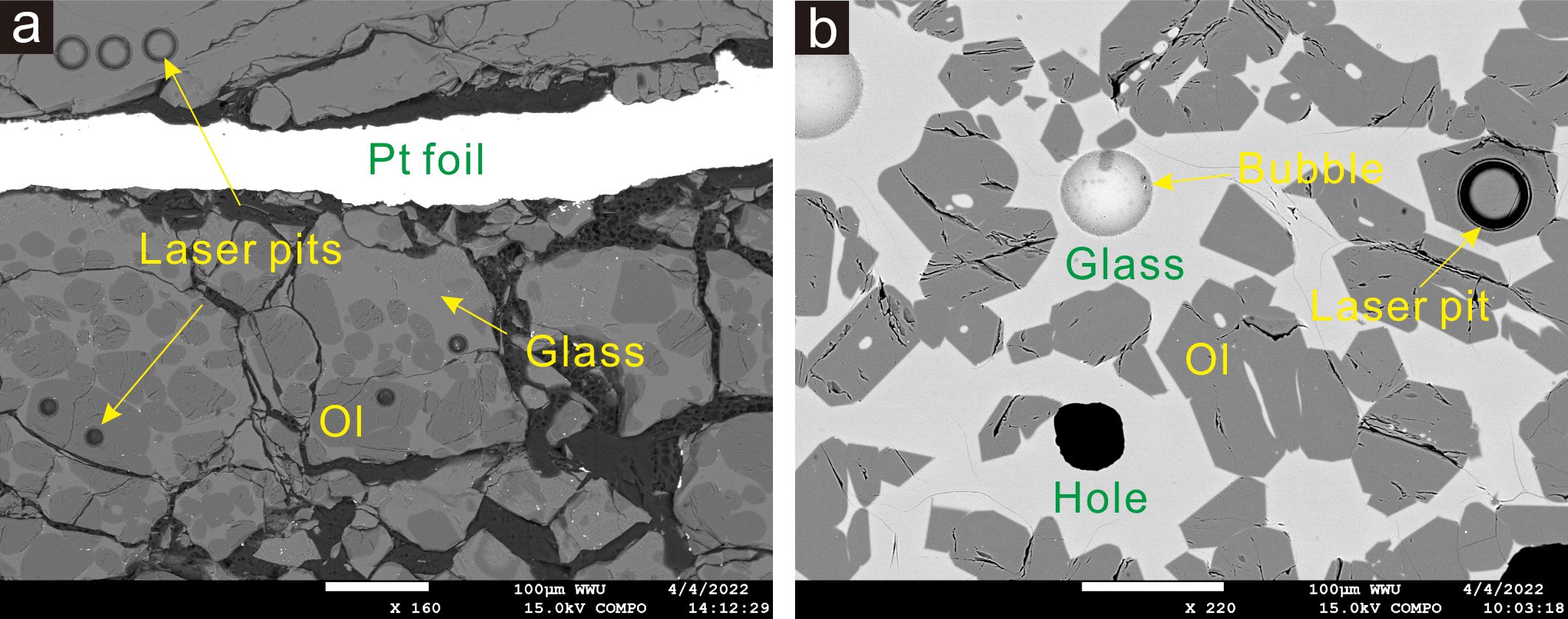
    Back Scattered Images of Recovered Samples
    Olivine (Ol) and silicate melt (quenched as glass) were recovered from a gas-mixing furnace at 1 atm and 1400 ℃. The starting material powders were loaded in a noble capsule and heated in the furnace for 72 hours at different oxygen fugacities. Laser-ICP-MS was used to measure the trace elements in olivine and glass. Credit: Jiejun Jing

    However, for applications involving the formation of basalt on other rocky planetary bodies including the Moon, Mars, and asteroids, oxygen fugacities during basalt formation can range widely from 2 log units below the iron-wüstite buffer (herein referred to as IW-2) to IW+6. In addition, lunar basalts are generally iron-rich compared to terrestrial basalts.

    Experimental Studies on FTREs

    To assess the effects of oxygen fugacity and iron content on partition coefficients of FTREs, Ga and Ge, Dr. Jiejun Jing (a JSPS postdoctoral fellow in Ehime University) conducted a series of high-temperature experiments (around IW-2 to IW+5.5) at 1 atm using a gas-mixing furnace with the cooperation of colleagues in Ehime University, and in other universities in the Netherlands, China and Germany.

    The results show that most DOl–melt show no sensitivity to bulk system iron contents, but DOl–meltCr is significantly higher in our experiments compared to DOl–meltCr derived from olivine-melt inclusion pairs in lunar samples with much higher FeO content. DOl–meltNi values are nearly constant at a range of oxygen fugacities above the IW buffer, but abruptly decrease when the system is iron metal saturated (below the IW buffer). Using the newly derived partition coefficients, the authors re-assessed two aspects of lunar basalt generation.

    First, they conclude that the Cr-rich nature of the olivines in lunar basalts compared to terrestrial basalts must be attributed to the Cr-nature of the cumulate mantle source of lunar basalts, which is linked to the early crystallization of Cr-poor minerals olivine and orthopyroxene in the lunar magma ocean resulting in shallow Cr-rich cumulates.

    Second, the higher Co/Ni ratios in olivine in high-titanium lunar basalts compared to olivine in low-titanium lunar basalts suggest the former were formed at a more reduced condition in the lunar mantle (below the IW buffer, saturated with metal).

    Reference: “Experimental investigation of first-row transition elements partitioning between olivine and silicate melt: Implications for lunar basalt formation” by Jie-Jun Jing, Ben-Xun Su, Jasper Berndt, Hideharu Kuwahara and Wim van Westrenen, 30 March 2024, Geochimica et Cosmochimica Acta.
    DOI: 10.1016/j.gca.2024.03.028

    Never miss a breakthrough: Join the SciTechDaily newsletter.
    Follow us on Google and Google News.

    Ehime University Moon Planetary Science
    Share. Facebook Twitter Pinterest LinkedIn Email Reddit

    Related Articles

    Study Suggests Earth and Moon Have Common Water Source

    Io’s Volcanoes Are Not Located Where Scientists Expected

    Pre-existing Mineral Deposits on the Moon Can Survive Lunar Impacts

    Presence of Water in the Primary Crust Indicates That the Early Moon Was Wet

    Saturn-Like Rings May Have Formed Solar System’s Moons

    New Theoretical Models Salvage Moon-Forming Impact Theory

    Simulation May Explain Saturnian System

    Catalog of Moon’s Craters May Reveal Ice Beyond Moon’s Poles

    Phobos May Provide Evidence of Life on Mars

    Leave A Reply Cancel Reply

    • Facebook
    • Twitter
    • Pinterest
    • YouTube

    Don't Miss a Discovery

    Subscribe for the Latest in Science & Tech!

    Trending News

    Millions Take These IBS Drugs, But a New Study Finds Serious Risks

    Scientists Unlock Hidden Secrets of 2,300-Year-Old Mummies Using Cutting-Edge CT Scanner

    Bread Might Be Making You Gain Weight Even Without Eating More Calories

    Scientists Discover Massive Magma Reservoir Beneath Tuscany

    Europe’s Most Active Volcano Just Got Stranger – Here’s Why Scientists Are Rethinking It

    Alzheimer’s Symptoms May Start Outside the Brain, Study Finds

    Millions Take This Popular Supplement – Scientists Discover a Concerning Link to Heart Failure

    The Universe Is Expanding Too Fast and Scientists Can’t Explain Why

    Follow SciTechDaily
    • Facebook
    • Twitter
    • YouTube
    • Pinterest
    • Newsletter
    • RSS
    SciTech News
    • Biology News
    • Chemistry News
    • Earth News
    • Health News
    • Physics News
    • Science News
    • Space News
    • Technology News
    Recent Posts
    • Doctors Surprised by the Power of a Simple Drug Against Colon Cancer
    • Why Popular Diabetes Drugs Like Ozempic Don’t Work for Everyone: The “Genetic Glitch”
    • Scientists Create Improved Insulin Cells That Reverse Diabetes in Mice
    • Scientists Stunned After Finding Plant Thought Extinct for 60 Years
    • A Common Diabetes Drug May Hold the Key to Stopping HIV From Coming Back
    Copyright © 1998 - 2026 SciTechDaily. All Rights Reserved.
    • Science News
    • About
    • Contact
    • Editorial Board
    • Privacy Policy
    • Terms of Use

    Type above and press Enter to search. Press Esc to cancel.